


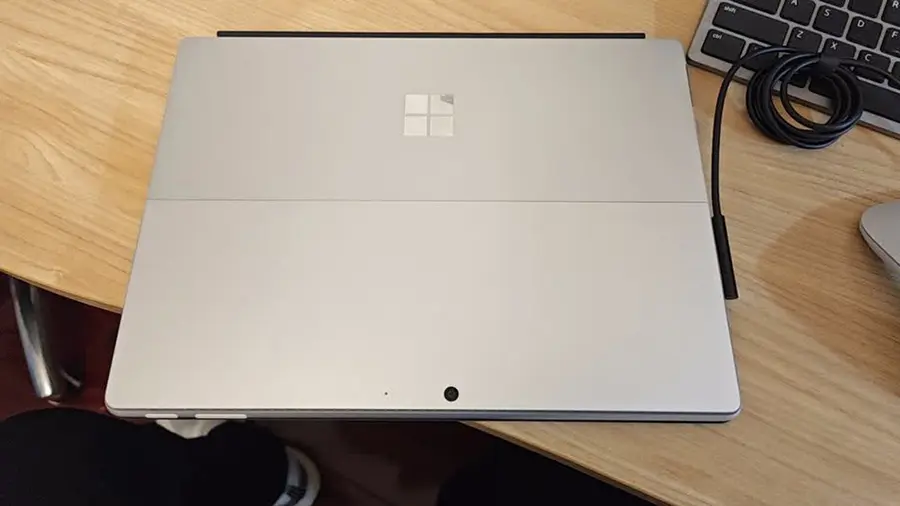
Microsoft Surface is often used as an example of magnesium alloy housing in consumer electronics. Early Surface devices, especially the Surface Pro series, did use magnesium alloy as an important selling point for a thin and lightweight body. But in recent years, newer Surface Pro and Surface Laptop models have moved more toward aluminum alloy housings.
This change was not simply because “magnesium alloy is no longer good enough.” It was the result of materials, cost, manufacturing, sustainability, and product positioning working together. At the end of the day, choosing a housing material for an electronic product is never just about which material sounds more premium. It is about which material better fits the product at its current stage.
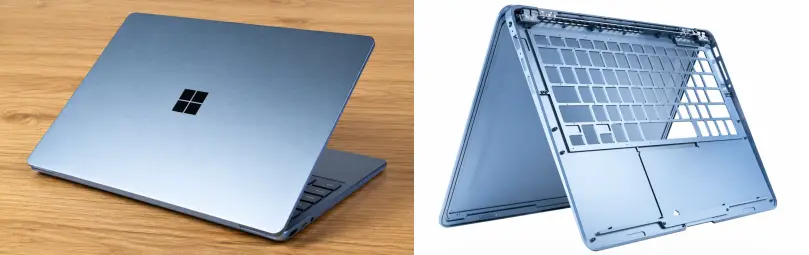

1. Why Did Early Surface Devices Use Magnesium Alloy?
The most direct reason was lightweight design
Magnesium alloy has a lower density than aluminum alloy. This means that, under the same structural design, it can help reduce device weight more easily. For a regular laptop, being lighter is certainly an advantage. But for a device like the Surface Pro, which combines a tablet and a laptop, weight is almost part of the core user experience.
That is because Surface Pro is not only used on a desk. Users also hold it in their hands, place it on their laps, and switch back and forth between tablet mode and keyboard mode. In this case, the weight of the housing material is not just a specification. It directly affects the user experience.
Another important reason: product differentiation
At that time, many high-end devices were already using aluminum alloy, especially the MacBook with its representative aluminum unibody design. If Microsoft had also followed a similar aluminum route, it would have been difficult to create a distinct material story.
That is why VaporMg became one of the signature selling points of early Surface devices. It did not only represent magnesium alloy as a material. It also represented the product attitude Microsoft wanted to express: light, thin, strong, and different from traditional laptops.
From this perspective, using magnesium alloy in early Surface devices made sense. It was not about being cheaper. It was about serving the product positioning of Surface at that time.
2. What Are the Limitations of Magnesium Alloy?
Material selection cannot only look at the advantages. The limitations of magnesium alloy are also clear.
1) More complex manufacturing
Magnesium alloy is lightweight, but its processing and manufacturing control are more difficult than aluminum alloy. Whether it is die casting, CNC machining, or later precision finishing, it requires stricter process control.
For consumer electronics housings, structural dimensions, assembly gaps, edge details, and appearance consistency are all extremely important. If any step is unstable, the final product quality will be affected.
2) More difficult surface treatment
A laptop housing is not finished just because it has been shaped. What really affects the user’s first impression is often the surface texture.
Aluminum alloy can achieve a stable and premium appearance through anodizing, sandblasting, coloring, and other processes. Magnesium alloy, however, usually requires more complex surface treatment and relies more heavily on coating systems.
This means it is not easy for magnesium alloy to achieve a stable, high-end, and durable appearance.
3) Higher cost
The cost here is not just the material price. It also includes machining cost, yield cost, surface treatment cost, supply chain management cost, and repair risk.
Many people talk about materials only by looking at density and strength. That is not enough. In real mass production, whether a material can be manufactured stably often matters more than a single performance parameter.
When we previously evaluated housing solutions for electronic products, we also found that materials that look more “premium” on paper are not always the most suitable in the end. A housing is not a lab sample. It has to survive mass production, assembly, transportation, daily wear, and cost calculation.
4) Greater difficulty in mass production consistency
Consumer electronics are not made as one-off samples. They are produced in thousands or even millions of units.
Whether the housing color is consistent, whether the surface finish is stable, whether the assembly gap is controllable, and whether the repair rate is acceptable all determine whether a material can be used in a mature product line for the long term.
Magnesium alloy can make good products. But it is not the easiest material to mass-produce consistently.
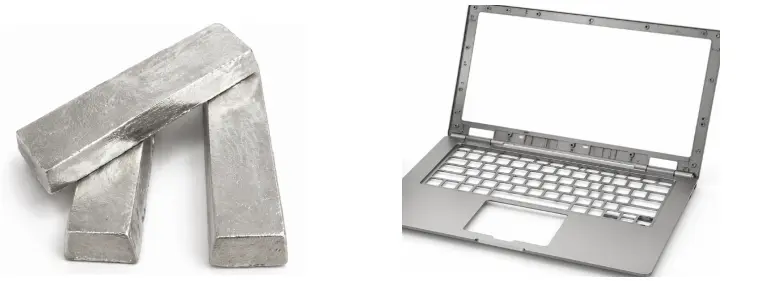

3. Why Did Microsoft Surface Later Move to Aluminum Alloy?
The core reason Surface later moved more toward aluminum alloy housing is simple: aluminum alloy is more balanced.
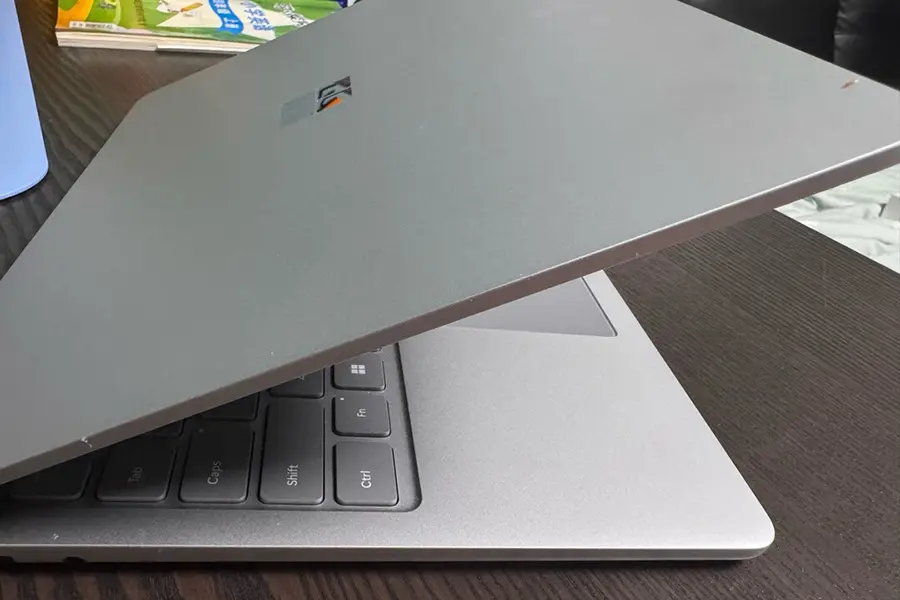

First, aluminum alloy manufacturing is more mature
Aluminum alloy is very suitable for CNC machining. It is also suitable for stamping, cutting, grinding, drilling, chamfering, and many other manufacturing processes.
For laptop housings, whether it is the exterior surface or internal structural components, aluminum alloy already has mature manufacturing solutions.
High-end products can use more CNC machining to improve precision and surface quality. Mass-produced products can also use stamping, local CNC finishing, and surface treatment to control costs. This flexibility is one of aluminum alloy’s most important advantages.
Second, aluminum alloy surface treatment is more stable
Anodizing and sandblasting processes are already very mature. Aluminum alloy housings can achieve a fine matte texture, stable color, and good corrosion resistance.
This is also why many high-end electronic products prefer aluminum alloy housings. The iPhone 17 Pro’s move from titanium alloy to aluminum alloy follows a similar logic.
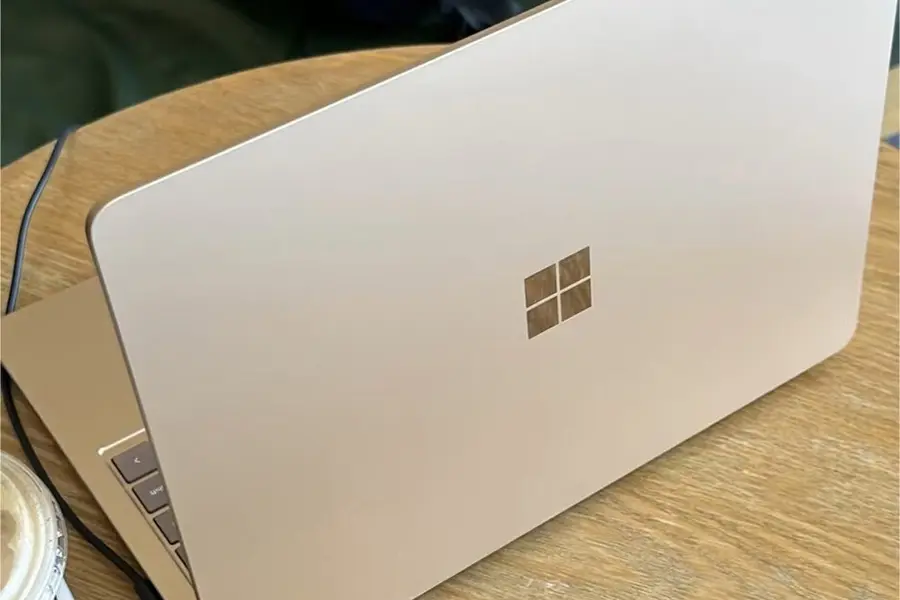
Third, aluminum alloy is more balanced in structure and heat dissipation
Magnesium alloy is light, but aluminum alloy performs more evenly in rigidity, structural stability, and heat dissipation.
Laptops and 2-in-1 devices contain motherboards, batteries, screens, hinges, thermal modules, and various fixing structures. The housing is not just a “cover.” It is also part of the entire device structure.
If the housing material can balance strength, heat dissipation, manufacturing, and appearance at the same time, it is better suited for a mature product.
Fourth, recycled aluminum better supports sustainability requirements
In recent years, consumer electronics brands have paid more attention to sustainable design. Aluminum has a mature recycling system, and recycled aluminum is easier to reuse in electronic product housings.
This is not an empty environmental slogan. For large companies, whether a material is easy to recycle, whether the supply chain is stable, and whether it supports the brand’s sustainability goals can all influence the final material choice.
Fifth, Surface no longer needs magnesium alloy to stand out
Early Surface devices needed to prove that they were not ordinary laptops and not ordinary tablets. Magnesium alloy and VaporMg helped Surface build a unique product identity.
But now the Surface product line is already mature. Its selling points are no longer just about material. They are about the overall experience, including the screen, performance, battery life, AI features, operating system ecosystem, portability, and design completeness.
To put it bluntly: early products need differentiated materials to tell a story; mature products need stable manufacturing processes to make that story work at scale.
Conclusion
Microsoft Surface’s move from magnesium alloy housing to aluminum alloy housing does not mean magnesium alloy has no value. On the contrary, magnesium alloy played an important role in early Surface devices: it helped the product achieve a thinner and lighter body, and it helped Surface build an identity different from traditional laptops.
But as the product line matured, aluminum alloy’s advantages in manufacturing maturity, surface treatment, structural stability, heat dissipation, cost control, recyclability, and mass production consistency became more obvious.
At RJCmold, we help customers evaluate material selection and manufacturing processes for consumer electronics housings, including aluminum CNC machining, plastic injection molding, surface treatment, prototyping, and low-volume production.
If your product is developing a housing structure, we can help you choose a more practical manufacturing solution based on weight, strength, appearance, cost, production volume, and assembly requirements.