

Export injection molds require strict standards in precision, mold life, lead time, and service. At RJCmold, every step follows international standards with careful attention to detail.
1. DFM (Design for Manufacturability)
Before mold design begins, we communicate closely with customers regarding product structure, material selection, and tolerance requirements. DFM analysis is conducted to identify potential manufacturing risks and provide optimization suggestions early in the process.
2. Mold Design
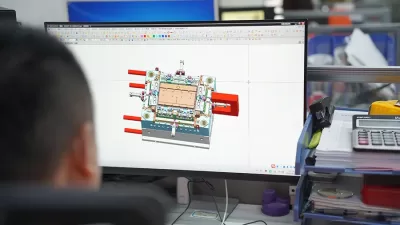

Based on the DFM results, a complete 3D mold design is developed, including the gating system, cooling system, ejector system, and other mold structures to ensure the mold is practical, easy to machine, and easy to maintain.
3. CNC Rough Machining
High-precision CNC machines are used for rough machining of mold bases and mold cores, quickly removing excess material while leaving sufficient allowance for finishing operations.
4. CNC Finishing
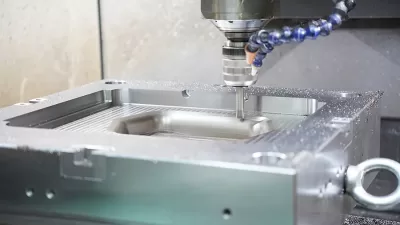
After CNC rough machining, the mold components typically proceed directly to CNC finishing with different cutting tools. This stage mainly focuses on refining the following areas:
- Cavity and core surfaces
- Product appearance areas
- Parting surfaces
- Matching structures such as sliders and lifters
- Critical fitting areas such as shut-offs and interlocking surfaces
For high-tolerance areas, multiple finishing passes may be performed to reduce assembly errors and minimize mold adjustment during trial runs.
5. EDM (Electrical Discharge Machining)
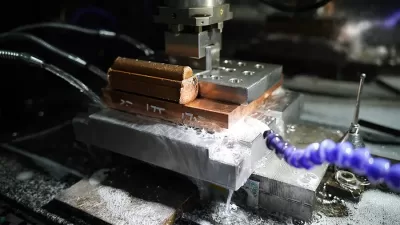
For deep ribs, sharp corners, complex cavities, and other areas difficult to machine directly with CNC tools, EDM machining is used to achieve precise electrical discharge machining while ensuring structural details, dimensional accuracy, and surface quality.
6. WEDM (Wire EDM Machining)
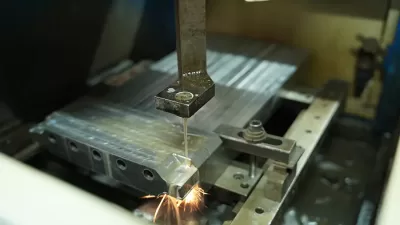
Wire EDM is used to machine insert contours, precision narrow slots, shut-off areas, and other complex structures requiring high dimensional and geometric accuracy.
7. Component Inspection
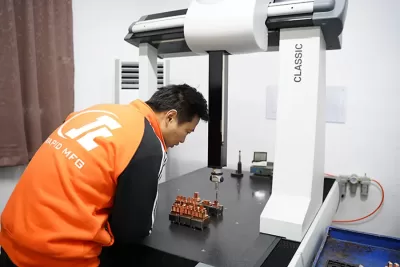

All critical components, including mold cores, inserts, and sliders, are inspected using high-precision coordinate measuring machines (CMM), optical projectors, and other inspection equipment before moving to the next process.
8. Mold Surface Treatment
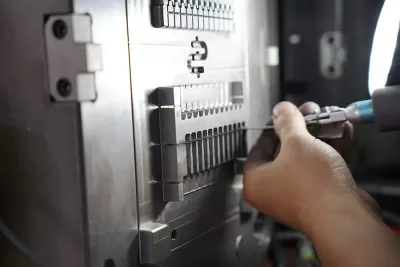
Processes such as polishing, texturing, and surface finishing are carried out according to product appearance and functional requirements, allowing the mold cavity to achieve the required surface finish or texture effect.
9. Mold Fitting
Moving components such as sliders, lifters, and ejector pins are carefully fitted and adjusted to ensure smooth movement without interference while maintaining proper mold closing accuracy.
10. Mold Assembly
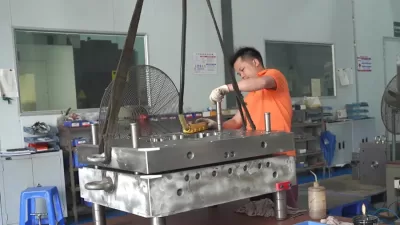
All mold components are assembled step by step according to the assembly drawings. The mold base is secured, and the cooling system sealing, hot runner electrical circuits, and air channels are checked to ensure proper operation.
11. T0 Mold Trial
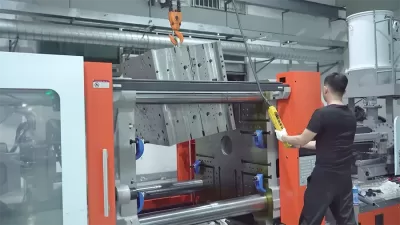
The assembled mold undergoes its first mold trial on the injection molding machine. Processing parameters are adjusted to verify mold movement and product molding performance.
12. Product Inspection
Trial samples undergo full dimensional inspection as well as appearance and performance testing. Results are compared against customer drawings and specifications to evaluate mold condition and product quality.
13. Mold Acceptance
Complete mold trial reports, qualified samples, and FAI (First Article Inspection) reports are provided for customer approval before final acceptance.
14. Mold Packaging and Export
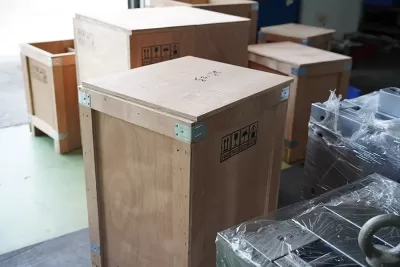
The mold is treated with anti-rust protection and packed with waterproof and shockproof materials before being placed into a standard export wooden crate. Spare parts lists and related documents are included to ensure safe shipment.