

Your injection molding production speed depends on your cycle time. If you want to make parts faster, you must look at every single second of your process. You will learn how to make more parts every hour without losing quality. The speed of your production relies on four main pillars. There are
- Cycle time
- Material properties
- Mold design
- Machine settings.
To find your true production speed, you must know your total cycle time and the number of cavities inside your mold.
You can calculate your output using a very simple mathematical formula:
Hourly output = 3600 ÷ cycle time × cavity count × yield rate × uptime rate
The reason is, there are exactly 3600 seconds in one single hour.
For example, if your cycle time is twenty seconds and you have four cavities, you divide 3600 by twenty. This math gives you 180 cycles per hour. Then, you simultaneously multiply 180 by four to get 720 parts per hour.
Cycle Time: The Core of Injection Molding Production Speed

Filling, Packing, Cooling, and Ejection Time
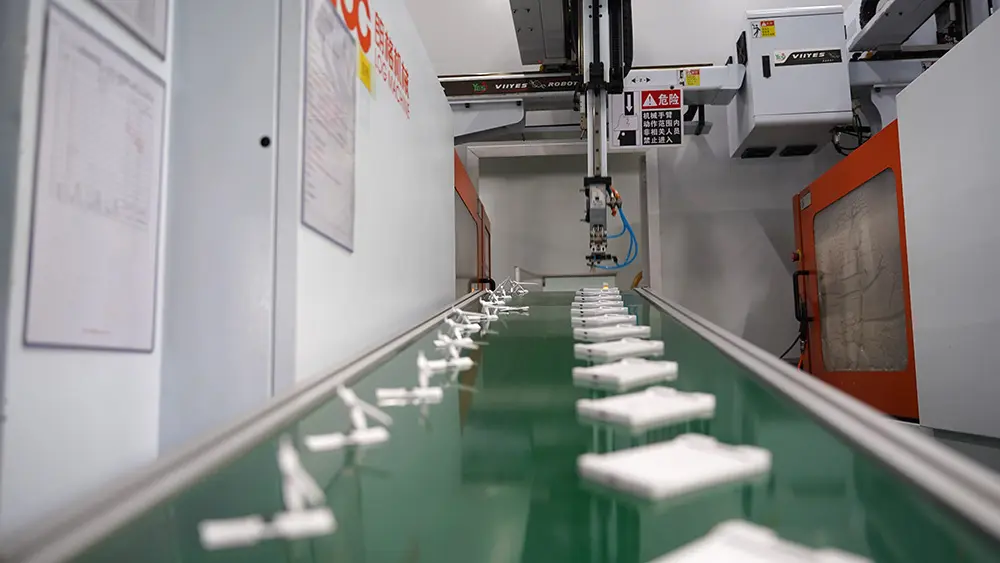
The total cycle contains many important steps. First, the filling stage pushes liquid plastic into the mold space. After filling, the packing stage begins. Injection pressure pushes the plastic into the mold, while holding pressure packs the plastic inside to avoid shrinkage. Then, the plastic must cool down and become solid. Finally, the ejection phase removes the finished part from the machine.
Cooling Time as the Largest Cycle Component
Cooling time consumes more than 70 percent of the total cycle time. For example, if your part takes twenty seconds to make, fourteen seconds is just for cooling the plastic inside the mold.
You must wait for the hot plastic to become hard before the mold can open. If you open the mold too early, the part will bend. Therefore, reducing your cooling time is the absolute fastest way to increase your production speed.
Plasticizing and Screw Recovery Time
The screw inside the barrel melts the plastic pellets and moves them forward. This action prepares the next batch of material. Different plastics need different screw designs to melt efficiently.
For example, a screw with a long transition zone melts hard plastics better. When the screw design matches the material, it melts the plastic fast. So, the machine is ready for the next shot before the cooling phase ends, meaning the machine never has to wait.
Mold Opening, Ejection, and Part Removal
When the part is finally hard, the mold opens to drop the part. If operators manually remove parts inconsistently, it causes the mold to stay open too long and cool down. Because of this delay, your actual output will fall short of theoretical calculations.
Also, changing your mold to make a different product stops the machine from making money. This changeover time can take many hours without a clear plan. Using a system like Single Minute Exchange of Die means you prepare all tools while the old mold runs. It will let your team work like a racing pit crew to swap molds fast and return to production quickly.
Mold Design Factors That Affect Production Speed
Cavity Count and Output per Cycle
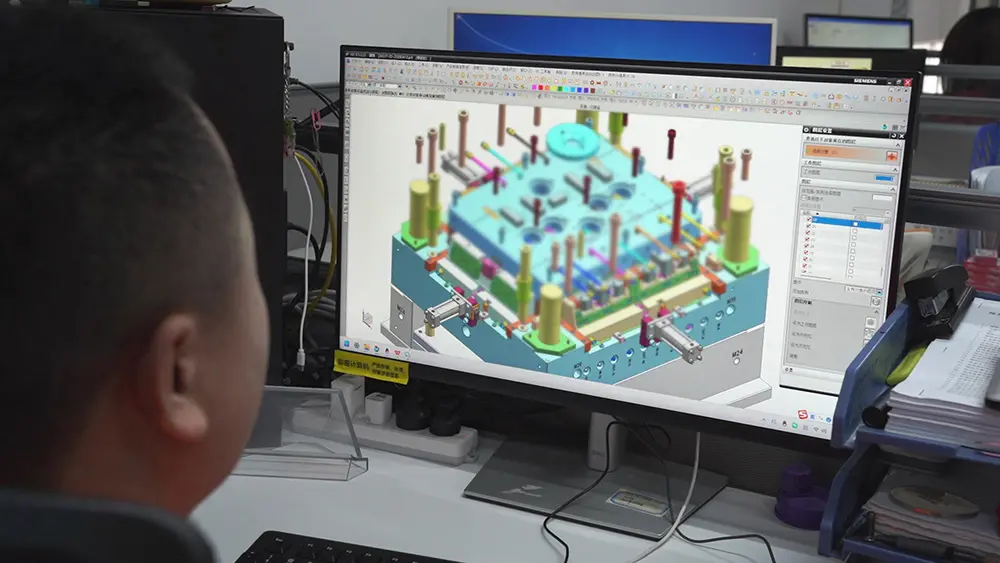
The number of empty spaces inside your mold is your cavity count. A higher cavity count means you make more parts in every single cycle. As shown before, adding more cavities increases your parts per hour very fast. But the problem is, bigger molds need larger machines and stronger cooling systems to maintain a good speed.
Cooling Channel Design and Heat Transfer Efficiency
The design of your cooling channels changes how fast heat leaves the plastic. Straight channels are very easy to drill into the metal. But, they do not reach every corner of a complex part shape, leaving some areas hot for too long.
Instead, you can use conformal cooling channels that follow the exact shape of your part. Water flows through them and removes heat evenly. Therefore, this design allows parts to cool much faster so your production speed goes up.
Impact of Gate Design and Runner Configuration on Flow
Gates and runners are the paths that molten plastic takes to enter the mold cavity. The size of these paths changes your speed. Small gates can make the plastic flow slowly because they create high resistance. But, large gates take longer to freeze, which increases your total wait time. There are many options like a direct pin gate, an edge fan gate, and hot runner systems.
Cavity Layout and Balanced Fill Patterns
If you have a mold with many cavities, the plastic must reach every cavity at the exact same time. It will be a balanced filling pattern. For example, one cavity fills slower than the others, you will increase the cycle time to wait for it. So, the purpose is to ensure runner paths have the same length and thickness.
Venting Systems and Mold Geometry Issue
When hot plastic enters the mold, it removes air out of the empty space. If the air cannot escape, it will get stuck and create high pressure. Moreover, it slows the filling speed. Sometimes, it can even burn the plastic. Good venting systems allow air escape easily through small gaps. Because of this release, the mold fills faster without causing any damage.
Material Properties That Affect Production Speed
Melt Flow and Filling Speed
Different plastics flow at different speeds. The melting process is very important. If the barrel is too cold, the plastic remains thick, moves slowly, and requires more time to fill the mold cavity. You must use the correct heat to keep the liquid plastic flowing fast and smoothly.
Cooling Behavior and Shrinkage
Every type of plastic shrinks a little bit when it cools down. A cold mold sucks heat away from the plastic quickly, letting you open the mold sooner to make more parts. Holding pressure packs the plastic inside to avoid shrinkage. You must balance the cooling speed with the shrinkage risk.
Processing Window and Material Stability
The processing window is the safe temperature range for your plastic. If the barrel is too hot, the plastic can degrade. You must find the right balance to keep the melt rate fast and steady. For instance, materials like nylon need a warmer mold to look good. But the problem is, this warm requirement naturally slows your production speed.
Machine Settings That Affect Production Speed
Barrel and Mold Temperature
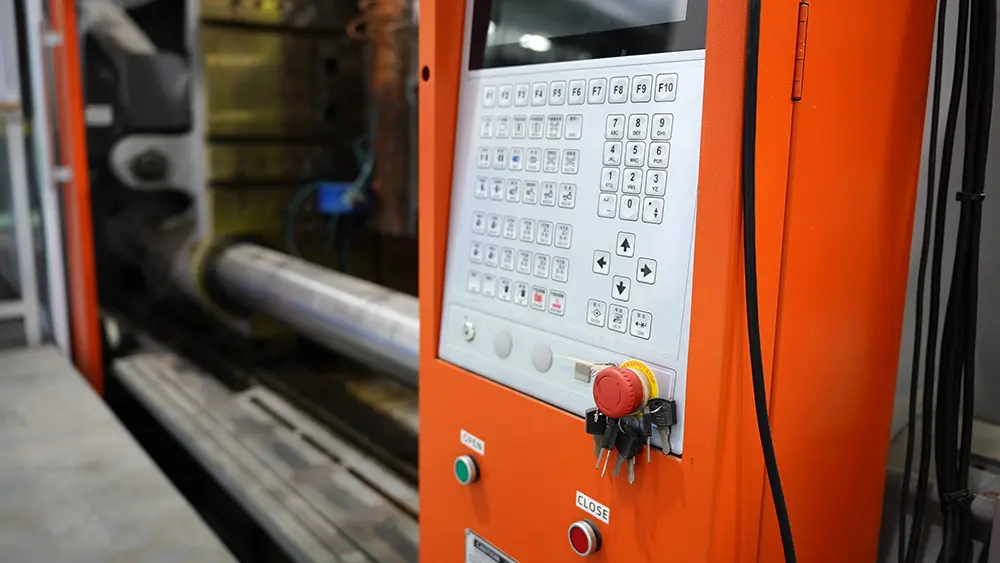
The barrel of your machine has different heating zones set to melt the plastic evenly. As mentioned above, extreme temperatures cause problems. Your mold temperature decides how fast the liquid plastic turns back into a solid part. A cold mold speeds up the process. But, a mold that is too cold can cause surface marks.
Injection Speed and Filling Time
You can easily change how fast the screw moves forward during the injection stage. Fast injection speeds fill mold cavities quickly to produce thin parts before the plastic cools down. You must control this speed carefully, as moving too fast can trap air. Here, you can use multi stage injection speeds where the screw starts fast and then slows down at the end.
Injection Pressure and Holding Pressure
Low injection and holding pressure results in lower density parts and a shorter cycle time with faster cooling. But, it risks sink marks and empty voids. High injection and holding pressure results in higher density parts and improved dimensional stability.
However, it creates a longer cycle time. Moreover, cooling will be slow and potential flashing and warpage. Holding pressure must last until the gate freezes. If you keep it active for too long, just wastes valuable seconds. So, monitor gate freezing to stop the pressure immediately.
Back Pressure and Plasticizing Speed
Back pressure is resistance the screw faces when it moves backward. The purpose is to prepare the next shot of plastic. If you set it very high, the screw takes a long time to return. In result, the plasticizing rate will be slow. High back pressure mixes the material better and removes air. But, you must keep it as low as possible.
Clamping Force and Mold Protection Settings
Clamp force keeps the mold tightly closed when high pressure plastic shoots inside. If the machine takes too long to build up this clamp force, cycle time increases. Similarly, the mold protection system makes the mold slow.
Machine Condition and Response Time
Your injection molding machine must react fast to changes in pressure. Slow hydraulic systems or electric motors create a delay between the injection and holding phases, adding extra time to the cycle. High quality machines use quick valves to change pressure states in milliseconds, lowering cycle times for much faster production runs.
If your machine breaks down, your production speed drops to zero. Regular maintenance keeps hydraulic pumps, heaters, and toggle links working properly. Dirty oil slows down valve movements, adding hidden seconds or hours to the process. Clean, well maintained machines move faster and run without unexpected stops.
Yield and Quality Limits: Why Faster Is Not Always Better
Short Shots and Incomplete Filling
Pushing your machine to run too fast can cause severe quality issues. For instance, moving the screw too fast during injection can trap air and lead to incomplete filling. When the mold does not fill completely, the broken part is called a short shot. Also, if your barrel is too cold, the plastic remains thick and requires more time to fill the cavity, which causes short shots too.
Flash and Overpacking
High injection pressure fills the mold faster. But, extra high injection and holding pressure can cause flashing and warpage. For example, flashing happens when liquid plastic leaks outside. Holding pressure packs the plastic to avoid shrinkage. The purpose is to keep it active for too long after the gate freezes just wastes valuable seconds.
Warpage, Shrinkage, and Dimensional Stability
There is a fine line between speed and structural integrity. If you reduce the cooling time too much, your parts will come out soft and bend easily. Opening the mold too early before the plastic hardens will cause the part to bend.
Flow Lines, Weld Lines, and Cosmetic Defects
A cold mold sucks heat away quickly so you can open it sooner. But the problem is, a mold that is too cold can cause surface marks or cosmetic defects. For instance, some materials like nylon need a warmer mold to look good and avoid surface flaws. This requirement will naturally slow down your maximum speed.
How to Improve Injection Molding Production Speed
Developing Scientific Molding Curves
Scientific molding uses exact data to find the best machine settings by running tests. These tests create curves for viscosity, gate freeze, and pressure loss. A gate freeze study shows exactly when plastic stops flowing into the cavity. It allows you to turn off holding pressure and avoid wasting time on a long holding stage. Relying on pressure curves replaces guessing with smart, fact based choices that trim useless seconds from the cycle.
Implementing Automated Inspection to Reduce Scrap
When producing parts rapidly, a single mistake can quickly create hundreds of defective items. Automated inspection cameras and sensors sit right next to the machine, evaluating every part the moment the mold opens.
If you do this, short shots will be separated immediately. Therefore, no time will be wasted. Subsequently, packing bad items keeps speeds high. You only count good products toward your true speed.
Reducing Downtime Through Predictive Maintenance
Waiting for a total breakdown stops production for days and destroys your speed average. Predictive maintenance fixes problems before they happen by using sensors to monitor parts such as pump and bearing temperatures.
Monitoring Real Time Data
Maintaining high production speeds requires tracking data minute by minute via monitoring software. This software connects to machines and logs cycle times. If a cycle slows by even a second, perhaps due to a clogged water line, the software instantly alerts the team. It allows them to resolve delays before hundreds of parts are compromised.
Also, using a robot arm to remove parts removes human error. Human operators do not always move at the same speed, which disturbs the temperature balance of the mold because it stays open too long and cools down too much. Ensuring robots work consistently means speeds remain exactly the same every time.
Conclusion
To increase your injection molding production speed, you must balance mold cooling, machine pressures, and regular maintenance. Use real time data and automation to keep your cycles consistent. Faster production is valuable, but only when your parts remain perfect and free of defects. Simultaneously, quality must always limit your maximum speed. True speed means making good parts that you can sell. By checking every single step carefully, you can make your process fast and highly successful.