


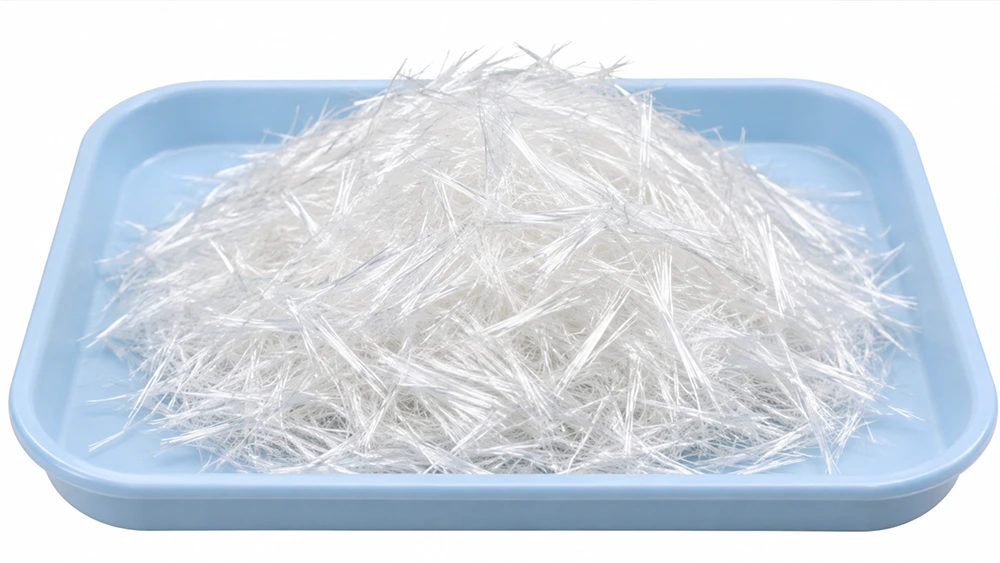
Fiberglass is a material made by drawing molten glass into fine fibers. It offers high tensile strength, good electrical insulation, and corrosion resistance. Fiberglass is widely used to reinforce plastics, manufacture composite materials, and provide thermal insulation. This article covers its types, properties, manufacturing process, and common uses.
1. What Is Fiberglass?
Fiberglass generally refers to two related materials: fine fibers made from molten glass, and composite materials made by combining glass fibers with resin. The latter is commonly known as glass fiber-reinforced plastic (GFRP). GFRP is a type of fiber-reinforced plastic (FRP).
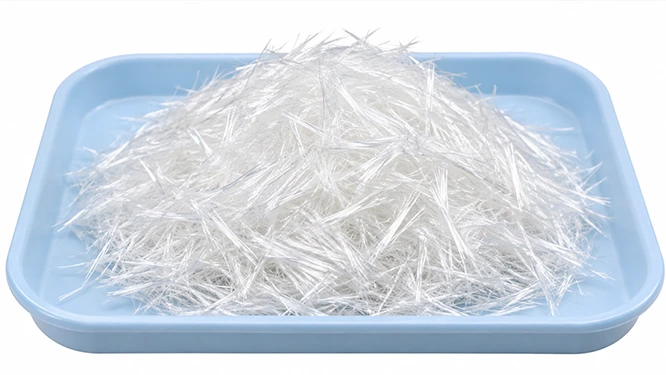

Glass fibers primarily provide reinforcement, while the resin holds the fibers together, transfers loads, and gives the material its final shape. Together, they form composite materials used to manufacture industrial parts with good mechanical properties.
2. What Are the Types and Forms of Fiberglass?
Fiberglass can be classified by its glass composition and physical form. Different glass fiber types vary in strength, corrosion resistance, and cost, while their physical forms influence how they are processed.
Common Types of Fiberglass
E-Glass (Electrical Glass): The most widely used type of industrial glass fiber. It offers good electrical insulation, mechanical properties, and cost-effectiveness, making it a common choice for composite materials and reinforced engineering plastics.
S-Glass (High-Strength Glass): Generally has higher tensile strength and elastic modulus than E-Glass. It is used in aerospace components, high-performance structures, and other applications with demanding mechanical requirements.
C-Glass (Chemical-Resistant Glass): Known for its chemical resistance, C-Glass is commonly used in corrosion-resistant composites and protective surface layers.
Common Forms and Products of Fiberglass
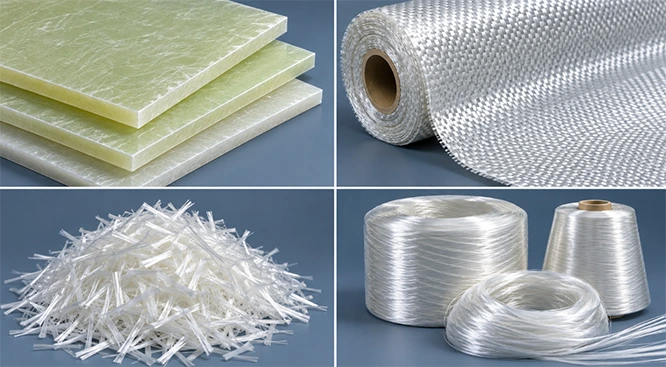
Fiberglass Sheets: Typically produced by laminating glass fiber reinforcements with resin. They offer good rigidity and electrical insulation and are commonly used for structural panels and electrical insulation boards.
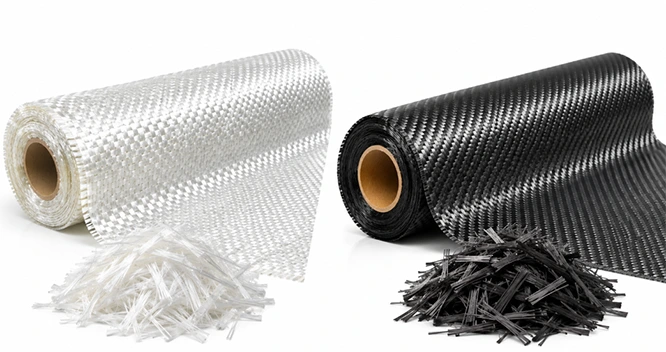
Fiberglass Cloth: Made by weaving continuous glass fibers into fabric. It is primarily used for composite laminates and structural reinforcement.
Chopped Glass Fibers: Glass fibers cut into short lengths. They are commonly added to engineering plastics as reinforcement fillers, particularly for injection molding.
Continuous Glass Fibers: Supplied as continuous strands or yarns, these fibers are suitable for composite manufacturing processes such as pultrusion and filament winding.

3. What Are the Properties of Fiberglass?
The main properties of fiberglass are summarized below:
| Property | Key Characteristics |
| Tensile Strength | High tensile strength, making it suitable for reinforcing composite materials |
| Density | Approximately 2.5–2.6 g/cm³ for common E-Glass, lower than steel |
| Stiffness | Has a relatively high elastic modulus and can improve composite stiffness, particularly along the fiber direction |
| Corrosion Resistance | Good resistance to many environments, although it is not resistant to all chemicals |
| Electrical Insulation | Generally provides good electrical insulating properties |
| Heat Resistance | Glass fibers can withstand high temperatures, but the service temperature of a composite is limited by its resin system |
| Machinability | Glass fibers are abrasive and can increase wear on molds and cutting tools during processing |
The properties of glass fibers do not necessarily reflect the performance of the finished composite. Fiber content, orientation, resin type, and manufacturing process all influence how the final part performs.
4. How Is Fiberglass Made?
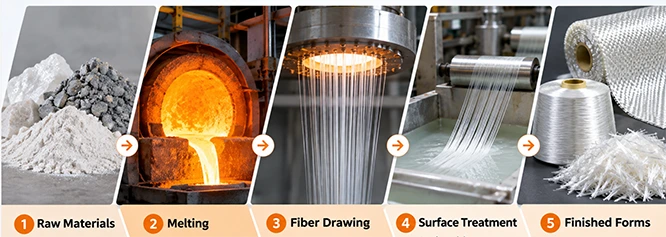
Fiberglass manufacturing involves several main steps: melting the raw materials, drawing the fibers, cooling, and surface treatment.
First, silica sand, limestone, and other mineral materials are mixed in specific proportions and melted at approximately 1,400–1,600°C to form molten glass. The molten glass then passes through a platinum-rhodium alloy bushing containing numerous tiny openings. It is drawn at high speed into continuous filaments, typically ranging from a few micrometers to just over 20 micrometers in diameter.
After cooling, the glass fibers receive a surface treatment known as sizing. This coating helps reduce fiber damage and improves bonding with resin. Finally, the fibers are processed into yarns, woven fabrics, chopped strands, or other forms for subsequent composite manufacturing.

5. Fiberglass vs. Carbon Fiber: What’s the Difference?
Fiberglass is a reinforcing fiber made primarily from glass, while carbon fiber is a high-performance reinforcing fiber composed mainly of carbon. Both are widely used in composite manufacturing, but they differ significantly in weight, stiffness, cost, and electrical properties.
| Property | Fiberglass | Carbon Fiber |
| Main Composition | Silicate glass | Carbon |
| Density | Approx. 2.5–2.6 g/cm³ | Approx. 1.7–1.9 g/cm³ |
| Tensile Strength | High | Generally high, depending on fiber grade |
| Stiffness | Relatively lower | Generally much higher |
| Electrical Properties | Good electrical insulation | Generally electrically conductive |
| Material Cost | Lower | Higher |
| Typical Applications | Insulation materials, boat hulls, industrial structural components | Aerospace structures, sporting goods, high-performance components |

6. What Is Fiberglass Used For?
The uses of fiberglass depend largely on its physical form and how it is combined with plastics, resins, or other materials.
Reinforcing Engineering Plastics: Short glass fibers are added to thermoplastics such as PA, PBT, PPS, and PEEK to improve their stiffness, strength, and dimensional stability.
Manufacturing Fiber-Reinforced Composites: Fiberglass cloth, mats, and continuous fibers can be combined with polyester, epoxy, and other resins to produce glass fiber-reinforced composite materials.
Thermal Insulation: Glass fibers can be processed into glass wool, insulation mats, and similar products. The numerous small air pockets within these materials help reduce heat transfer, making them suitable for insulating buildings, pipes, and industrial equipment.
Electrical Insulation: Fiberglass provides good electrical insulation and can be made into insulating fabrics and sleeves. It can also be combined with epoxy resin to produce electrical insulation laminates such as FR-4.
Reinforcing Cement and Construction Materials: Alkali-resistant glass fibers can be added to cement-based materials to improve crack resistance and toughness.
FAQs
Q1: What Is Fiberglass Resin?
Fiberglass resin generally refers to resin materials used with glass fibers. Common types include polyester resin, epoxy resin, and vinyl ester resin.
Q2: Is Fiberglass Stronger Than Carbon Fiber?
Carbon fiber generally offers higher stiffness and specific strength, although actual strength depends on the fiber grade. Fiberglass is more affordable and offers advantages in electrical insulation and general structural reinforcement.
Q3: What Is a Fiberglass Repair Kit?
A fiberglass repair kit is a set of materials used to repair fiberglass composite products. It typically contains resin, hardener, and fiberglass cloth or mat for repairing localized cracks, holes, and surface damage.
Q4: What Is in Fiberglass?
Fiberglass is primarily made of silicon dioxide (SiO₂) and other inorganic oxides, including aluminum oxide and calcium oxide. The exact chemical composition varies depending on the type of glass fiber, such as E-Glass or S-Glass.