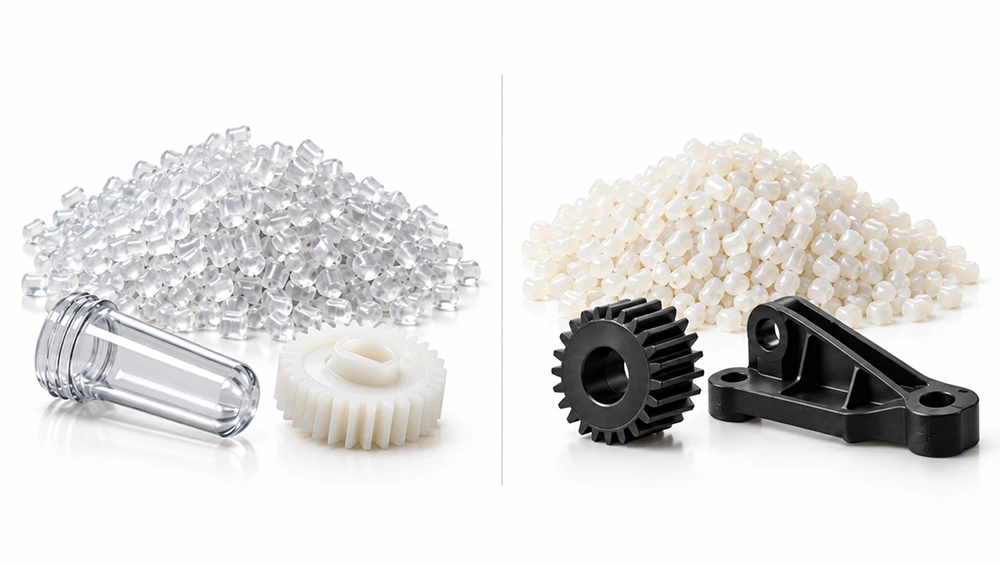
In engineering material selection, hardness, stiffness, and strength are often confused, but they describe different material properties. Simply put, hardness reflects a material’s resistance to indentation, scratching, and localized deformation; stiffness describes its resistance to elastic deformation; and strength indicates how much stress a material can withstand before yielding or breaking.
1. What Is the Difference Between Hardness, Stiffness, and Strength?
There is no simple rule that “the harder a material is, the stronger it is” or “the stronger it is, the stiffer it is.” The table below provides a quick comparison of their key differences.
| Comparison | Hardness | Stiffness | Strength |
| What it represents | Resistance to localized surface deformation | Resistance to elastic deformation | Resistance to yielding or fracture |
| Main concerns | Scratching, indentation, wear | Bending, elongation, deflection | Load-bearing, yielding, failure |
| Common metrics | Rockwell, Vickers, Shore, etc. | Young’s Modulus | Yield Strength, Tensile Strength |
| A higher value means | The surface is more resistant to indentation | Less deformation under the same conditions | The material can withstand higher stress |
2. What Is Hardness?
Hardness describes a material’s resistance to indentation, scratching, and localized plastic deformation. It mainly reflects how the material behaves when a localized area is subjected to contact loading.
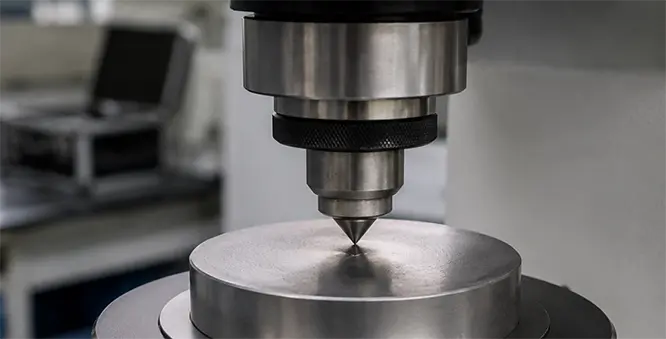
1) Common Hardness Testing Methods
Different materials require different hardness testing methods. Common methods include:
Rockwell Hardness: Commonly used for steel, aluminum, and other metals. It is fast and convenient for production testing.
Brinell Hardness: Often used for castings, forgings, and metals with relatively non-uniform microstructures.
Vickers Hardness: Suitable for thin parts, small test areas, and a wide range of metallic materials.
Shore Hardness: Mainly used for plastics, rubber, and elastomers.
Because different hardness tests use different indenters, loads, and scales, hardness values from different testing systems cannot simply be compared directly.
2) Why Is Hardness Important?
For parts exposed to friction, contact, or repeated wear, hardness can directly affect service life.
Gear teeth, shafts, guideways, and mold cavities, for example, typically require sufficient surface hardness to reduce indentation and wear. However, excessively high hardness may also come with reduced toughness, so engineering design should not simply aim for the highest possible hardness.
3. What Is Stiffness?
Stiffness describes the ability of a material or component to resist elastic deformation. The higher the stiffness, the less elastic deformation it generally undergoes under the same loading conditions. The key term here is elastic deformation: once the load is removed, the material can return to its original shape.
1) Young’s Modulus and Material Stiffness
In engineering, Young’s modulus is commonly used to describe the stiffness of a material under tensile or compressive loading:
E = Stress / Strain
Within the elastic range, the higher the Young’s modulus, the more resistant the material is to stretching or compression.
2) Material Stiffness and Part Stiffness Are Not the Same
Young’s modulus is a material property, but the actual deformation of a component also depends heavily on its structural design.
Factors that affect part stiffness include:
- Wall thicknessand cross-sectional dimensions
- Part length
- Reinforcing ribs
- Cross-sectional shape
- Load direction and support conditions
Even when the same plastic material is used, increasing ribbing, optimizing the cross-section, or adjusting wall thickness can significantly reduce part deflection.
4. What Is Strength?
Strength describes how much stress a material can withstand before permanent deformation or fracture occurs. Different loading conditions correspond to different types of strength.
1) Yield Strength
Yield strength is the stress at which a material begins to undergo noticeable permanent plastic deformation.
If the applied stress remains below the yield point, the material can generally return to its original shape after unloading. Once the yield point is exceeded, however, the part may remain permanently bent or elongated even after the load is removed.
2) Tensile Strength
Tensile strength usually refers to ultimate tensile strength, which is the maximum engineering stress a material can withstand during a tensile test.
Yield strength focuses more on when permanent deformation begins, while ultimate tensile strength represents the maximum stress reached during tensile loading.
3) Other Common Types of Strength
Depending on how a part is loaded in service, other strength properties may also need to be considered, including compressive strength, shear strength, flexural strength, and fatigue strength.
Saying that a material has “high strength” is therefore quite general. In actual design, the dominant type of loading must first be identified.
5. Hardness vs. Stiffness vs. Strength: A Detailed Comparison
1) Hardness vs. Strength
Hardness and strength can be related, but they are not the same thing.
For example, after heat treatment, some steels show increases in both hardness and tensile strength. As a result, hardness can sometimes be used to roughly estimate strength within a specific material system. However, this relationship generally applies only to the same or closely related material families.
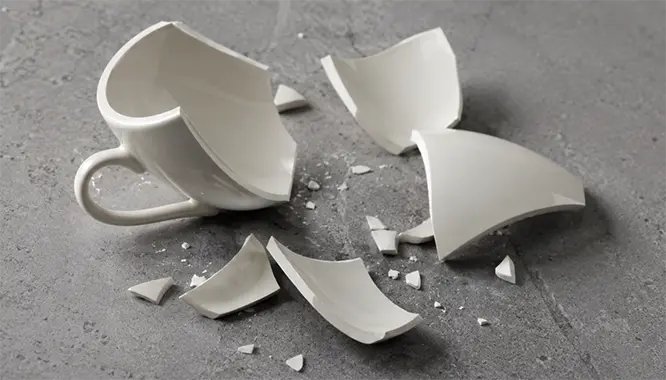
A highly hard material may also be very brittle. Ceramics, for example, can have extremely high hardness yet still fracture suddenly under impact.
2) Strength vs. Stiffness
Strength and stiffness are two of the most commonly confused mechanical properties.
Two materials may have similar strength but behave very differently in terms of deformation before yielding or failure. In other words, a part may be “strong enough not to break” yet still deform so much elastically that it no longer performs its intended function.
For precision machine structures, locating fixtures, or optical equipment supports, for instance, even a deflection of only a few tenths of a millimeter may already exceed allowable limits, despite the actual stress remaining well below the material’s yield strength.
3) Hardness vs. Stiffness
High hardness does not necessarily mean that a component will resist bending.
A slender metal shaft with a hardened surface, for example, may have very high surface hardness. But if its diameter is too small or its unsupported length is too great, it can still bend noticeably under load.
Likewise, changing the heat-treatment condition of certain metals can significantly increase hardness, while Young’s modulus may change only slightly by comparison.
6. Understanding Stiffness and Strength Through the Stress-Strain Curve
A stress-strain curve provides a clear way to distinguish stiffness from strength. Stiffness is mainly reflected by the slope of the curve in the elastic region, while strength is represented by stress values such as yield strength and ultimate tensile strength.
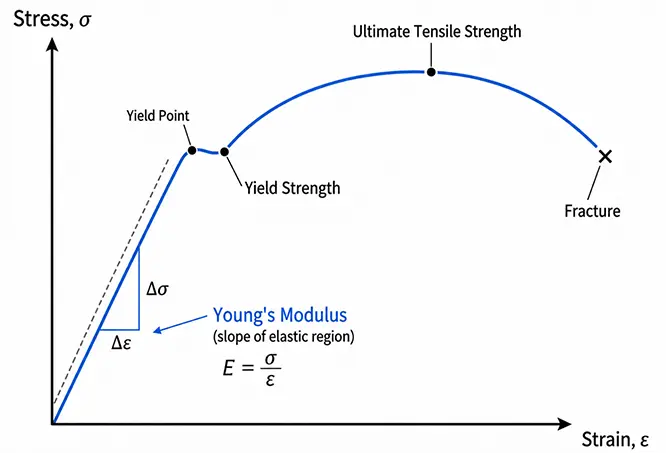
At the beginning of the curve, within the elastic region, the slope corresponds to Young’s modulus. A steeper slope indicates higher stiffness, meaning less strain is produced under the same stress.
As the stress continues to increase:
At the Yield Point, the material begins to undergo noticeable permanent deformation. The curve then rises toward the Ultimate Tensile Strength, where the maximum engineering stress is reached. With further tensile loading, the material eventually reaches Fracture.
7. Comparison of Hardness, Stiffness, and Strength in Common Engineering Materials
Hardness, stiffness, and strength do not increase or decrease together across different engineering materials. Two materials can differ significantly in strength while having very similar stiffness. The following tables compare several commonly used metals and engineering plastics.
Common Metal Materials
| Material | Young’s Modulus | Yield Strength | Tensile Strength | Typical Hardness |
| 6061-T6 Aluminum | ≈69 GPa | ≈276 MPa | ≈310 MPa | ≈95 HB |
| 7075-T6 Aluminum | ≈72 GPa | ≈503 MPa | ≈572 MPa | ≈150 HB |
| 304 Stainless Steel | ≈193 GPa | ≈205 MPa | ≥515 MPa | ≈90 HRB |
| Ti-6Al-4V Titanium | ≈110 GPa | ≈830 MPa | ≈900 MPa | ≈36 HRC |
Common Engineering Plastics
| Material | Tensile Modulus | Typical Tensile Strength | Typical Hardness | Key Characteristics |
| ABS | ≈2.0–2.5 GPa | ≈40–45 MPa | ≈R100–110 | Balanced overall properties, easy to injection mold |
| PC | ≈2.0–2.4 GPa | ≈55–75 MPa | ≈M70 / R scale | High toughness and impact resistance |
| PA6 | ≈2.5–3.0 GPa | ≈80 MPa | ≈R115–120 | Relatively high strength and good wear resistance |
| POM / Acetal | ≈2.7–3.1 GPa | ≈65–70 MPa | ≈M80–90 | Good rigidity, low friction, good dimensional stability |
| PEEK | ≈3.4 GPa | ≈95–100 MPa | ≈R126 / M99 | High strength, high-temperature resistance, and chemical resistance |
Note: The values shown above are typical reference values. Actual properties vary depending on material grade, heat-treatment condition, filler content, temperature, moisture content, and testing standard. For engineering design, always refer to the datasheet for the specific material grade.
8. Case Studies: Practical Applications of Hardness, Stiffness, and Strength in Parts
Steel Gear
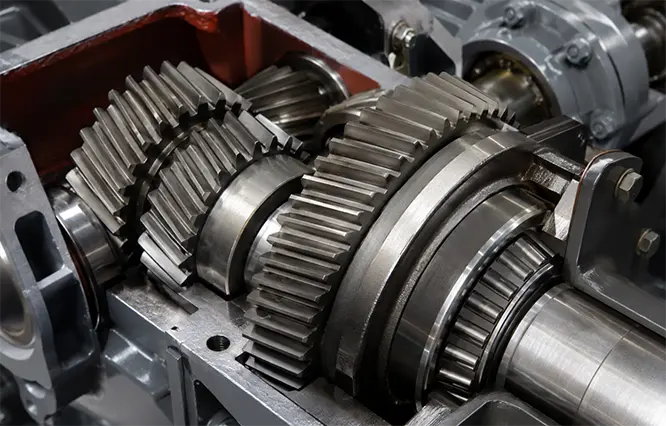
During operation, gear teeth are continuously subjected to contact pressure and friction. Their surfaces therefore require sufficient hardness to resist wear and indentation.
At the same time, the tooth roots and gear body must provide adequate strength to prevent bending, plastic deformation, or fracture under torque and impact loading.
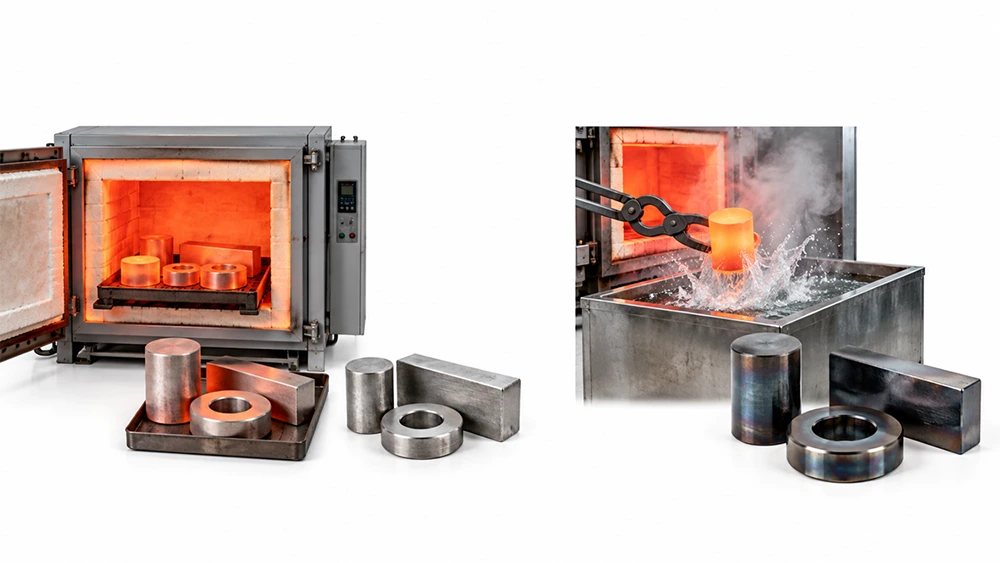
For this reason, some steel gears are carburized or induction hardened to create a hard surface while retaining sufficient strength and toughness in the core.
Injection-Molded Nylon Bracket
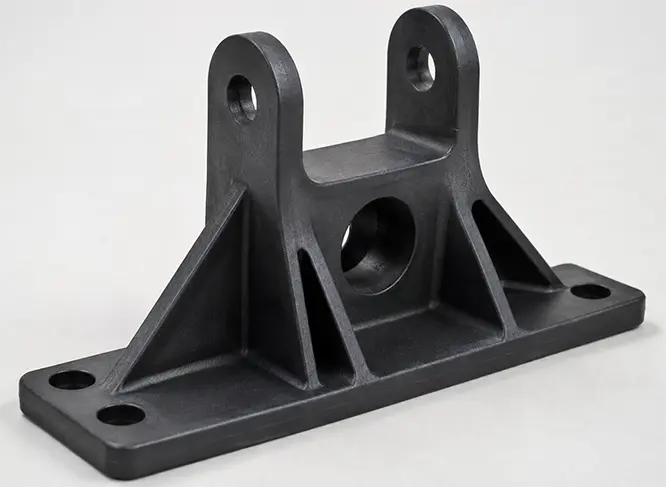
For a load-bearing plastic bracket, the material must first provide sufficient strength to prevent fracture during installation or service.
In many cases, however, the real design limitation is stiffness. If the bracket has walls that are too thin or an unsupported span that is too long, excessive deflection may occur even when the material itself is strong enough.
The design may therefore use reinforcing ribs, optimized cross-sections, or glass-fiber-reinforced nylon to increase part stiffness without significantly increasing weight.
Conclusion
Hardness, stiffness, and strength describe a material’s resistance to surface deformation, elastic deformation, and yielding or fracture, respectively. They are related, but one cannot replace another.
In practical design, the goal should not simply be to choose a “harder” or “stronger” material. The more important question is which failure mode the part is most likely to experience—and which material property should therefore take priority.