

What Are High-Temperature Plastics?
High-temperature plastics are plastic materials that can maintain useful performance in elevated-temperature environments. Compared with general-purpose plastics, they usually offer better heat resistance, mechanical strength, dimensional stability, chemical resistance, and long-term reliability.
In real applications, a high-temperature plastic is not selected only because it has a high melting point. The more important questions are whether the part can keep its shape, hold mechanical load, resist creep, and maintain stable performance during actual service.
For example, a plastic part may briefly survive a high temperature during testing, but that does not mean it can work reliably for months or years under heat, pressure, vibration, chemicals, or assembly stress. This is why material selection for high-temperature applications must consider both the temperature level and the working environment.
High-temperature plastics are commonly used in automotive parts, medical devices, electronic connectors, electrical insulation components, industrial equipment, aerospace parts, and fluid-handling systems.
High-Temperature Plastics vs Short-Term Heat-Resistant Plastics
Some common plastics can resist heat for a short time, but they are not always suitable for long-term high-temperature use.
Materials such as ABS, PP, PC, PA, and PBT may work in applications with brief heat exposure. For example, they may tolerate hot water contact, short-term hot air exposure, or a temporary temperature spike. However, under continuous heat or mechanical load, these materials may soften, warp, creep, or lose dimensional accuracy.
This does not mean these plastics are poor materials. In many projects, they are practical and cost-effective. The key point is that they are usually better described as heat-resistant plastics for limited conditions, not high-temperature plastics for demanding long-term service.
True high-temperature plastics are used when a part must maintain performance under more severe conditions, such as continuous heat, high load, chemical exposure, repeated sterilization, tight tolerances, or demanding electrical requirements.
Overview of Common High-Temperature Plastics
| Material | Key Properties | Common Applications | Relative Cost |
| PEEK | Excellent heat resistance, high strength, chemical resistance, wear resistance | Gears, bearings, medical parts, aerospace components | Very High |
| PEI | Heat resistance, dimensional stability, flame resistance, electrical insulation | Connectors, electrical housings, medical devices | High |
| PPS | Heat resistance, chemical resistance, low moisture absorption, dimensional stability | Automotive parts, pumps, valves, electrical components | Medium to High |
| PPSU | Toughness, hydrolysis resistance, repeated sterilization resistance | Medical devices, food-contact parts, hot-water components | High |
| PSU | Heat resistance, transparency, hydrolysis resistance | Fluid components, medical parts, electrical parts | Medium to High |
| LCP | Excellent flow, low warpage, high dimensional stability | Thin-wall connectors, electronic components, precision parts | High |
| PTFE | Low friction, chemical resistance, high temperature resistance | Seals, gaskets, sliding parts, insulation parts | Medium to High |
Material cost can vary commonly depending on the grade, supplier, reinforcement, flame-retardant rating, certification requirements, and order volume. For a general material guide, relative cost is usually more useful than fixed USD/kg pricing.
PEEK
PEEK is one of the highest-performance high-temperature plastics. It combines excellent heat resistance, high mechanical strength, wear resistance, chemical resistance, and good dimensional stability. It is often selected for demanding parts where common engineering plastics cannot meet the working conditions.
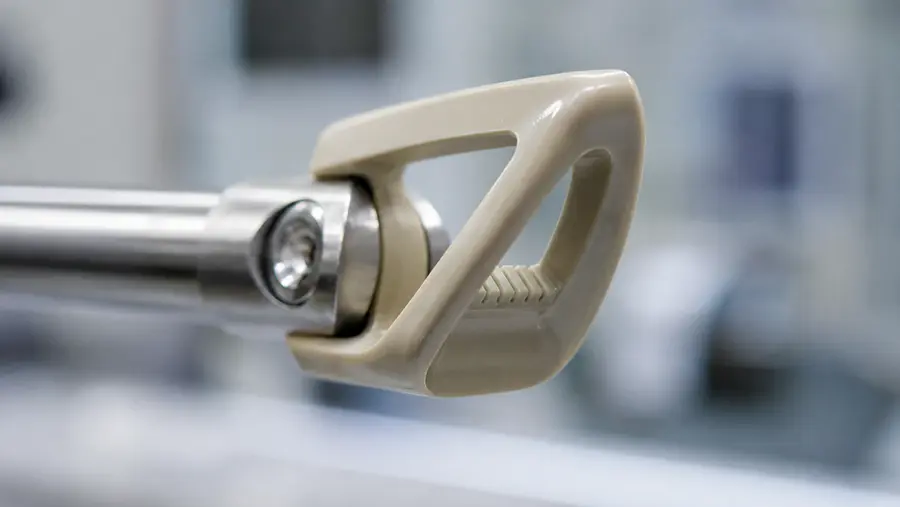

PEEK is commonly used in gears, bearings, bushings, seals, medical components, aerospace parts, and high-performance industrial components. In some applications, it can replace metal because it is lighter, corrosion-resistant, and electrically insulating.
The main limitation of PEEK is cost. It is much more expensive than common engineering plastics, and it also requires more demanding processing conditions. Injection molding PEEK usually requires high melt temperature, high mold temperature, proper drying, and stable processing control.
Typical applications include:
- High-performance gears
- Bearings and bushings
- Medical device components
- Aerospace brackets and structural parts
- Industrial wear-resistant components
- Seals and high-temperature functional parts
PEEK is suitable for projects where long-term reliability, heat resistance, strength, and chemical resistance are more important than material cost.
PEI
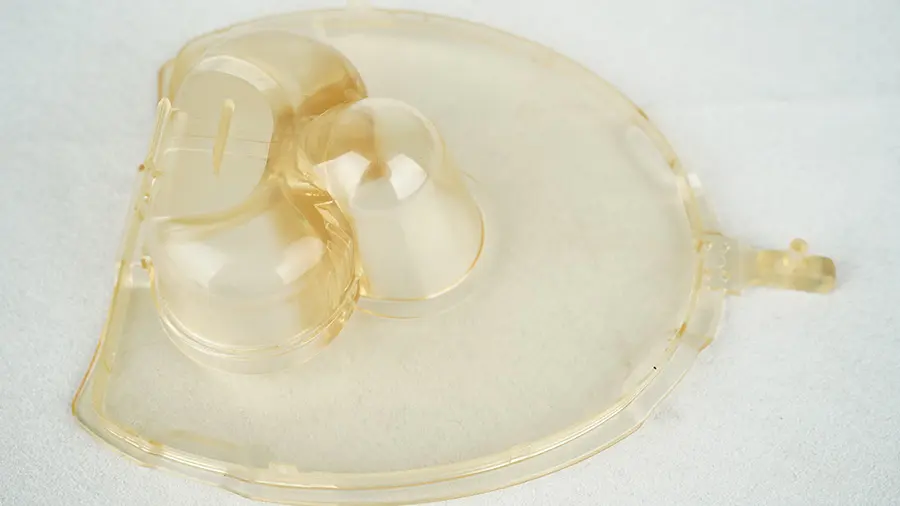
PEI is a high-temperature plastic known for heat resistance, dimensional stability, flame resistance, and good electrical insulation. Many PEI grades have a recognizable amber transparent appearance, which is useful when a part requires both performance and some level of visual inspection.

PEI is commonly used in electrical and electronic components, medical devices, connectors, insulating housings, and structural parts. It is especially useful when the part needs stable dimensions, good stiffness, and flame-retardant performance.
Compared with PEEK, PEI is usually more cost-effective, but it does not offer the same level of chemical resistance or wear resistance. For many electrical and medical device applications, however, PEI provides a practical balance between performance and cost.
Typical applications include:
- Electrical connectors
- Insulating housings
- Medical device parts
- Flame-retardant electronic components
- High-temperature structural parts
- Transparent or semi-transparent functional components
PEI is a good option when a part needs heat resistance, electrical insulation, dimensional stability, and flame resistance without moving directly to the highest-cost materials.
PPS
PPS is a high-temperature plastic commonly used in automotive, electrical, and industrial applications. It offers good heat resistance, chemical resistance, dimensional stability, and low moisture absorption. These properties make it suitable for parts that must remain stable in hot, oily, or chemically exposed environments.
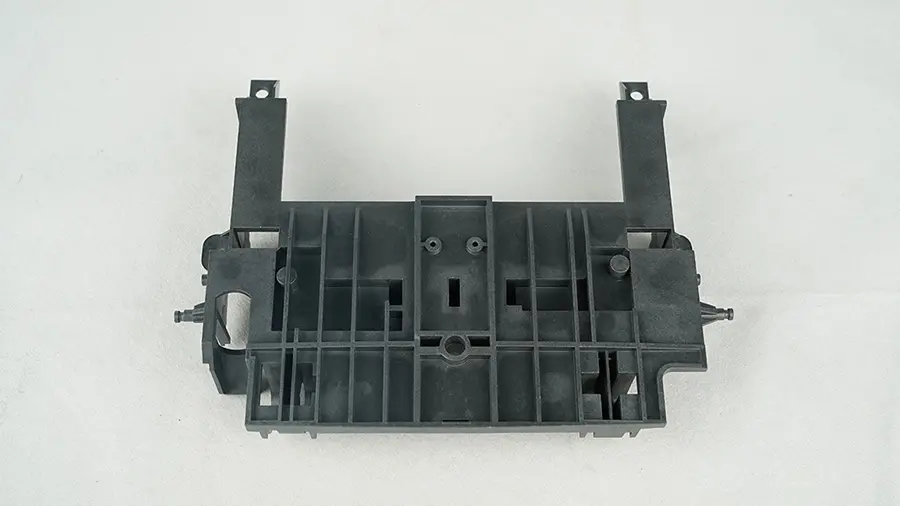
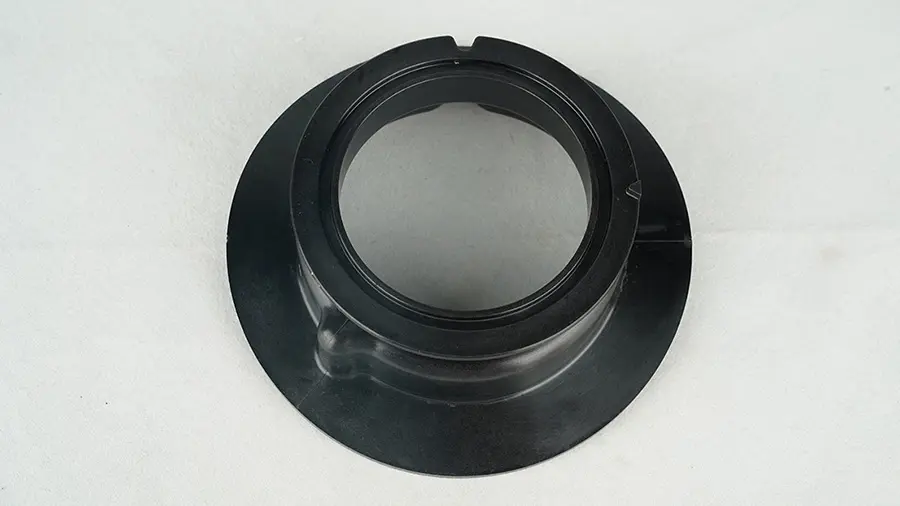
PPS is especially common in automotive under-hood components, pump parts, valve parts, sensors, electrical connectors, and industrial components. It performs well around oil, fuel, coolant, and many chemicals, which is why it is often used in functional parts rather than appearance-focused products.
Many PPS grades are glass-fiber reinforced. Reinforcement improves stiffness, strength, and dimensional stability, but it can also affect mold flow, surface finish, and fiber orientation. For precision injection molded parts, mold design and processing control are important.
Typical applications include:
- Automotive sensor housings
- Pump and valve components
- Electrical connectors
- Engine-area components
- Chemical-resistant industrial parts
- Dimensional-stable functional components
PPS is often selected when a project needs heat resistance and chemical resistance at a more practical cost level than premium materials such as PEEK.
PPSU
PPSU is a high-temperature plastic with strong toughness, hydrolysis resistance, and repeated sterilization resistance. It is often used in medical, healthcare, food-contact, and hot-water applications.
One of the main advantages of PPSU is that it performs well in hot water, steam, and repeated sterilization environments. Some plastics may become brittle, cloudy, cracked, or dimensionally unstable after repeated exposure to moisture and heat. PPSU is more reliable in these conditions.
PPSU also has good impact resistance, which makes it useful for reusable medical and healthcare components. It is often chosen when a part needs both toughness and heat resistance.
Typical applications include:
- Sterilizable medical components
- Surgical instrument parts
- Dental device components
- Hot-water fittings
- Food-contact parts
- Reusable healthcare components
- Sterilization trays and related parts
PPSU is suitable for parts that must handle heat, moisture, impact, and repeated cleaning or sterilization.
PSU
PSU is a high-temperature plastic with good heat resistance, hydrolysis resistance, transparency, and dimensional stability. It is commonly used in fluid-handling parts, medical components, electrical parts, and transparent or semi-transparent industrial components.
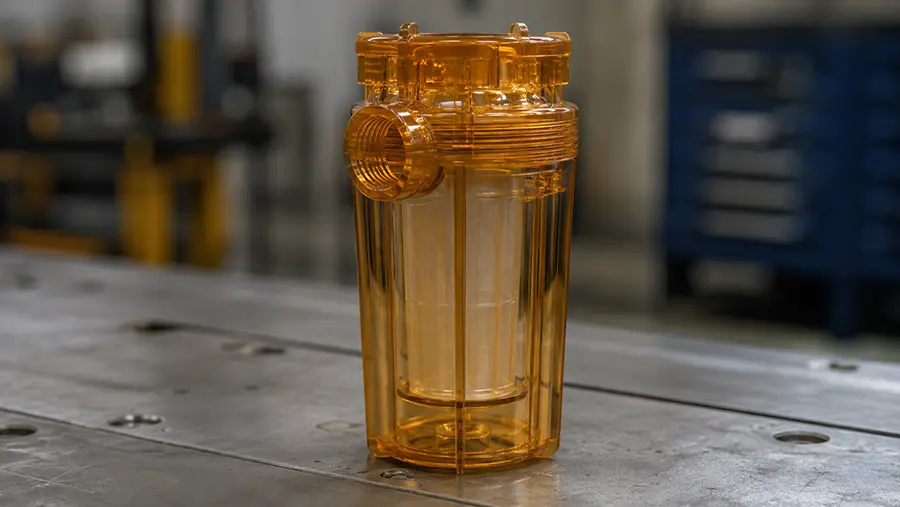
Compared with PPSU, PSU usually has lower toughness and impact resistance. However, it can still be a good material choice when the application requires heat resistance, transparency, and resistance to hot water or steam, but does not require the higher toughness of PPSU.
PSU is often used in filter housings, fluid connectors, medical device parts, electrical insulating components, and transparent functional parts. Its transparency can be helpful when users need to see liquid flow, internal structures, or assembly conditions.
Typical applications include:
- Fluid-handling components
- Filter housings
- Medical device parts
- Transparent or semi-transparent housings
- Electrical insulating parts
- Hot-water system components
PSU is useful when a part needs heat resistance and transparency, especially in fluid or medical-related applications.
LCP
LCP is a high-temperature plastic mainly known for excellent flow, low warpage, and high dimensional stability. It is especially valuable for thin-wall precision parts and small electronic components.
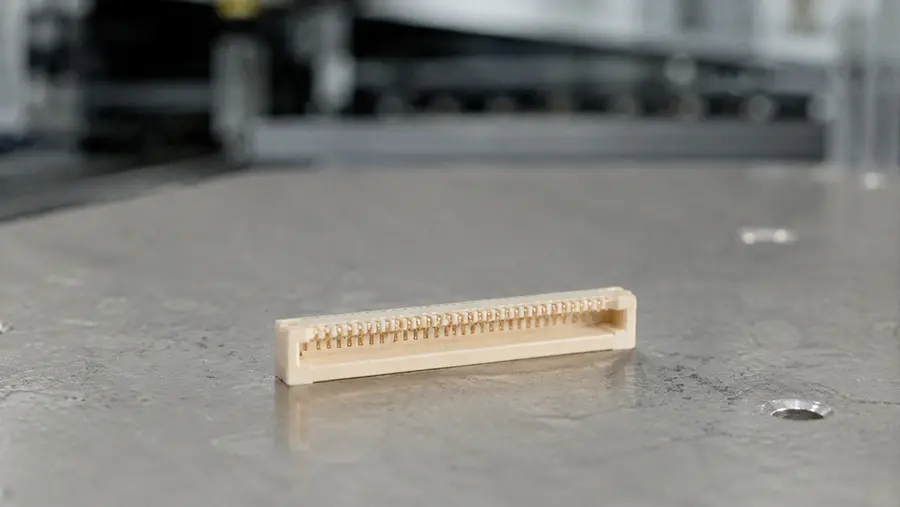
Because LCP flows very well during molding, it can fill thin and complex cavities that may be difficult for many other plastics. This makes it common in connectors, sockets, bobbins, electronic components, and compact precision parts with small features.
LCP also has low shrinkage and good dimensional stability. For high-density electronic parts, this is important because even small deformation can affect assembly, contact position, and electrical performance.
However, LCP is not usually selected for large general structural parts. Its value is strongest in small, thin-wall, precise, and high-volume electronic components.
Typical applications include:
- Thin-wall connectors
- Precision sockets
- Coil bobbins
- Electronic components
- Small complex molded parts
- High-density electrical parts
- Miniature precision housings
LCP is suitable for projects where the part is small, thin, precise, and difficult to mold with ordinary engineering plastics.
PTFE
PTFE is commonly known for low friction, excellent chemical resistance, and high temperature resistance. It is commonly used in seals, gaskets, valve seats, sliding parts, insulation parts, and corrosion-resistant components.
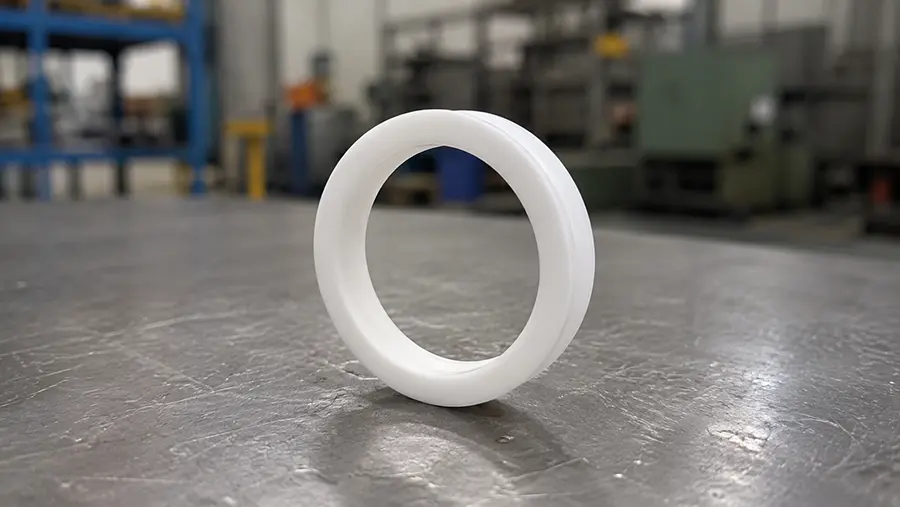
The biggest advantage of PTFE is its very low friction. This makes it useful for sliding parts, non-stick surfaces, bushings, and sealing applications. PTFE also performs well in many aggressive chemical environments, which is why it is common in chemical processing, fluid handling, and industrial sealing systems.
PTFE is different from many typical injection molding plastics. Standard PTFE is not usually processed by conventional injection molding. Many PTFE parts are made by compression molding, ram extrusion, machining, or other special processes. For this reason, PTFE selection should consider both material performance and manufacturing method.
Typical applications include:
- Seals and gaskets
- Valve seats
- Sliding parts
- Bushings
- PTFE tape and insulation parts
- Chemical-resistant components
- Corrosion-resistant fluid-handling parts
PTFE is suitable when a part needs low friction, chemical resistance, sealing performance, or stable behavior in high-temperature and corrosive environments.