Custom PEEK Injection Molding Services
We mold custom PEEK parts for applications that require heat, chemical, or wear resistance. We work with unfilled and filled grades to match your part’s operating conditions.
Request a Quote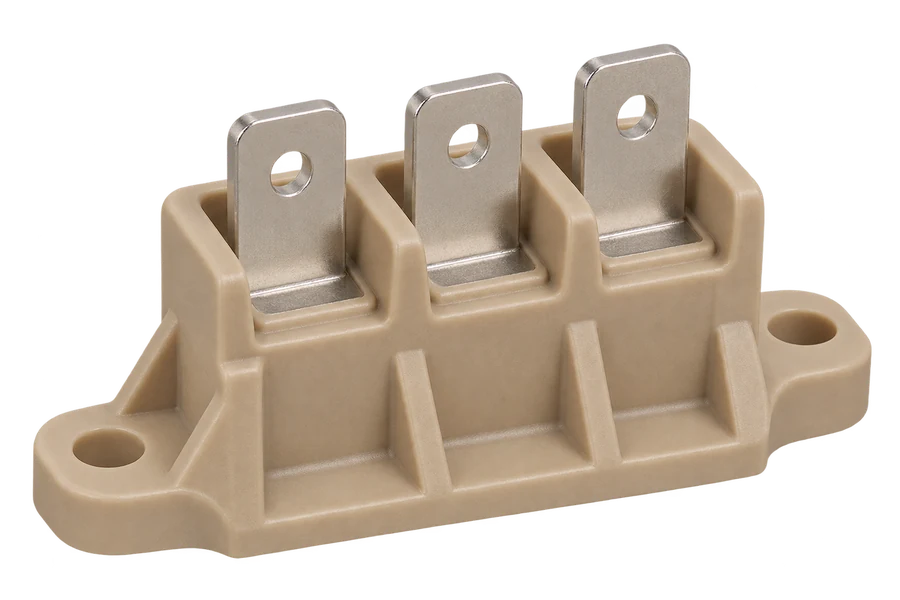
PEEK Injection Molded Parts and Applications
-
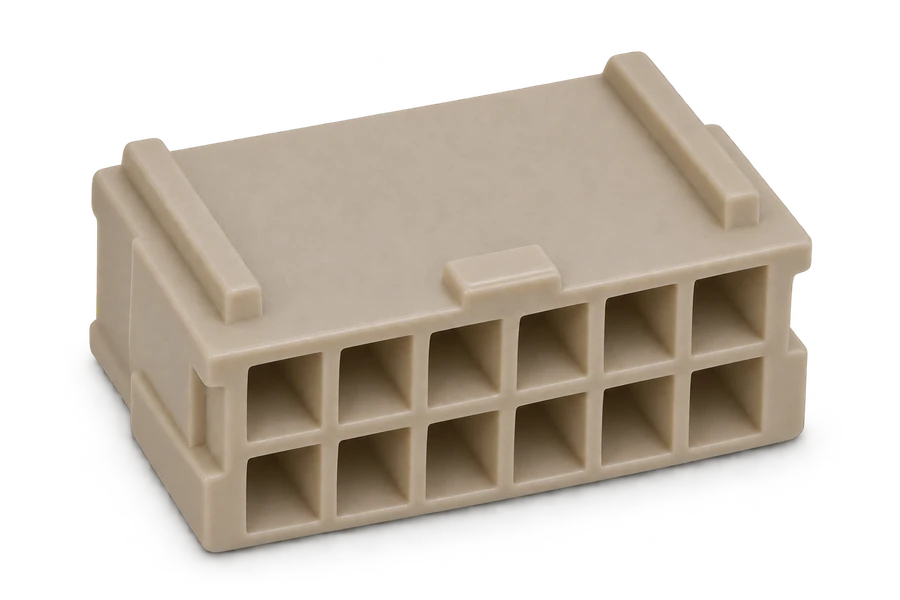
Connector Insulators
Unfilled PEEK electrically isolates terminals in high-temperature connectors.
-
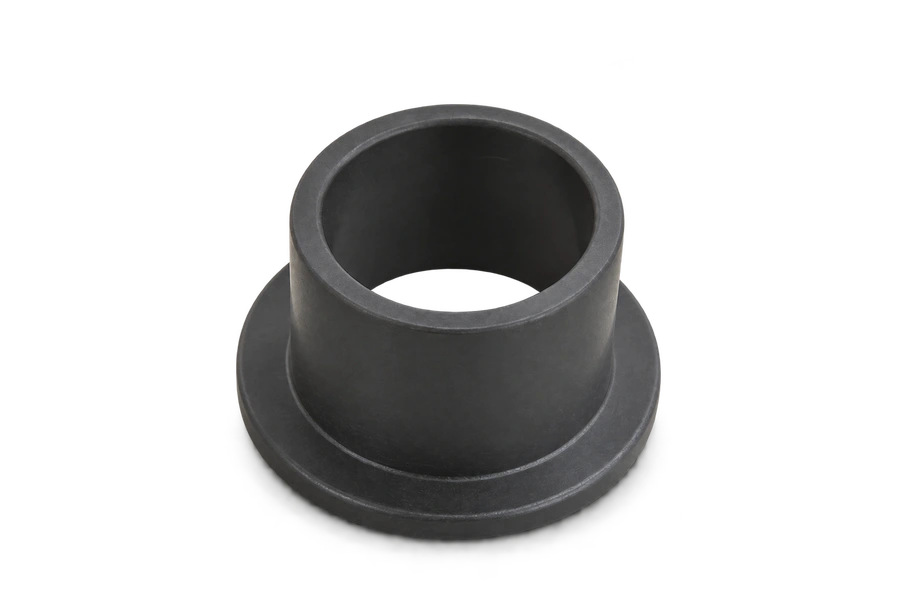
Flanged Bushings
Wear-grade PEEK supports sliding shafts where low friction and wear resistance matter.
-
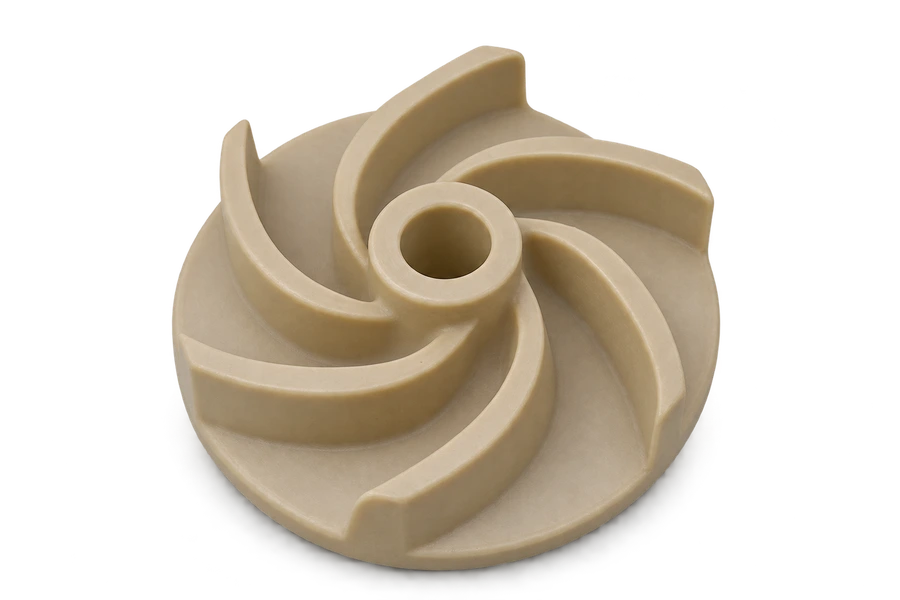
Pump Impellers
PEEK grades are selected for compatibility with the process fluid and operating temperature.
-
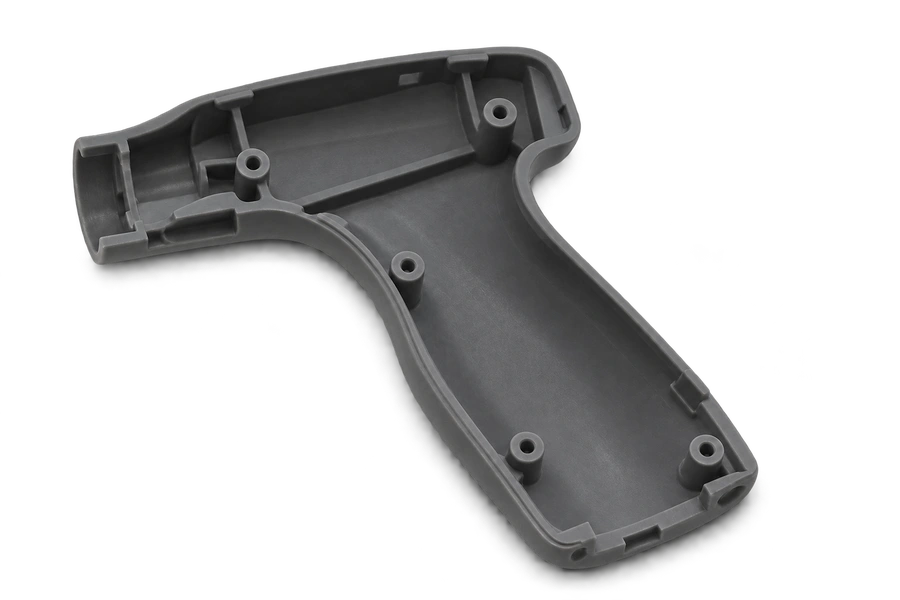
Medical Instrument Handles
Selected PEEK grades are used in reusable instrument handles with defined sterilization requirements.
PEEK Grades for Injection Molding
Compare representative PEEK grades by stiffness, heat deflection under load, and typical part applications.
| Grade Type | Example Grade | HDT at 264 psi (1.82 MPa) |
Flexural Modulus at 23°C |
Typical Part Applications |
|---|---|---|---|---|
| Unfilled PEEK | Victrex 450G | 152°C | 4.1 GPa | Connector insulators and electrical housings where ductility matters. |
| 30% Glass-Filled PEEK | Victrex 450GL30 | 315°C | 10.2 GPa | Mounting brackets and housings that need greater stiffness under load. |
| 30% Carbon-Filled PEEK | Victrex 450CA30 | 315°C | 18.6 GPa | Rigid supports and load-bearing components where deflection is critical. |
| Wear-Grade PEEK | Victrex 450FC30 | >293°C | 9.4 GPa | Bushings and thrust washers in sliding contact. |
Values are typical for the grades shown. HDT measures short-term deflection under a specified load. Assess continuous service temperature using the selected grade, operating load, and exposure time. Victrex grade data
Design Considerations
for PEEK Injection Molding
Wall Thickness and Flow Length
Keep walls uniform and use gradual transitions where thickness changes. Review the flow path from the gate to thin sections and place weld lines away from highly stressed areas.
Shrinkage and Warpage
Fiber-filled PEEK can shrink differently along and across the flow direction. Use grade-specific shrinkage data for the initial mold design, then check warpage and critical dimensions on trial parts.
Critical Fits and Tolerances
Mark datums, mating surfaces, and critical bores on the drawing. Measure trial parts to confirm which features meet tolerance as molded and which need secondary machining.
What is PEEK – Polyether Ether Ketone
Polyether Ether Ketone (PEEK) is a high-performance engineering thermoplastic known for its exceptional mechanical strength, chemical resistance, and thermal stability. It can operate continuously at high temperatures up to 250°C and withstand harsh chemical environments. PEEK is widely used in aerospace, automotive, medical devices, and high-performance industrial components. It can be processed through injection molding or CNC machining, though both require precise temperature control and careful handling due to the material’s high melting point and hardness.
| Property | Typical Value / Description | Notes |
|---|---|---|
| Tensile Strength | 90–100 MPa | Very high strength, suitable for load-bearing components |
| Flexural Strength | 150–180 MPa | Excellent rigidity for structural parts |
| Impact Strength (Notched) | 50–70 J/m | Moderate toughness; generally rigid and durable |
| Elastic Modulus | 3.5–4.0 GPa | High stiffness |
| Heat Deflection Temperature | 250–260°C | Can withstand continuous high-temperature operation |
| Density | 1.30 g/cm³ | Relatively heavy among engineering plastics |
| Chemical Resistance | Excellent; resistant to acids, bases, and organic solvents | Suitable for harsh chemical and high-temperature environments |
| Water Absorption | <0.5% | Very low, maintaining dimensional stability |
| Shrinkage | 0.3–0.5% | Low; mold design must still consider shrinkage for tight tolerance parts |
| Flammability | UL94 V-0 | High flame resistance |
From Tooling to Production
RJC designs and builds injection molds in-house. For PEEK parts, we use grade-specific shrinkage data to size the mold and verify critical dimensions on trial parts before production.
Discuss Your PEEK Project- DFM Review Review the specified PEEK grade, wall thickness, gate location, and critical fits.
- Mold Build Build the mold in-house, accounting for grade-specific shrinkage and mold temperature requirements.
- Sample Approval Run the mold trial and check sample parts for warpage and critical dimensions against the drawing.
- Production Control resin drying, melt temperature, and mold temperature. Inspect production parts to the agreed requirements.
PEEK Injection Molding FAQs
Prototype runs typically take 5–10 days, production orders 3–6 weeks depending on complexity and quantity.
We support from single-piece prototypes up to high-volume production without MOQ constraints.
Yes, we offer various grades including reinforced and virgin PEEK tailored for mechanical, chemical, or medical needs.
Absolutely, all export molds meet EU, US, and medical device manufacturing standards.
Request a Quote for Your PEEK Parts
Send us your 3D files and estimated order quantity. Include a drawing with critical dimensions and tolerances. If you have a specified PEEK grade, include it. If you’re still selecting a grade, share the part’s operating conditions.