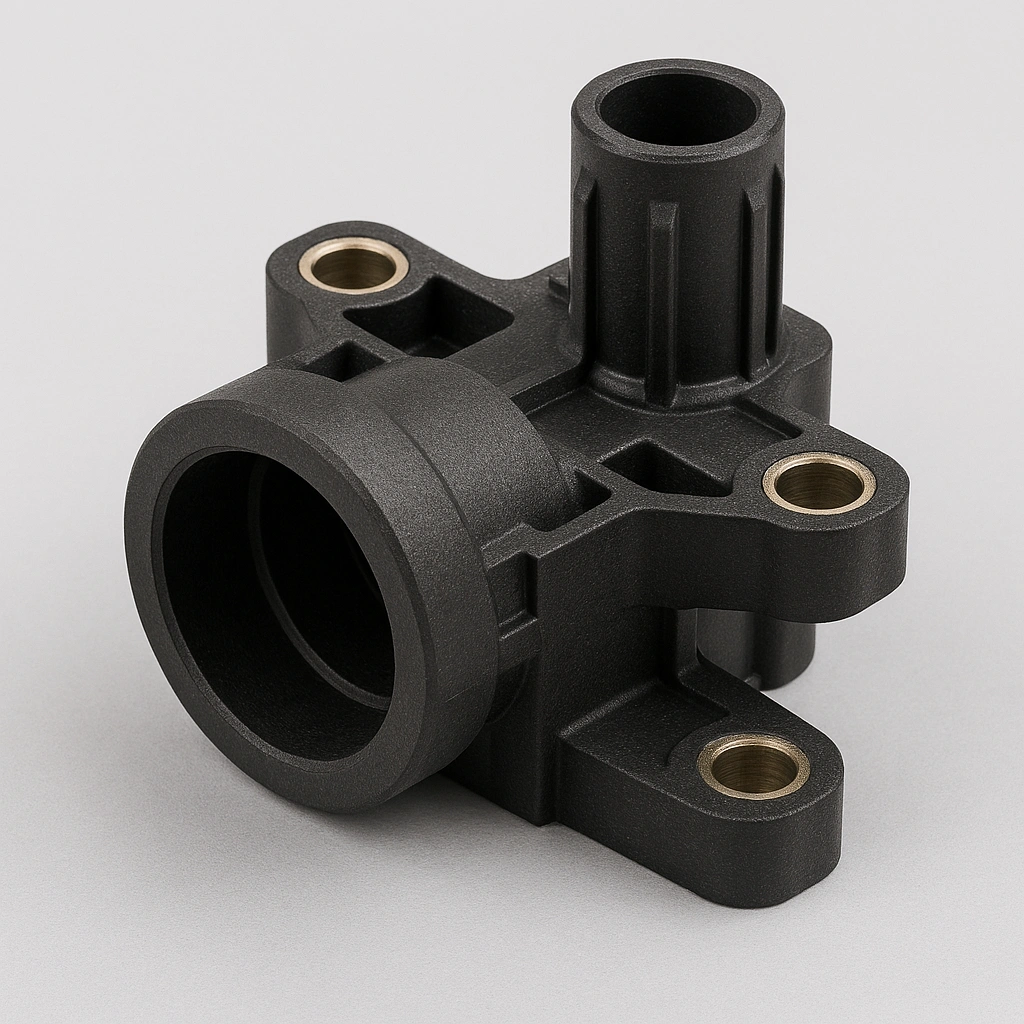
Our PPS Injection Molding Capabilities
From under-the-hood automotive components to precision pump parts, our PPS injection molding service delivers consistent performance in the harshest conditions.
Product Design Support
- DFM analysis for high-precision, high-temperature parts
- Guidance on wall thickness, gating, and venting for crystalline PPS
- Material selection: unfilled, glass-fiber reinforced, mineral-filled PPS
Mold Design & Manufacturing
- High-hardness steel molds for abrasive glass-filled PPS grades
- Temperature-controlled tooling to achieve optimal crystallinity
- Gate design to prevent weld lines and flow marks
Plastic Injection Molding
- Processing up to 330°C melt temperature
- Tight tolerance molding for precision assemblies (±0.02 mm)
- Controlled drying and handling to prevent contamination
Post-processing & Assembly
- Precision machining for sealing surfaces
- Surface treatment for improved adhesion or bonding
- Assembly of PPS components with metal inserts or seals
What is PPS – Polyphenylene Sulfide
Polyphenylene Sulfide (PPS) is a high-performance engineering thermoplastic known for its excellent thermal stability, chemical resistance, and dimensional stability. It can operate continuously at high temperatures and withstand harsh chemical environments, making it suitable for automotive components, electrical connectors, and chemical processing equipment. PPS is typically processed via injection molding, requiring precise temperature control and drying to maintain its high-performance properties. CNC machining is possible but challenging due to material hardness and wear on cutting tools.
| Property | Typical Value / Description | Notes |
|---|---|---|
| Tensile Strength | 80–120 MPa | High-strength material suitable for structural components |
| Flexural Strength | 130–180 MPa | High rigidity, can withstand significant mechanical loads |
| Impact Strength (Unnotched) | 50–60 J/m | Moderate toughness; material is relatively brittle compared to PC or ABS |
| Elastic Modulus | 4.0–5.0 GPa | High rigidity |
| Heat Deflection Temperature | 260–280°C | Can operate under continuous high temperatures |
| Density | 1.35 g/cm³ | Higher density than common plastics |
| Chemical Resistance | Excellent; resistant to acids, bases, and most organic solvents | Suitable for harsh chemical environments |
| Water Absorption | <0.05% | Extremely dimensionally stable |
| Shrinkage | 0.3–0.5% | Low shrinkage, precise mold design still recommended |
| Flammability | UL94 V-0 | High flame resistance |
Common Applications of PPS Molded Parts
| Industry | Example Parts | Why PPS Works Well |
|---|---|---|
| Automotive | Fuel system components, under-hood parts | Withstands >200°C, resists fuels and automotive fluids |
| Electrical | Switch housings, high-voltage connectors | Flame retardant, excellent insulation |
| Industrial | Pump parts, valve components | Chemical resistance, dimensional stability |
| Consumer Appliances | Heating elements, hair dryer housings | Heat tolerance, electrical safety compliance |
Production & Delivery Solutions
| Solution Type | Best For | Typical Lead Time | Notes |
|---|---|---|---|
| Rapid Prototyping | Functional prototypes for high-temp tests | 8–12 days | Ideal for evaluating thermal/chemical resistance |
| Small Batch | Limited production for pilot runs | 2–3 weeks | Cost-effective for niche applications |
| Mass Production | Long-term high-volume programs | 3–5 weeks | Stable quality for critical components |
| Export Molds | Overseas PPS molding production | 4–6 weeks | Built to handle abrasive reinforced grades |
PPS Injection Molding FAQs
PPS can continuously operate at temperatures up to 200–240°C, with peak short-term performance above 260°C.
Yes, it requires high processing temperatures, precise moisture control, and corrosion/abrasion-resistant tooling.
Yes, PPS has UL94 V-0 rating without additives, making it suitable for electrical safety requirements.
Yes, PPS resists acids, bases, fuels, and most solvents, even at elevated temperatures.
Reinforced PPS (with glass fiber/minerals) offers higher strength and stiffness, while unfilled PPS provides better elongation and toughness.