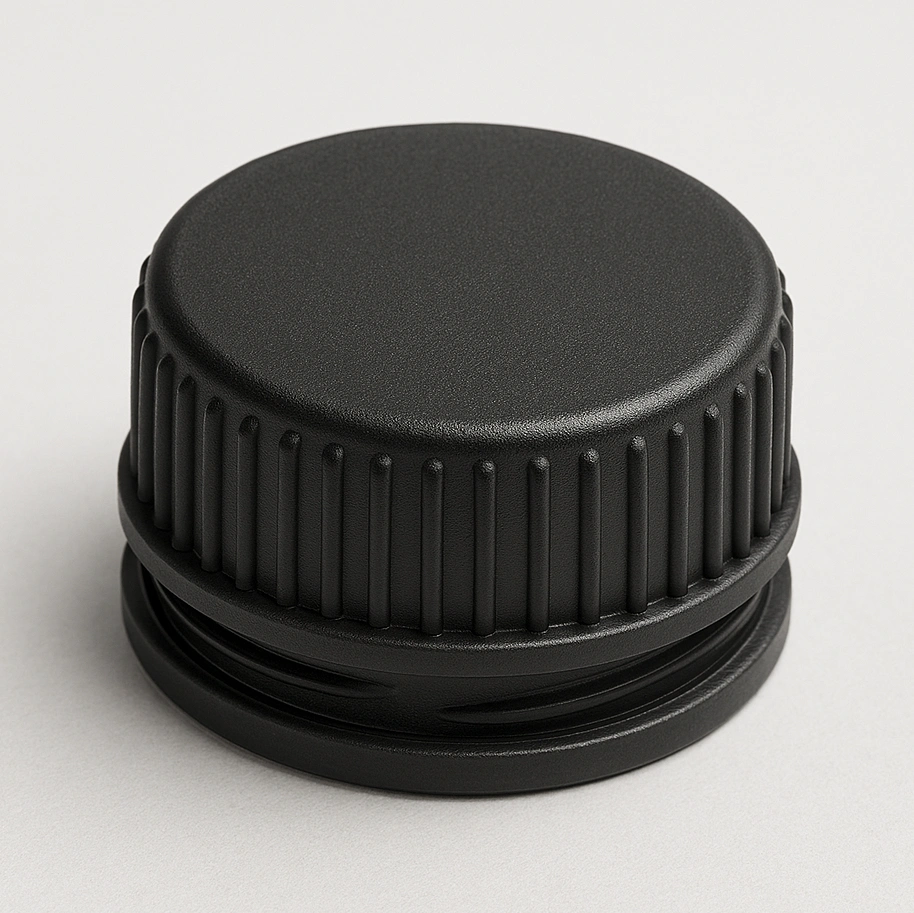
Our PE Injection Molding Capabilities
From impact-resistant packaging to large industrial components, our PE injection molding service delivers durable, cost-effective solutions with quick turnaround.
Product Design Support
- DFM guidance for HDPE, LDPE, and UHMW-PE grades
- Design optimization for flexibility, impact resistance, and weight reduction
- Assistance with food-contact and regulatory compliance
Mold Design & Manufacturing
- Precision tooling for high-volume PE production
- Optimized gating to ensure uniform wall thickness
- Texturing and surface finishes for aesthetic and functional purposes
Plastic Injection Molding
- Processing for LDPE, HDPE, LLDPE, and specialty PE grades
- High-speed cycles for efficient production
- Capability to mold large parts with minimal warpage
Post-processing & Assembly
- CNC machining for tight-tolerance features
- Printing, embossing, or labeling for branding
- Assembly with other plastics, metals, or elastomers
What is PE – Polyethylene
Polyethylene (PE) is a widely used lightweight thermoplastic polymer, available in several grades, including Low-Density PE (LDPE) and High-Density PE (HDPE). It is known for excellent chemical resistance, wear resistance, and low cost. PE is commonly used in packaging, containers, piping, household products, and automotive components. While mechanically moderate and heat-sensitive, it is easy to process through injection molding, blow molding, or CNC machining. Proper drying, mold design, and temperature control are important to maintain dimensional stability and part quality.
| Property | Typical Value / Description | Notes |
|---|---|---|
| Tensile Strength | 10–35 MPa | Light to medium load applications; varies with density grade |
| Flexural Strength | 15–45 MPa | Flexible structures perform well |
| Impact Strength | 50–100 J/m | Good impact resistance for light-load components |
| Elastic Modulus | 0.2–1.0 GPa | Low rigidity; affects deflection under load |
| Heat Deflection Temperature | 70–120°C | Depends on density and grade; HDPE more heat resistant than LDPE |
| Density | 0.91–0.96 g/cm³ | Lightweight material |
| Chemical Resistance | Excellent; resistant to most acids, bases, and solvents | Suitable for chemical exposure environments |
| Water Absorption | 0.01–0.03% | Minimal, maintains dimensional stability |
| Shrinkage | 1.5–2.5% | Mold design must consider shrinkage, especially for thick parts |
| Flammability | UL94 HB | General flame resistance; can be improved with additives |
Common Applications of PE Molded Parts
| Industry | Example Parts | Why PE Works Well |
|---|---|---|
| Packaging | Caps, containers, closures | Lightweight, food-safe, cost-effective |
| Automotive | Fuel tanks, splash guards | High impact resistance, chemical stability |
| Industrial | Pipe fittings, protective covers | Resistant to corrosion, easy to mold |
| Consumer Goods | Storage bins, toys, sports equipment | Durable, non-toxic, available in many grades |
Production & Delivery Solutions
| Solution Type | Best For | Typical Lead Time | Notes |
|---|---|---|---|
| Rapid Prototyping | Testing fit, durability, and flexibility | 7–10 days | Ideal for functional testing |
| Small Batch | Limited-run or specialty PE products | 2–3 weeks | Flexible for multiple grades |
| Mass Production | High-volume consumer/industrial parts | 4–6 weeks | Cost-efficient, consistent quality |
| Export Molds | Overseas PE molding | 5–7 weeks | Long mold life for continuous production |
PE Injection Molding FAQs
Common grades include LDPE (low-density), HDPE (high-density), and LLDPE (linear low-density). UHMW-PE is generally machined, not injection molded, due to its viscosity.
Yes, many grades are FDA-approved and safe for food-contact applications.
PE generally has better impact resistance, especially in cold temperatures, but PP offers higher stiffness and heat resistance.
PE’s low surface energy makes painting/bonding challenging, but it can be treated via corona, flame, or plasma to improve adhesion.
Standard PE can degrade with prolonged UV exposure, but UV-stabilized grades are available for outdoor use.