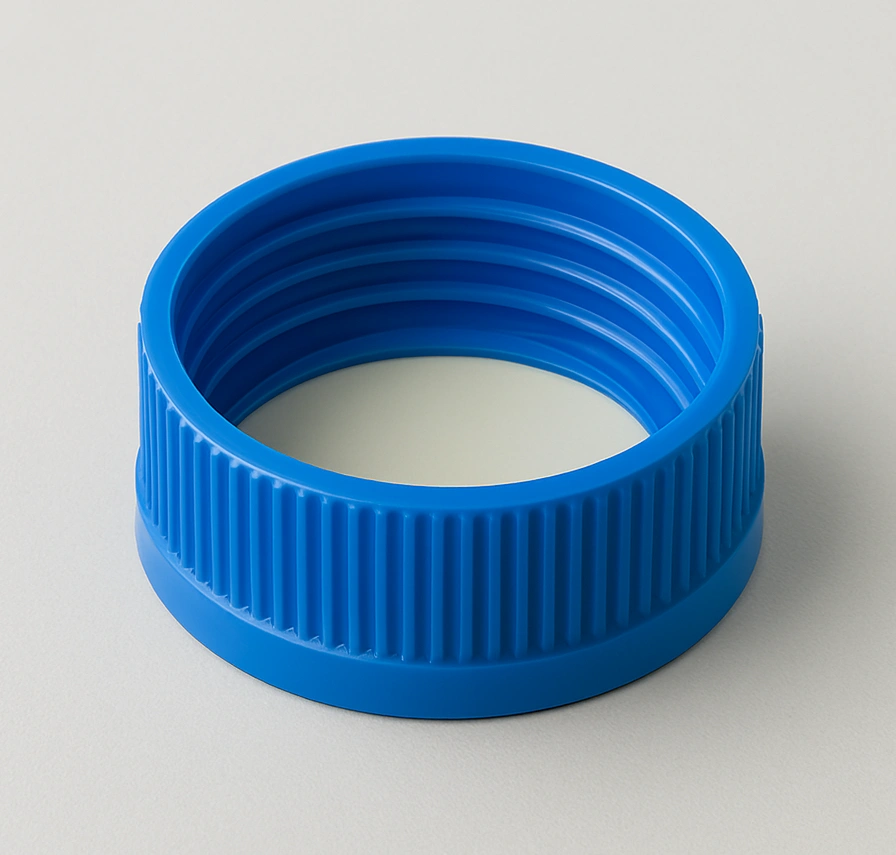
Our PP Injection Molding Capabilities
From flexible living hinges to durable automotive parts, our PP injection molding service delivers quality, cost-efficiency, and fast lead times.
Product Design Support
- Design for fatigue resistance and flexibility (ideal for living hinges)
- Wall thickness optimization to reduce weight and cost
- Food-contact compliant design for packaging applications
Mold Design & Manufacturing
- Tooling tailored for high-volume PP production
- Gate and runner design optimized for shrinkage control
- Surface finish options from textured to high-gloss
Plastic Injection Molding
- Processing PP for both homopolymer and copolymer grades
- Controlled cooling to minimize warpage
- High-speed production for reduced cycle time
Post-processing & Assembly
- CNC finishing for precision features
- Surface treatment to improve printability and adhesion
- Assembly with other materials for complex products
What is PP – Polypropylene
Polypropylene (PP) is a lightweight, versatile thermoplastic known for its excellent chemical resistance, fatigue resistance, and low cost. It is widely used in packaging, automotive parts, household goods, and piping systems. PP is available in different grades, including homopolymer and copolymer variants, offering varying rigidity and impact resistance. PP can be processed through injection molding or CNC machining. Proper mold design, temperature control, and wall thickness uniformity are important to minimize shrinkage and warping during production.
| Property | Typical Value / Description | Notes |
|---|---|---|
| Tensile Strength | 30–40 MPa | Medium strength, suitable for light to moderate load components; measured at 23°C |
| Flexural Strength | 50–70 MPa | Suitable for standard structural applications |
| Impact Strength (Notched/Unnotched) | 40–60 J/m | Moderate impact resistance; copolymer grades improve toughness |
| Elastic Modulus | 1.5–2.0 GPa | Relatively flexible material |
| Heat Deflection Temperature | 90–110°C | Sensitive to prolonged high-temperature exposure |
| Density | 0.90–0.91 g/cm³ | Lightweight, easy to handle |
| Chemical Resistance | Excellent; resistant to most acids, bases, and solvents | Suitable for chemical exposure environments |
| Water Absorption | <0.01% | Very low; dimensionally stable |
| Shrinkage | 1.5–2.5% | Must be considered in mold design, especially for thick sections |
| Flammability | UL94 HB | Basic flame resistance; can be improved with additives |
Common Applications of PP Molded Parts
| Industry | Example Parts | Why PP Works Well |
|---|---|---|
| Consumer Goods | Food containers, caps, hinges | Lightweight, dishwasher safe, FDA-approved |
| Automotive | Bumpers, interior panels, battery cases | Impact resistance, heat stability |
| Medical | Syringe components, trays, lab ware | Sterilizable, chemical resistance |
| Industrial | Chemical tanks, piping components | Corrosion resistance, long service life |
Production & Delivery Solutions
| Solution Type | Best For | Typical Lead Time | Notes |
|---|---|---|---|
| Rapid Prototyping | Functional testing of PP designs | 7–10 days | Supports design validation |
| Small Batch | Limited-run PP components | 2–3 weeks | Flexible in grade and color selection |
| Mass Production | High-volume industrial/consumer parts | 4–6 weeks | Consistent quality, cost-effective |
| Export Molds | Overseas PP molding | 5–7 weeks | High durability molds for long-term use |
PP Injection Molding FAQs
Homopolymer PP has higher strength and stiffness, while copolymer PP offers better impact resistance, especially at low temperatures.
Yes, most PP grades are FDA-approved and suitable for direct food contact.
Standard PP may degrade under UV exposure, but UV-stabilized grades are available.
PP is typically opaque, but clarified grades can achieve good transparency for packaging.
Yes, PP is widely recycled and labeled as recycling code #5.