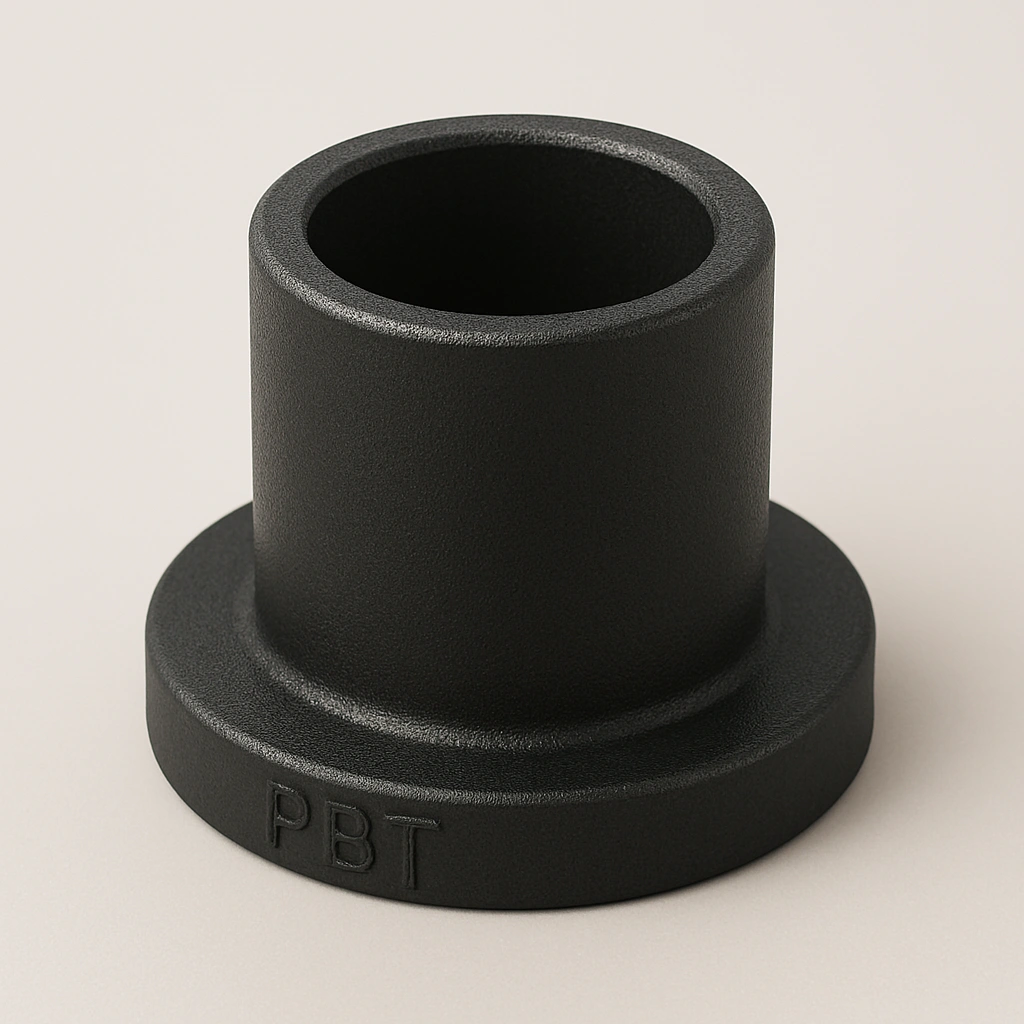
Our PBT Injection Molding Capabilities
Our PBT injection molding services cover the entire process—from material selection and design optimization to mold manufacturing and high-volume production—ensuring your parts meet strict performance standards.
Product Design Support
- DFM (Design for Manufacturability) analysis for high-strength, low-shrinkage designs
- Guidance on glass-filled vs. unfilled PBT grades
- Optimization for electrical and structural applications
Mold Design & Manufacturing
- Mold flow simulation to predict filling behavior and warpage
- High-polish mold surfaces to achieve smooth finishes
- Mold designs accommodating tight tolerances and complex geometries
Plastic Injection Molding
- Processing temperatures: 240–260°C for optimal crystallinity
- Tolerance control for precision electrical components
- Capability for high glass fiber loadings (up to 30%)
Post-processing & Assembly
- Secondary machining for ultra-precise fits
- Pad printing, laser marking, and custom surface treatments
- Mechanical and electrical assembly integration
What is PBT – Polybutylene Terephthalate
Polybutylene Terephthalate (PBT) is a semi-crystalline engineering thermoplastic known for its excellent dimensional stability, electrical insulation properties, and resistance to chemicals and heat. PBT is widely used in automotive components, electrical connectors, household appliances, and industrial machinery. It offers good mechanical strength, low moisture absorption, and can be processed through injection molding or CNC machining. Proper mold design and temperature control are essential to prevent warping and maintain tight tolerances.
| Property | Typical Value / Description | Notes |
|---|---|---|
| Tensile Strength | 55–75 MPa | High strength suitable for structural components |
| Flexural Strength | 90–110 MPa | Provides rigidity for load-bearing parts |
| Impact Strength (Notched/Unnotched) | 40–60 J/m | Good toughness; may be enhanced with reinforced grades |
| Elastic Modulus | 2.3–2.8 GPa | Stiff material with good dimensional stability |
| Heat Deflection Temperature | 140–150°C | Can withstand moderate to high temperatures |
| Density | 1.31–1.42 g/cm³ | Moderate density; stable under mechanical load |
| Chemical Resistance | Excellent; resists oils, fuels, and most chemicals | Avoid strong acids and oxidizers |
| Water Absorption | 0.2–0.4% | Low, ensuring dimensional stability |
| Shrinkage | 0.4–0.7% | Must be considered in mold design to maintain tolerances |
| Flammability | UL94 V-0 | Good flame resistance |
Common Applications of PBT Molded Parts
| Industry | Example Parts | Why PBT Works Well |
|---|---|---|
| Automotive | Sensor housings, connectors, clips | Heat resistance, dimensional stability |
| Electrical | Switches, sockets, circuit breakers | Excellent insulation, low moisture absorption |
| Industrial | Pump housings, machine components | Wear resistance, chemical durability |
| Consumer Products | Appliance parts, handles, casings | Aesthetic finish, structural integrity |
Production & Delivery Solutions
| Solution Type | Best For | Typical Lead Time | Notes |
|---|---|---|---|
| Rapid Prototyping | Design and fit validation | 3–7 days | Ideal for functional testing |
| Small Batch | Low-volume orders | 1–2 weeks | Flexible production with quick turnaround |
| Mass Production | High-demand products | 2–5 weeks | Cost-effective, consistent quality |
| Export Molds | Overseas manufacturing | 4–6 weeks | Built to meet global production standards |
PBT Injection Molding FAQs
PBT offers a balance of mechanical strength, chemical resistance, and electrical insulation, especially in high-humidity or chemically aggressive environments.
Yes—standard PBT can handle up to 150°C, and special grades can withstand higher continuous use temperatures.
Yes—flame-retardant grades meeting UL 94 V-0 are available for electrical and automotive safety requirements.
Yes—glass fiber reinforcement improves stiffness, dimensional stability, and heat resistance.