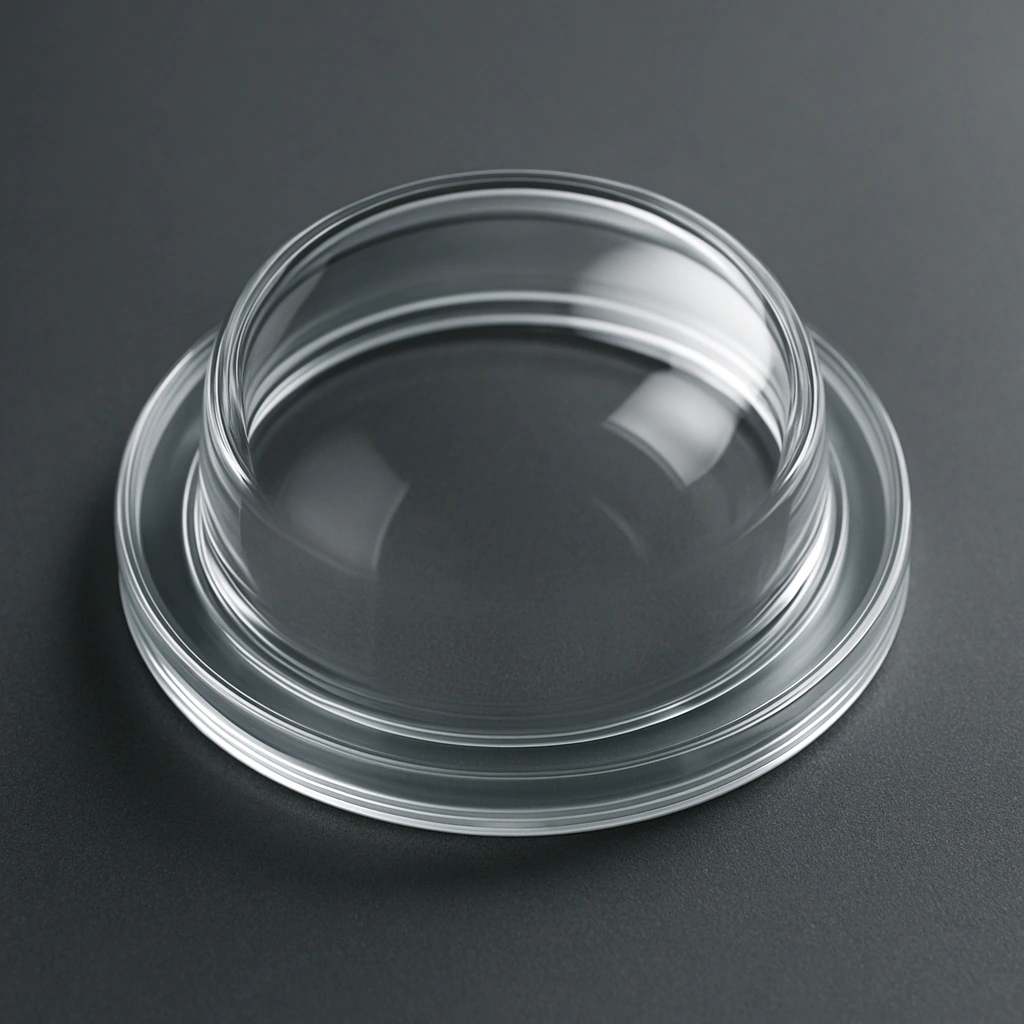
Our PMMA Injection Molding Capabilities
From prototype light covers to mass-produced optical components, we provide end-to-end PMMA molding solutions that meet the most demanding visual and dimensional standards.
Product Design Support
- DFM analysis tailored for optical-grade molding
- Guidance on wall thickness for clarity and strength balance
- Material grade selection (impact-modified PMMA available)
Mold Design & Manufacturing
- Polished mold surfaces (SPI A1/A2) for optical transparency
- Flow simulation to prevent weld lines and bubbles
- Mold venting optimized for flawless surface finish
Plastic Injection Molding
- Precision molding with tight tolerance control (±0.03 mm)
- Specialized barrel and screw design for optical polymers
- Multi-cavity production for high-volume transparent parts
Post-processing & Assembly
- Optical polishing and flame polishing for enhanced clarity
- UV coating, anti-scratch coating available
- Assembly and clean-room packaging for sensitive applications
What is PMMA – Polymethyl Methacrylate
Polymethyl Methacrylate (PMMA), also known as acrylic or acrylic glass, is a transparent thermoplastic with excellent optical clarity and surface finish. It is lightweight, weather-resistant, and widely used for lenses, displays, signage, protective covers, and decorative components. PMMA is rigid but relatively brittle, so design considerations such as uniform wall thickness and avoidance of sharp corners are important. It can be processed by injection molding or CNC machining, with careful control to maintain clarity and prevent cracking.
| Property | Typical Value / Description | Notes |
|---|---|---|
| Tensile Strength | 60–75 MPa | High rigidity but moderate strength; tested at 23°C |
| Flexural Strength | 90–110 MPa | Good rigidity for structural parts |
| Impact Strength (Unnotched) | 15–25 J/m | Relatively brittle; prone to cracking under impact |
| Elastic Modulus | 2.8–3.2 GPa | Provides rigidity and dimensional stability |
| Heat Deflection Temperature | 90–100°C | Sensitive to prolonged high-temperature exposure |
| Density | 1.18 g/cm³ | Lightweight and easy to handle |
| Chemical Resistance | Moderate; resistant to weak acids and bases, but soluble in ketones and esters | Avoid strong solvents for long-term applications |
| Water Absorption | 0.2–0.3% | Maintains dimensional stability |
| Shrinkage | 0.4–0.7% | Mold design must consider shrinkage |
| Flammability | UL94 HB | Basic flame resistance |
Common Applications of PMMA Molded Parts
| Industry | Example Parts | Why PMMA Works Well |
|---|---|---|
| Automotive | Headlight lenses, interior light covers | Optical clarity, UV resistance |
| Medical Devices | Transparent housings, optical components | Biocompatibility, sterilization compatibility |
| Consumer Goods | Display cases, decorative panels | High gloss finish, impact strength (vs. glass) |
| Lighting | Diffusers, lamp covers | Light transmission up to 92%, color stability |
Production & Delivery Solutions
| Solution Type | Best For | Typical Lead Time | Notes |
|---|---|---|---|
| Rapid Prototyping | Optical design validation | 7–12 days | Low-volume, quick mold setup |
| Small Batch | Pre-production and market testing | 2–3 weeks | Flexible order size, cost-effective |
| Mass Production | Consistent large-scale supply | 3–5 weeks | Optimized for surface and optical quality |
| Export Molds | Overseas production of PMMA parts | 4–6 weeks | Polished molds meeting optical standards |
POM Injection Molding FAQs
PMMA offers better clarity and scratch resistance than PC, but lower impact strength. For higher impact requirements, impact-modified PMMA can be used.
Yes, PMMA has excellent weatherability and UV resistance, making it suitable for outdoor applications.
Properly molded PMMA can achieve light transmittance of up to 92%, comparable to optical glass.
Standard PMMA has good hardness but can scratch under abrasion; applying anti-scratch coating enhances durability.
Yes, with optimized mold design and gating, complex geometries can be achieved without sacrificing optical quality.