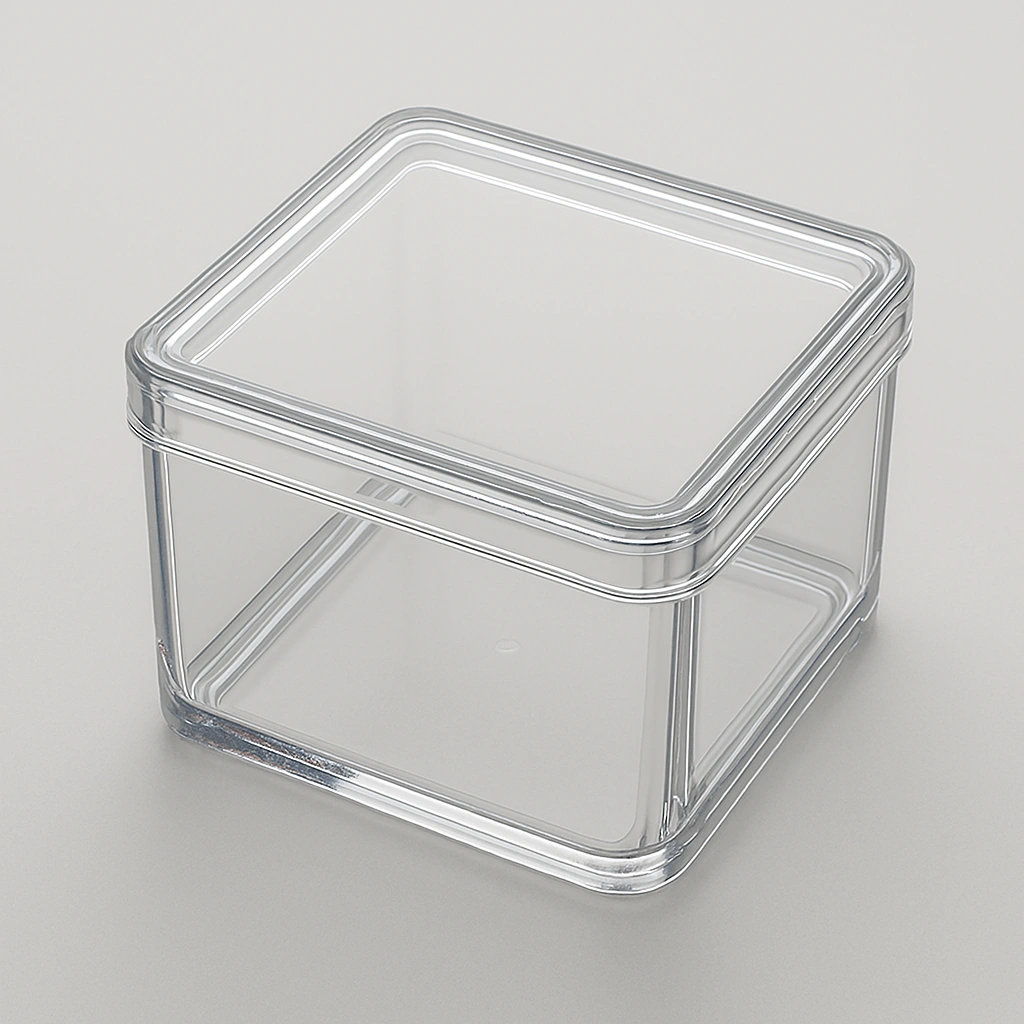
Our PS Injection Molding Capabilities
From early design support to final delivery, we offer complete end-to-end PS molding solutions designed to meet both your technical requirements and commercial goals.
Product Design Support
- DFM (Design for Manufacturability) analysis tailored for GPPS and HIPS
- Material-grade selection advice (clarity vs. impact resistance)
- Structural optimization to balance aesthetics, rigidity, and cost
Mold Design & Manufacturing
- High-precision steel molds optimized for PS flow
- Domestic and export-ready molds available
- Polishing and gating strategies optimized for surface finish and cycle time
Plastic Injection Molding
- Tolerance control up to ±0.05 mm
- Machine tonnage: 50T – 1000T
- Efficient processing for both clear GPPS and impact HIPS variants
Post-processing & Assembly
- Options for printing, hot stamping, pad printing
- Ultrasonic welding and sub-assembly services
- Custom packaging and labeling tailored to retail or industrial use
What is PS – Polystyrene
Polystyrene (PS) is a rigid, lightweight thermoplastic that is easy to process but relatively brittle. It is commonly used for packaging, disposable containers, appliance housings, and optical components. PS offers good dimensional stability and surface finish, but its low impact resistance requires careful design, including uniform wall thickness and avoidance of sharp corners. PS can be formed through injection molding or CNC machining, with proper control to minimize stress-induced cracking or warping.
| Property | Typical Value / Description | Notes |
|---|---|---|
| Tensile Strength | 35–50 MPa | Moderate strength, suitable for light-load components; tested at 23°C |
| Flexural Strength | 60–80 MPa | Rigid enough for general structural parts |
| Impact Strength (Unnotched) | 15–30 J/m | Relatively brittle; prone to cracking under sudden impact |
| Elastic Modulus | 3.0–3.5 GPa | Provides good rigidity |
| Heat Deflection Temperature | 90–100°C | Sensitive to high temperatures; may deform under heat |
| Density | 1.05 g/cm³ | Lightweight and easy to handle |
| Chemical Resistance | Moderate; resistant to weak acids and bases, but susceptible to ketones and strong solvents | Not suitable for harsh chemical environments |
| Water Absorption | 0.1% | Dimensionally stable |
| Shrinkage | 0.4–0.7% | Mold design must account for shrinkage |
| Flammability | UL94 HB | Basic flame resistance |
Common Applications of PS Molded Parts
| Industry | Example Parts | Why PS Works Well |
|---|---|---|
| Consumer Goods | Food containers, cosmetic packaging | Lightweight, good appearance |
| Electronics | TV housings, audio equipment cases | Precise molding, smooth finish |
| Medical | Petri dishes, test tubes | Sterilizable, clarity (GPPS) |
| Retail Displays | Point-of-purchase stands, signage panels | Excellent clarity (GPPS), easy printing |
Production & Delivery Solutions
| Solution Type | Best For | Typical Lead Time | Notes |
|---|---|---|---|
| Rapid Prototyping | Functional PS samples, display models | 7–10 days | Ideal for form and fit verification |
| Small Batch | Specialty packaging, trial runs | 2–3 weeks | Flexible volumes with consistent quality |
| Mass Production | Consumer goods, medical disposables | 4–6 weeks | High efficiency with stable output |
| Export Molds | Overseas PS molding | 5–7 weeks | Precision tooling for local production |
PS Injection Molding FAQs
GPPS offers high clarity and rigidity, making it ideal for transparent parts. HIPS adds rubber modifiers for improved impact resistance, often used in housings and packaging.
PS has limited heat resistance (softens around 90–100°C), so it’s not suitable for high-temperature environments.
Yes, food-grade GPPS is available and complies with food contact regulations when processed correctly.
Yes, PS can be recycled, but collection and reprocessing depend on local infrastructure.
Standard PS is not UV-resistant and may yellow over time; UV-stabilized grades are available for limited outdoor applications.