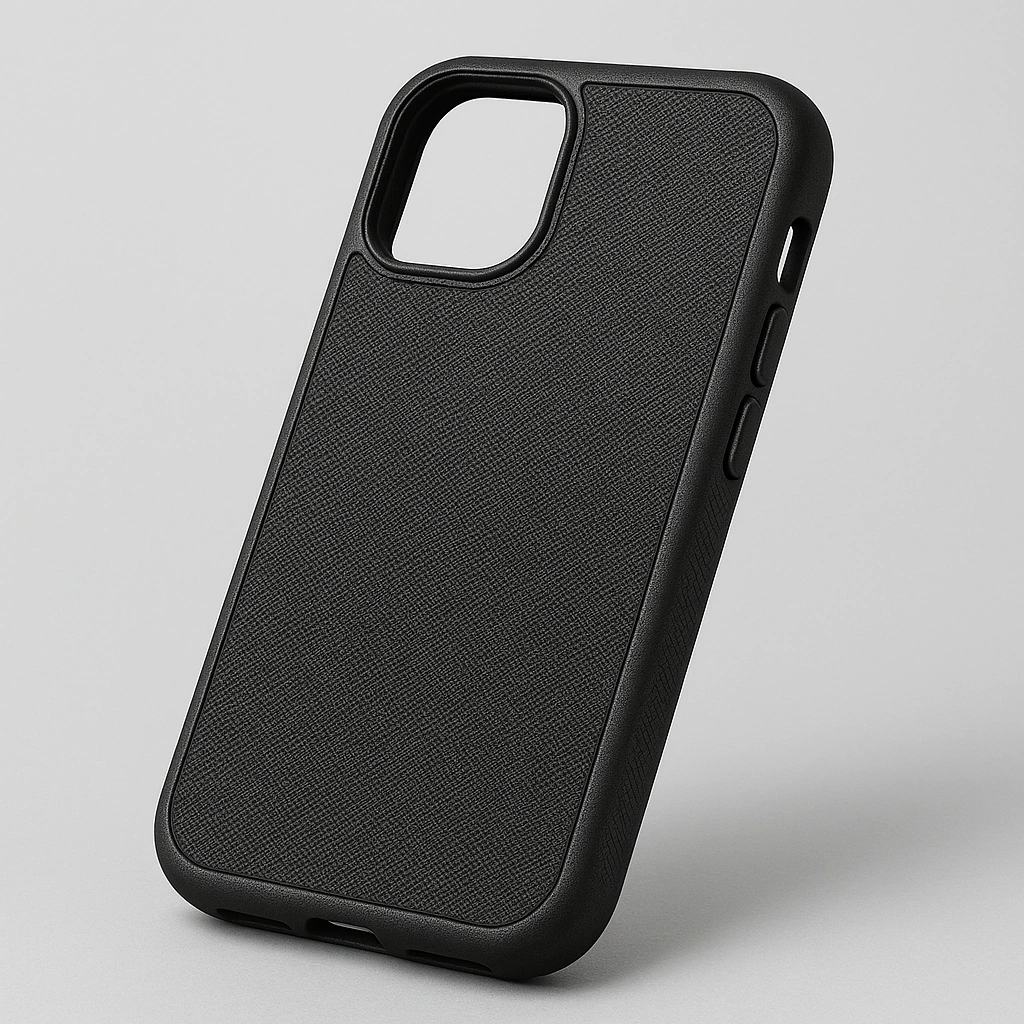
Our TPU Injection Molding Capabilities
From early design through production, our TPU injection molding services ensure your parts combine elasticity, precision, and durability—whether for protective cases, seals, or industrial components.
Product Design Support
- DFM analysis optimized for TPU elasticity
- Grade selection guidance (polyester- or polyether-based TPU)
- Geometry optimization to maintain flexibility without compromising strength
Mold Design & Manufacturing
- Mold flow analysis for TPU’s high viscosity behavior
- Hardened steel molds for extended production life
- Gating and venting designs to reduce shrinkage and surface defects
Plastic Injection Molding
- Tight tolerance control even on soft durometer parts
- Shore hardness range: 60A–75D
- Injection machines from 50T–1000T, ideal for both thin and thick-walled TPU parts
Post-processing & Assembly
- Overmolding with ABS, PC, or nylon substrates
- Printing, laser engraving, and surface texturing
- Bonding, trimming, and kitting for final product readiness
What is TPU – Thermoplastic Polyurethane
Thermoplastic Polyurethane (TPU) is a versatile elastomeric thermoplastic known for its excellent flexibility, abrasion resistance, and impact resilience. TPU can be formulated to achieve a wide range of hardness levels, making it suitable for applications such as flexible hoses, gaskets, wearable devices, protective covers, and automotive components. It can be processed through injection molding, extrusion, or CNC machining. Careful temperature control and mold design are essential to maintain dimensional accuracy and surface quality.
| Property | Typical Value / Description | Notes |
|---|---|---|
| Tensile Strength | 30–50 MPa | Strong for an elastomer; suitable for flexible components |
| Elongation at Break | 400–600% | Highly stretchable and elastic |
| Hardness | 70A–95A (Shore) | Varies depending on grade; softer grades are highly flexible |
| Tear Strength | 20–35 kN/m | Resistant to tearing and wear |
| Elastic Modulus | 5–25 MPa | Provides flexibility while maintaining shape recovery |
| Heat Deflection Temperature | 80–100°C | Moderate heat resistance; prolonged exposure may soften material |
| Density | 1.10–1.25 g/cm³ | Lightweight and durable |
| Chemical Resistance | Good; resistant to oils, greases, and some solvents | Avoid strong acids and oxidizers |
| Water Absorption | 0.5–1.0% | Low moisture uptake ensures dimensional stability |
| Shrinkage | 0.5–1.5% | Mold design must account for shrinkage in injection molding |
| Flammability | UL94 HB / V-2 depending on grade | Moderate flame resistance; can be enhanced with additives |
Common Applications of TPU Molded Parts
| Industry | Example Parts | Why TPU Works Well |
|---|---|---|
| Consumer Electronics | Protective phone cases, wearable straps | High elasticity, abrasion resistance, good grip |
| Automotive | Gaskets, bushings, cable sheaths | Vibration dampening, oil resistance |
| Industrial | Seals, rollers, flexible connectors | Long wear life, tear resistance |
| Sporting Goods | Skate wheels, grips, protective gear | Impact absorption, flexibility in all climates |
Production & Delivery Solutions
| Solution Type | Best For | Typical Lead Time | Notes |
|---|---|---|---|
| Rapid Prototyping | Material property testing | 3–7 days | Quick verification of hardness & fit |
| Small Batch | Low-volume production | 1–2 weeks | Ideal for custom or seasonal products |
| Mass Production | High-demand markets | 2–5 weeks | Cost-efficient large runs |
| Export Molds | Overseas manufacturing | 4–6 weeks | Built to meet international standards |
TPU Injection Molding FAQs
From 60A (soft, rubber-like) to 75D (rigid, engineering-grade), depending on formulation.
Yes—TPU bonds well to ABS, PC, nylon, and certain polyesters with proper surface preparation.
Polyether-based TPU offers excellent hydrolysis and UV resistance, making it suitable for outdoor use.
Yes—custom colors and surface finishes available upon request.
Thermoplastic Polyurethane (TPU) is a high-performance polymer that combines the elasticity of rubber with the processing advantages of plastics. It can be repeatedly melted and reshaped when heated, then regains its original properties upon cooling. TPU is widely used in footwear, cables, medical devices, automotive components, and 3D printing due to its excellent abrasion resistance, oil resistance, elasticity, and processing convenience. Learn more: What is tpu
TPE (thermoplastic elastomer) is a broad category encompassing various materials that exhibit rubber-like elasticity but can be processed like plastics. TPV (thermoplastic vulcanizate) is a specialized type of TPE produced through dynamic vulcanization, offering superior heat and chemical resistance. TPU (thermoplastic polyurethane) stands out in the TPE family for its engineering plastic-like performance, particularly known for exceptional abrasion resistance and mechanical strength. Learn more:TPE Vs. TPV Vs. TPU