
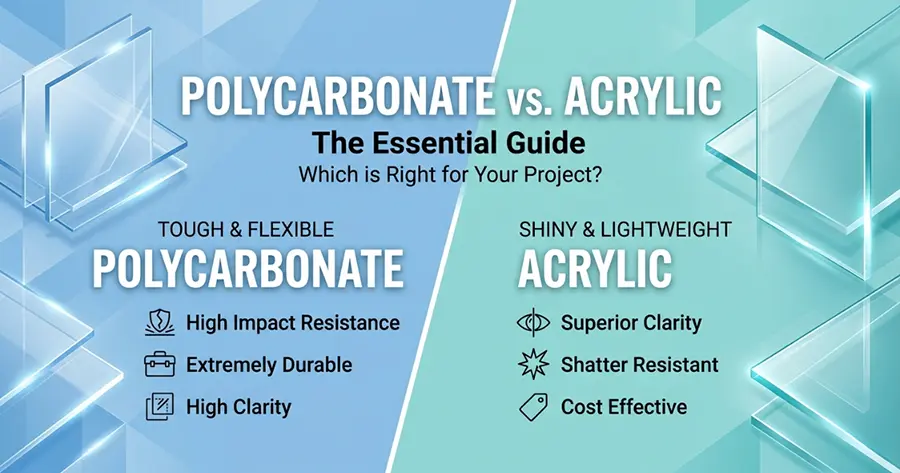
Choosing between polycarbonate vs acrylic depends on three things: how much impact the material will face, how long it needs to stay clear outdoors, and your budget. Both are transparent plastic alternatives to glass, but they work in very different ways.
What is Polycarbonate vs Acrylic Plastic?
There is a big difference between acrylic and polycarbonate. You see these materials every day in signs, windows, and shields. But the chemical names and brand names can be confusing for a new buyer.
What is acrylic?
Acrylic is a plastic made from a chemical called polymethyl methacrylate. Scientists often call it PMMA vs PC plastic when they compare it to other materials. You will find this plastic sold under famous names like:
- Plexiglass
- Lucite
- Perspex
It is a stiff plastic that looks like glass but weighs much less. Most people choose acrylic vs polycarbonate sheet options when they want something that looks beautiful and stays clear for a long time.
What is polycarbonate? Lexan, Makrolon explained
Polycarbonate is a much tougher type of plastic. It is made from two chemicals called:
- Bisphenol A
- Carbonyl chloride
You will often see it sold as lexan vs plexiglass in hardware stores. Other trade names include Makrolon. The reason people use this material is because it is almost impossible to break. It is the top choice for safety and protection.
How each material is manufactured?
The way a factory makes the sheet changes how it performs for you. For acrylic, you can buy cast acrylic vs polycarbonate or extruded acrylic vs polycarbonate.
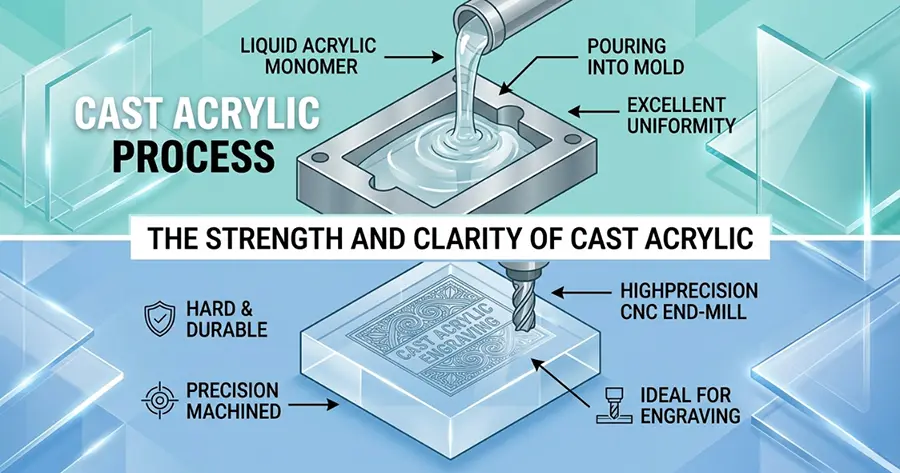
Cast acrylic is made by pouring liquid material into a mold. This makes the plastic very hard and uniform. It is great for machining and engraving. Extruded acrylic is pushed through a machine like toothpaste. It is cheaper, but it can crack more easily when you work with it.
Polycarbonate is usually made through extrusion for flat sheets. The raw plastic is melted and pushed through a die. For complex shapes, factories use injection molding. There are even polycarbonate vs acrylic 2025 2026 versions that use recycled materials to be better for the environment.
Polycarbonate vs Acrylic Impact Resistance and Strength
You must think about how much force your plastic will take. This is where is polycarbonate stronger than acrylic becomes a very important question.
How polycarbonate absorbs impact
The reason polycarbonate is so strong is because it is flexible. Polycarbonate is 250 times more impact resistant than regular glass. It is also about 30 times stronger than acrylic.
When a heavy object hits the surface, the plastic bends slightly. It behaves like a spring. The molecular chains inside the material stretch instead of snapping. This flex to absorb mechanism allows it to soak up the energy of a hit without breaking into pieces. This is why it is the best clear plastic sheet for outdoor use in areas where things might fall or hit it.
Why acrylic cracks vs polycarbonate bends
But the problem is that acrylic is very stiff. Acrylic is 17 times stronger than regular glass. That is still very good for many projects, but it is rigid. If you hit it with a hammer, it will likely shatter or crack into large pieces because it cannot flex.
In a real world test, polycarbonate can stop a flying stone or even a bullet in thick layers, while acrylic might snap. Therefore, you must use polycarbonate if your project is in a place where people or objects might bump into it.
When acrylic’s impact resistance is enough
So, is polycarbonate stronger than acrylic? Yes, it is much stronger. But the problem is that you do not always need that much strength. For 80 percent of normal projects, acrylic strength is more than enough.
If you are making a picture frame or a small polycarbonate vs acrylic display case, you do not need to pay for extra strength. Acrylic will not break just by being touched or moved. You only need the extra power of polycarbonate when there is a real risk of a hard hit.
Optical clarity and light transmission
If you want a perfect view, you must look at polycarbonate vs acrylic clarity.
Light transmittance comparison
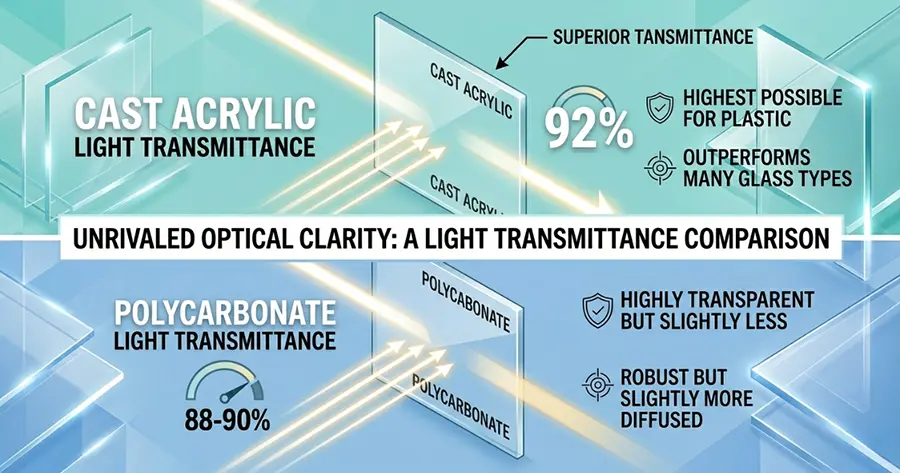
Acrylic allows 92 percent of light to pass through it. This is better than many types of glass. Polycarbonate allows 88 to 90 percent of light through. The difference sounds small, but in thick sheets you will notice it. A 10 millimeter acrylic sheet stays very clear. A 10 millimeter polycarbonate sheet can look slightly blue or green.
Yellowing and tinting over time
Acrylic is very stable in the sun. It does not yellow because it is naturally UV stable through the full thickness of the sheet. It will stay clear for 15 to 20 years in the sun. But the problem is that polycarbonate can turn yellow after only a few months if it does not have a special coating. Acrylic is naturally resistant to the sun. Polycarbonate needs help from humans to stay clear for a long time.
Edge polishing and aesthetic finish
You can polish the edge of acrylic until it is as clear as the surface. You can use a flame or a buffing wheel to make it shine. But you cannot do this with polycarbonate. The edges of polycarbonate do not polish the same way and will always look dark or fuzzy. Therefore, acrylic is much better for high end furniture and art where the edges are visible.
UV resistance and weatherability
You must check how the material handles the weather if you use it outside. This is a big part of polycarbonate vs acrylic UV resistance.
How Acrylic Handles UV Exposure
Acrylic does not need extra layers to survive the sun. It is born with UV stability. This makes it perfect for acrylic vs polycarbonate signage that stays outside in the heat and rain. It will not become brittle or lose its shine even after many years.
Does Polycarbonate Resist UV Without Coating?
Polycarbonate is different. Because of its chemistry, the sun can break it down. Manufacturers must add a UV resistant coating to the surface. This coating is usually about 50 microns thick.
If you buy polycarbonate for outdoor use, you must check that the sheet has this coating on both sides. Without it, the plastic becomes yellow and very weak.
Long-term outdoor performance
For a long life outside, acrylic is usually better. It often lasts 15 to 20 years without yellowing. Good UV coated polycarbonate usually lasts about 10 to 15 years.
But because polycarbonate is so strong, people still use polycarbonate vs acrylic roofing because it can handle heavy snow and hail storms. You must decide if you want the longest life or the best protection from falling ice.
Scratch Resistance and Surface Hardness of Polycarbonate and Acrylic
You will be surprised to learn that the strongest plastic is actually the easiest to scratch. This is a key part of polycarbonate vs acrylic scratch resistance.
Mohs hardness
Acrylic is a harder material. On the Mohs hardness scale, acrylic rates 4 to 5. Polycarbonate rates only about 3. This means acrylic is harder on the surface.
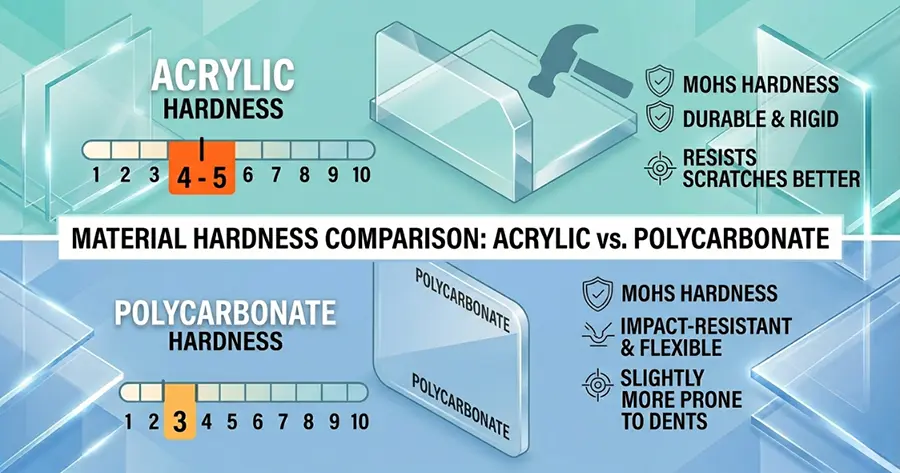
Everyday contact, cleaning cloths, and dust will scratch polycarbonate much faster. Therefore, you should use acrylic for things people touch often, like a counter top or a polycarbonate vs acrylic display case.
Can polycarbonate scratches be polished out?
But the problem is that you cannot fix polycarbonate easily. If you scratch it, those marks are usually permanent. You cannot polish them away the same way you can with other materials. But for acrylic, you can use a plastic polish and a soft cloth to restore the surface. You can make it look new again with a little work.
Hard-coat polycarbonate grades as a solution
There is a way to fix the scratch problem for polycarbonate. You can buy a hard coat version. This is a sheet with a very thin, very hard layer added during manufacturing. These sheets scratch far less than standard versions.
But the problem is that it makes the polycarbonate vs acrylic cost much higher. You should only buy this if your project needs both high strength and a clear surface that is cleaned often.
Polycarbonate and Acrylic Heat and Temperature Resistance
You must know how hot your project area will get. This is the polycarbonate vs acrylic temperature resistance.
Glass transition temperature
Polycarbonate handles temperatures up to 120 or 130 degrees Celsius in continuous use. Its glass transition temperature is 147 degrees Celsius. Acrylic starts to soften around 80 to 90 degrees Celsius. It deforms at its glass transition temperature of 105 degrees Celsius.
Therefore, polycarbonate is much better for parts near car engines or industrial lighting. It is also the reason for the acrylic vs polycarbonate fire rating difference. Polycarbonate is much harder to set on fire.
Cold-weather performance
Polycarbonate handles cold weather better. Acrylic becomes brittle in very cold temperatures and can crack more easily. If your project is in a very cold climate or will face big temperature changes, polycarbonate performs more reliably.
Polycarbonate and Acrylic Fabrication
You need to know how to cut polycarbonate vs acrylic before you start your work. The acrylic vs polycarbonate machinability is very different for both.
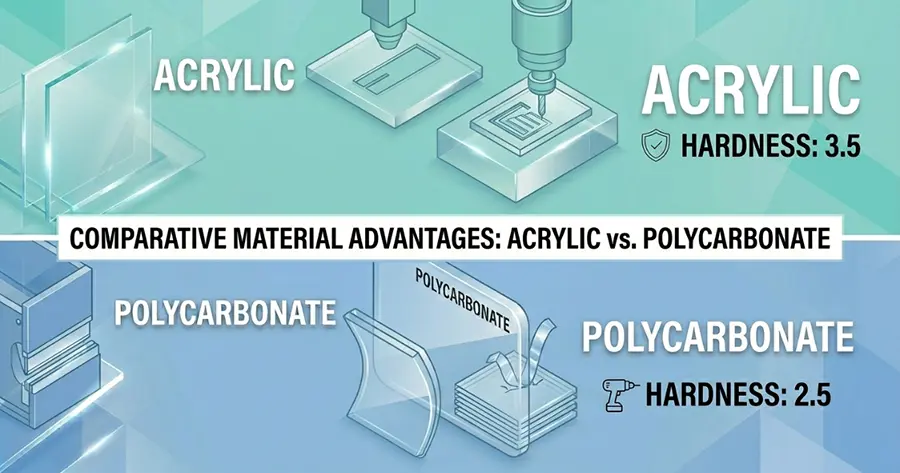
Cutting and machining
You can use a circular saw for both. But the reason is different. For acrylic, you must use a blade designed for plastics with many teeth to stop it from chipping. For polycarbonate, you can use a standard blade because it does not chip as much. You must keep the plastic cool while cutting. If it gets too hot, the material will melt at the cut edge.
Drilling without cracking
Drilling acrylic is where many people make mistakes. Acrylic cracks easily when you drill it incorrectly. You need a plastic point drill bit with a 60 to 90 degree tip angle. You must use light, steady pressure and always put a backing board under the sheet.
But for polycarbonate, you can use a regular drill bit. It does not crack when the bit exits the sheet. So for projects with many holes, polycarbonate is much easier to work with.
Bending
You can cold bend polycarbonate. This means you can take a thin sheet and bend it into a curve without any heat. You cannot do this with acrylic. If you want to bend acrylic, you must heat it to around 160 to 190 degrees Celsius. Then you shape it and let it cool. The result looks excellent, but the process takes more time and equipment.
Laser cutting
If you have a laser machine, you should use acrylic. A laser cuts acrylic cleanly and leaves polished edges. But the problem is that a laser will burn polycarbonate. The edges turn brown and look hazy. So for laser cut signs or art pieces, always choose acrylic.
Bonding, gluing, and finishing both materials
You can use a special glue that melts the two pieces of plastic together. This is called solvent welding. It works well for both materials. But you must use the right glue for each type to avoid cracking or white marks.
Polycarbonate vs Acrylic Price Per Sheet
You must look at your budget for the polycarbonate vs acrylic cost.
Raw material cost
In most cases, acrylic is much cheaper. Acrylic sheets cost about 35 to 50 percent less than polycarbonate of the same size and thickness. For example, an acrylic panel might cost 120 dollars while a polycarbonate one of the same size could cost 350 to 400 dollars.
If you are doing a large project and do not need extreme strength, acrylic will save you a lot of money.
Total cost of ownership
But the problem is the long term cost. Polycarbonate lasts longer in high impact situations. If you use cheap acrylic for a machine guard and it cracks in six months, you must replace it twice. In that case, the expensive polycarbonate was actually the better deal because it lasts much longer. You must think about how long you want the project to last before you choose the cheaper sheet.
Best Applications for Polycarbonate vs Acrylic
You will see these plastics in different places because of their unique traits.
Best uses for acrylic
Acrylic is the best choice for looks. You should use it for an acrylic vs polycarbonate aquarium because it is very clear and holds water well. It is also the top choice for acrylic vs polycarbonate signage and display cases where clarity matters.
Best uses for polycarbonate
Polycarbonate is the king of safety. Use it for polycarbonate or acrylic for windows in a garage where a ball might hit them. It is also the best choice for acrylic or polycarbonate for greenhouse use because it handles hail and falling branches. It is used for riot shields and face shields because it does not shatter.
Overlapping applications and how to decide
Sometimes you can use either one. For acrylic or polycarbonate for boat windows, you might use both. Use acrylic for the side windows because it stays clear in the sun. Use polycarbonate for the front window to protect you from heavy waves.
Polycarbonate vs Acrylic: Full Comparison Table
Here is a simple table to help you see the facts.
| Feature | Acrylic | Polycarbonate |
| Strength | 17 times stronger than glass | 250 times stronger than glass |
| Clarity | 92 percent (Better) | 88 to 90 percent |
| UV Resistance | Natural stability | Needs coating |
| Scratch Resistance | Higher (Mohs 4 to 5) | Lower (Mohs 3) |
| Heat Resistance | Up to 105 degrees Celsius | Up to 147 degrees Celsius |
| Bending | Needs heat | Cold bend possible |
| Cost | 35 to 50 percent lower | Higher |
Which should you choose?
You have all the facts now. You must choose based on what is most important for your job.
Choose acrylic when
If you want something that looks like glass and does not cost much, choose acrylic. It is the best choice for art, picture frames, and indoor displays. It will stay clear for a very long time without turning yellow.
Choose polycarbonate when
If you are worried about windows breaking or someone getting hurt, choose polycarbonate. It is the only choice for safety shields and outdoor covers in storm areas. It is much easier to work with if you are a beginner because it does not crack when you drill holes in it.
Summary
Both materials are great transparent plastic alternatives to glass, but they have different jobs. Acrylic gives you clarity and lower cost. Polycarbonate gives you strength and heat resistance. Think about your budget and your safety needs before you buy.
FAQ
What is food safe polypropylene?
Polypropylene is one of the safest plastics for food contact. It has Resin Identification Code #5. It is BPA and Phthalate Free. Polypropylene is highly resistant to fats, oils, and acidic foods.
Is polycarbonate stronger than acrylic?
Yes. Polycarbonate is about 30 times stronger than acrylic and 250 times stronger than regular glass.
Which is more scratch resistant — acrylic or polycarbonate?
Acrylic is more scratch resistant. Polycarbonate is softer on the surface and picks up scratches faster.
Does polycarbonate yellow over time?
Standard polycarbonate will yellow under UV light. Acrylic does not yellow because it is UV stable.
Can you use acrylic outdoors?
Yes. Acrylic is naturally UV resistant and holds its clarity for 15 to 20 years in the sun.
What is the difference between Lexan and Plexiglass?
Lexan is a brand name for polycarbonate. Plexiglass is a common name for acrylic.
Which is cheaper — acrylic or polycarbonate?
Acrylic is 35 to 50 percent cheaper per sheet.