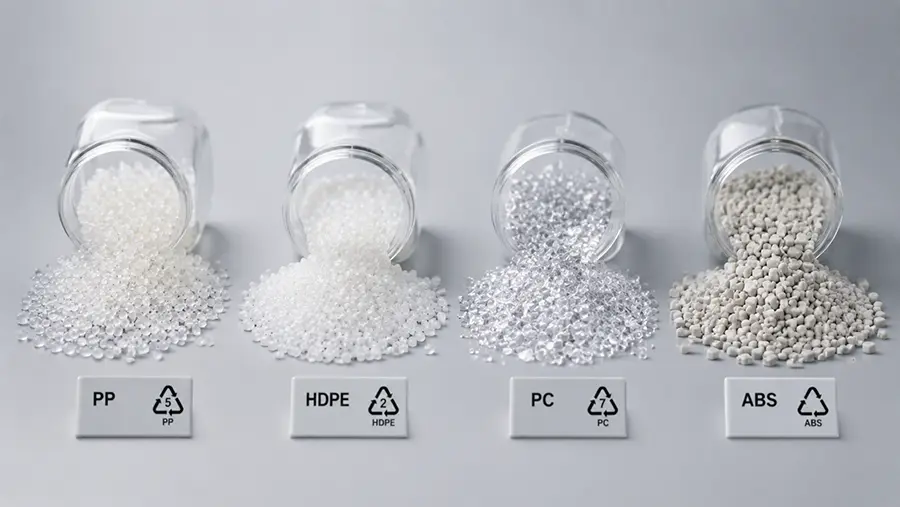
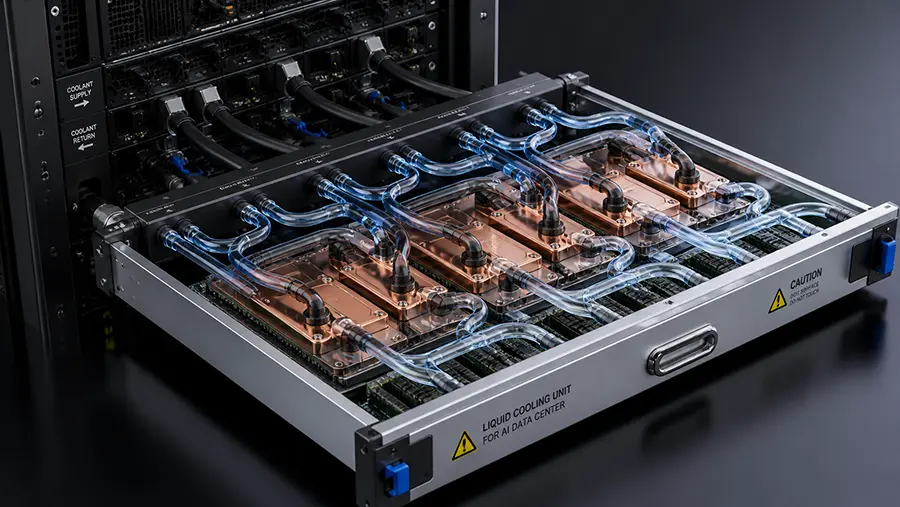
Introduction
More transparent parts are being made from acrylic because product requirements have changed. Many parts now need not only transparency, but also lightweight structure, easy hole processing, convenient assembly, and compatibility with manufacturing from prototyping to mass production. Acrylic is easier to apply in these aspects, so it is commonly used in equipment viewing windows, light covers, instrument panels, transparent covers, and decorative housings.
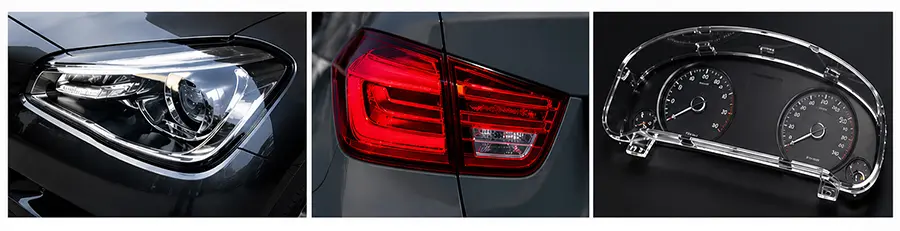
This does not mean glass is being replaced. Glass is still suitable for applications requiring high scratch resistance, high heat resistance, strong cold-touch feel, or specific brand preferences. However, for small to medium-sized parts, more complex structures, or faster delivery timelines, acrylic is often better at balancing appearance, cost, and production stability.
Material Selection for Transparent Parts Is Not Just About Clarity
Once a product enters development, transparent parts are affected by weight, thickness, edge finishing, hole accuracy, transportation safety, and maintenance. Glass offers high hardness and a premium feel, but for complex shapes, localized holes, or irregular structures, both cost and breakage risk need to be considered in advance.
The advantage of acrylic is not that it outperforms glass in every aspect, but that it combines visual performance with manufacturing adaptability. For parts that are not exposed to long-term high temperature, heavy friction, or strong chemical environments, acrylic is easier to turn into a product that can be manufactured, assembled, and delivered consistently.
Greater Design Flexibility with Acrylic
Acrylic can be cut, engraved, thermoformed, bonded, and polished. It also allows curved surfaces, steps, chamfers, holes, and integrated frames. This enables designs to go beyond simple flat panels and be refined according to installation methods and visual layering.
Post-processing is another reason for its wide adoption. Through silk screening, painting, hard coating, and localized matte finishing, the same type of transparent part can present different brand appearances. If higher scratch resistance, solvent resistance, or outdoor stability is required, coatings should be evaluated in advance, or alternative materials such as PC or glass should be considered.
Injection Molding Makes Transparent Parts More Suitable for Mass Production
When a product enters stable mass production, acrylic injection molding becomes more efficient for high volumes, consistent dimensions, and relatively fixed structures. The mold can form the outer shape, snaps, mounting features, ribs, and localized textures in one process, reducing the need for secondary assembly and machining.
For consumer electronics windows, equipment viewing windows, lighting components, and decorative transparent parts, this approach helps reduce assembly errors and improve consistency in large-scale production. However, proper mold design, gating, venting, and process control are essential; otherwise, defects such as weld lines, flow marks, or internal stress may still appear.
CNC Machining Provides Flexibility for Prototyping and Small Batches
Not all projects justify tooling at the beginning. When appearance is still being validated, order volume is small, or dimensions need frequent adjustments, acrylic CNC machining is more suitable as an early-stage solution. It allows quick confirmation of panels, windows, transparent covers, and display parts.
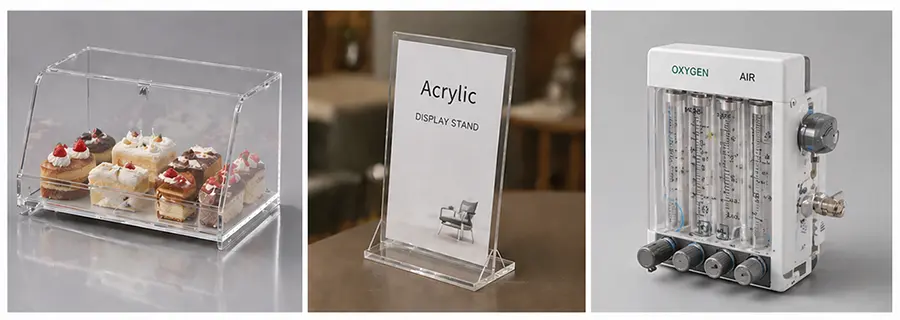
The value of this approach lies in reducing trial-and-error costs. Early stages focus on validating holes, edges, and assembly relationships. Once requirements are stable, the project can be evaluated for transition to injection molding. This avoids premature tooling and helps customers better plan the production path.
Acrylic Advantages Must Be Matched with Structure
The performance of acrylic transparent parts depends not only on the material itself, but also on whether the structural design and manufacturing process are aligned. If holes, edges, mounting steps, bonding surfaces, and surface protection are not considered in advance, defects such as burrs, weld lines, scratches, or stress marks may appear after assembly, even if the material has high transparency.
Therefore, the advantages of acrylic should be evaluated together with manufacturing methods. For complex structures in mass production, injection molding should be prioritized to improve consistency and assembly efficiency. For rapid prototyping, small batches, or frequent design changes, CNC machining is more suitable to reduce iteration cost. This approach connects material advantages with structural implementation and delivery requirements, rather than relying on the assumption that one material is simply better.
For transparent housings, viewing windows, equipment panels, and decorative parts, the key is to first define appearance requirements, production volume, structural complexity, assembly method, and budget timeline, and then determine the material and process. Acrylic is used more frequently because it supports both prototyping and mass production needs. A reliable material selection ultimately depends on understanding the application boundaries.
If you need acrylic injection molding or acrylic CNC machining, contact our engineers for the best solution.