The biggest misunderstanding
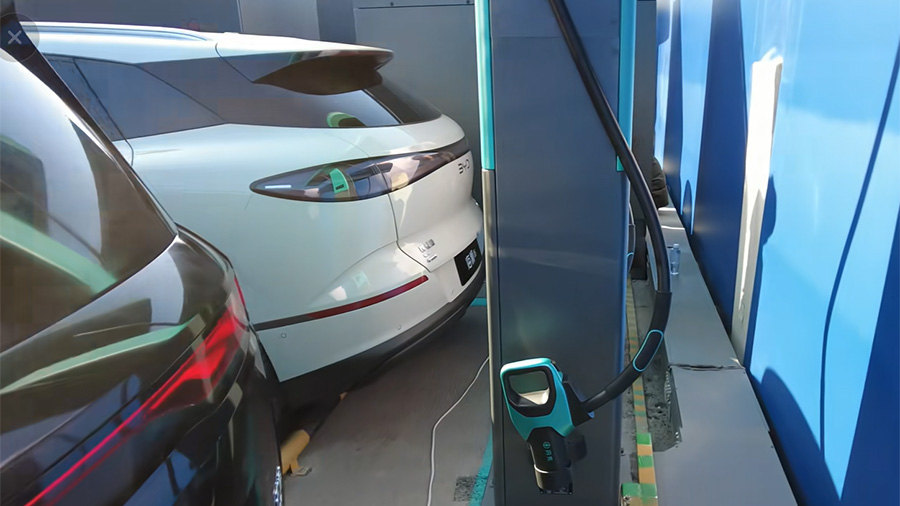
Last night, on March 5, 2026, BYD unveiled its latest fast-charging technology, pushing EV charging times into territory once reserved for gasoline refueling. As charging moves from half-hour waits to just a few minutes, the EV industry is entering a new phase of growth—one driven less by early adoption and more by real-world usability. That shift matters far beyond batteries and charging infrastructure. It is also reshaping how value is created across the supply chain. For manufacturers of injection-molded parts, the opportunity is not simply that EVs may use more plastic components. That is the obvious answer, and not the most important one. The real opportunity lies in how the role of plastic parts is changing: low-value commodity parts will face even tougher price competition, while functional, integrated, and safety-critical components move closer to the center of vehicle design.
Many people hear “EV” and immediately assume injection-molded parts must have a bigger future. The logic sounds straightforward: vehicles are becoming more electronic, interiors more digital, and structures more complex, so naturally there should be more room for plastic components.
That is only half true.
The EV era does create opportunities, but not because “there will be more plastic parts.” The real shift is that plastic parts are being assigned a different role. If a supplier still thinks in terms of clips, covers, decorative trim, or ordinary brackets, the EV transition may not create more upside at all. In fact, it may make things worse. EVs are not just replacing one powertrain with another. They are reshaping vehicle architecture, cost structures, and supply-chain power.
Put more bluntly:
EVs are not handing the injection-molding industry a free gift. They are forcing it to choose where it wants to stand.
The biggest misunderstanding: assuming the EV era simply means more plastic parts
Many traditional molding companies look at EVs and instinctively focus on part count. More screens in the cabin, more advanced lighting, more charging-related components, more connectors, more wiring supports—therefore, demand for plastic parts must be rising.
But the reality is more complicated.
One of the defining trends in EVs is integration. Platform design, modularization, and system consolidation are not necessarily creating more individual parts. In many cases, they are doing the opposite. A subassembly once made up of five or six plastic parts may now become one larger molded component with a few inserts. A function that used to rely on multiple small pieces can now be designed directly into one material-system-structure solution.
That changes the game.
It means low-value, highly replaceable small parts will become even more competitive and commoditized, while the real value shifts toward larger, more complex, more functional components.
So the opportunity in the EV era is not about producing more commodity housings. It is about whether a supplier can turn a plastic part from a passive accessory into a functional part of the system.
The real opportunity is not in appearance parts, but in functional plasticization
The most important difference between EVs and internal combustion vehicles is not simply the absence of the engine. It is the rise of battery systems, high-voltage architecture, power electronics, thermal management, and intelligent controls.
And that is exactly where new space opens up for injection-molded components.
- High-voltage electrical systems: insulation, safety, and precision are becoming the new battleground
The most valuable molded parts in EVs are not always the biggest or the most visible. They are often the ones tied to electrical safety.
This includes parts such as high-voltage connector housings, busbar support structures, insulating brackets, sensor housings, wire-management components, and charging interface parts.
The barrier here is not just molding capability. It is whether the supplier can deliver:
- stable insulation performance
- reliable flame-retardant properties
- tight dimensional consistency
- durability under thermal cycling, vibration, and humidity
- acceptable mass-production yield at scale
The value of these products does not come from the plastic itself. It comes from how that plastic functions inside a safety-critical electrical system.
Any company that still defines itself simply as “a shop that runs molding machines” will struggle to enter this space.
- Battery pack applications: a big opportunity, but not an easy one
The moment people hear “battery pack,” they get excited. And they are not entirely wrong. Battery-related applications are one of the biggest opportunity areas in EVs—but also one of the most misunderstood.
There is real plasticization potential around battery packs: cell spacers, module support components, insulating barriers, sampling-wire retention structures, cooling-related plastic parts, and various functional components around upper and lower pack assemblies.
The catch is that this is no longer ordinary automotive plastics logic. It is closer to safety-component logic.
Once a part influences electrical insulation, thermal propagation, assembly precision, or long-term reliability, the customer is no longer just buying a molded component. They are buying risk control.
In other words, battery-pack applications are not attractive because the unit prices may be higher. They are difficult because the consequences of failure are much more serious.
Companies that want to enter this area need more than molding capacity. They need material knowledge, simulation capability, stable tooling, and disciplined validation systems. As we noted in our article on how to select the right plastic material, “selecting a plastic material is a systematic decision-making process that requires balancing multiple factors.”
- Thermal management: an underestimated source of growth
The EV industry depends heavily on thermal management, yet many plastics suppliers still do not treat this as a strategic opportunity.
As thermal systems become more complex, so does the demand for molded parts used in tubing support, valve-related housings, pump-adjacent components, sensor housings, ducting, reservoir-related structures, and other functional applications. The key advantage here is not only weight reduction. It is also temperature resistance, chemical resistance, dimensional stability, and assembly consistency.
This space sits in an interesting middle ground. It is not as technically intimidating as some high-voltage electrical components, but it is also not as crowded and commoditized as standard interior trim. For molding companies with real engineering capability that want to move beyond pure price competition, this is one of the most practical entry points.
Smart interiors look exciting, but excitement does not always translate into profit
Many suppliers love talking about smart interiors because they are visible, tangible, and easy to market.
Ambient lighting components, hidden air-vent structures, IMD and INS decorative panels, light-transmitting surfaces, screen-adjacent structural parts, and complex appearance parts are all part of the modern EV conversation.
But this is where some caution is needed.
Smart interiors do offer opportunities, but they also create one of the easiest traps in the business: looking premium while earning very little.
Why? Because these parts often come with three characteristics:
- high visual standards and expensive rejection costs
- frequent design changes and compressed development schedules
- a large pool of alternative suppliers and relentless price pressure
A lot of companies enter this segment and end up realizing they are simply helping the brand create a “high-tech look” without building any real technical moat of their own. Today the customer wants piano black. Tomorrow it wants micro-texture. Next month it wants a backlit surface with no visible light source. But regardless of the styling request, procurement still asks the same question: can you do it for less?
So yes, smart interiors can be worth pursuing—but only if the supplier can do far more than “make parts look good.” It needs to control surface finishing, assembly tolerances, optical behavior, squeak-and-rattle performance, and automated inspection. Otherwise, it is not entering a premium market. It is entering a more sophisticated version of the same old price war.
The toughest demand in EVs is not innovation alone, but the demand for everything at once
Many people assume the challenge of EVs lies mainly in new technology. In reality, a large number of projects fail not because the concept is difficult, but because the production reality is brutal.
Customers typically want EV plastic parts that are:
- lighter
- thinner
- more complex
- more stable
- lower in cost
- and delivered on a shorter timeline
It is a demanding list, but that is the market.
Vehicle manufacturers and Tier 1 suppliers are not going to lower expectations simply because a part is “just plastic.” They will push vehicle cost-down targets, range concerns, assembly efficiency, and aesthetic consistency all the way down the supply chain.
That is why one of the harshest truths of the EV era is this:
an injection-molding company can no longer survive as a mere processor. It is being pushed to become a problem solver.
It has to understand materials, mold flow, dimensional chains, automation, reliability validation, and ideally even the customer’s platform logic. The old model—quote from drawings, build the tool, ship the parts—used to be enough. Today, that path leads straight to the bottom of the pricing ladder.
Three types of companies will capture EV value.
Most others will only follow.
The first: companies that can deliver functional integrated parts
These are the suppliers that can consolidate multiple small components into one larger part and combine structural support, retention, insulation, sealing, and even appearance functions into a more integrated solution.
They are not just winning molding work. They are gaining influence earlier in design.
The second: companies that can sell materials and process knowledge together
These suppliers do not simply mold whatever resin the customer specifies. They can also tell the customer what material should be used, how wall thickness should be adjusted, how weld-line risk can be reduced, and how to balance performance with cost.
At that point, they are no longer selling only molded parts. They are selling engineering judgment.
The third: companies that can mass-produce precision and safety-related parts reliably
In the EV market, the real value is not in “making a working sample.” It is in delivering stable production without failure.
For high-voltage parts, thermal-management components, and battery-adjacent applications, customers ultimately pay for consistency. The suppliers that can build strong PPAP discipline, reliability validation, process capability, and traceability systems are the ones that move beyond simple quoting.
The least promising path:
talking about the EV boom while staying in low-barrier contract manufacturing
One of the most common illusions in the industry is to confuse a market trend with a competitive advantage.
As if serving an EV customer automatically makes a supplier more valuable.
That is dangerous thinking.
The EV market is growing, but growth does not guarantee profit. New-energy customers may launch more programs, but that does not mean suppliers gain more negotiating power. In fact, because the EV supply chain is moving faster and competing harder, many low-barrier molding companies may be pushed out even faster than they were in the internal-combustion era. The broader market expansion is real—global electric car sales exceeded 17 million in 2024, with a sales share above 20%—but that growth does not reward every supplier equally. (IEA)
The reason is simple:
EVs welcome plastic parts, but they do not reward low-value plastic parts.
If a supplier cannot move from ordinary structural components to functional ones, from simple processing to collaborative development, and from experience-based trial-and-error to data-driven production, then the hotter the EV market becomes, the faster it may be replaced.
Conclusion
The EV era absolutely creates opportunities for injection-molded parts. But the opportunity is not simply that “electric vehicles will use more plastics.” The deeper truth is this:
the functional boundaries of the vehicle are being rewritten, and plastic parts are moving from supporting roles into the system itself.
The suppliers that can enter hard application areas—high-voltage safety, thermal management, functional integration, and precision structures—have a real chance to escape commodity competition. Those that remain dependent on ordinary decorative parts, small covers, and generic brackets will discover that EVs did not save them. They merely gave them a new group of customers who still expect lower prices.
In the end, the EV transition is not a universal growth story for the injection-molding industry. It is a sorting process.
It will not reward companies simply because they know how to mold plastic.
It will reward companies that know how to turn plastic parts into product capability.
The opportunity is real.
But it is not for everyone.