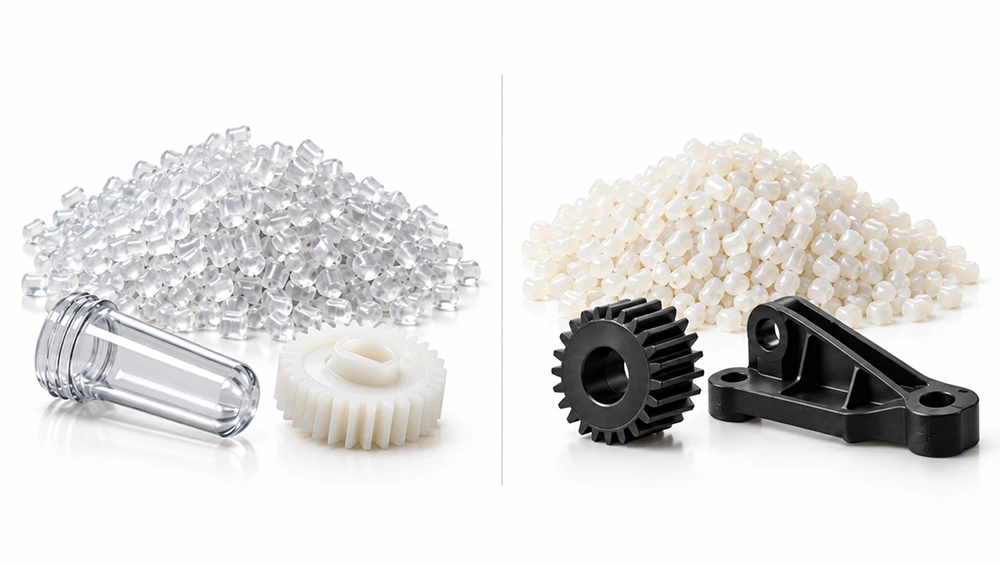
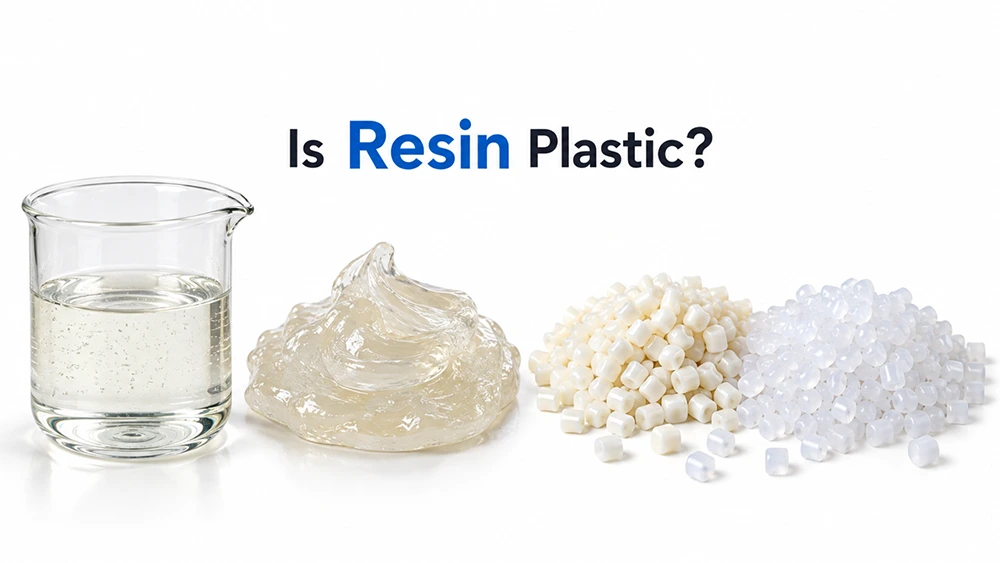
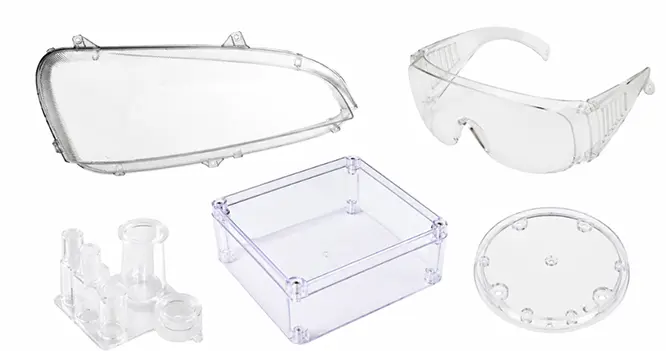
Lexan is commonly used in transparent protective covers, automotive lighting components, and electronic housings because it can provide both high transparency and strong impact resistance. But what exactly is Lexan, and how is it related to the commonly used material PC? Below is a brief look at its properties, applications, and limitations.
1. What Is Lexan?
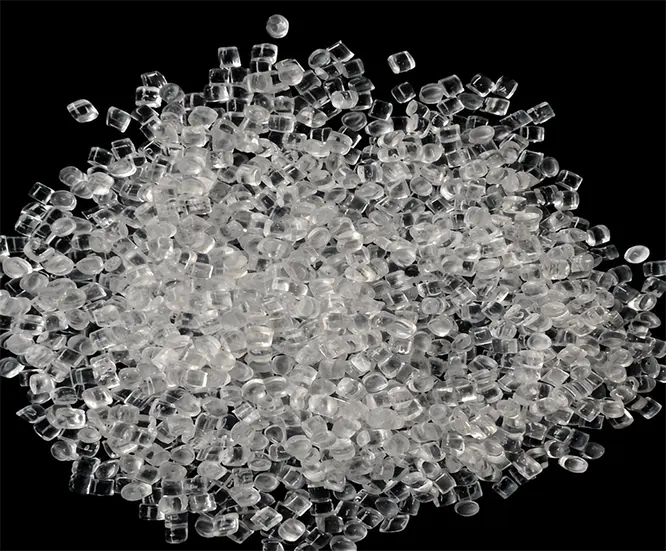
Lexan is a family of thermoplastic engineering plastics based primarily on PC (polycarbonate) resin. From a material-structure perspective, it is an amorphous polymer whose molecular chains contain carbonate groups. This structure is what allows the material to combine high impact strength, transparency, heat resistance, and good dimensional stability.
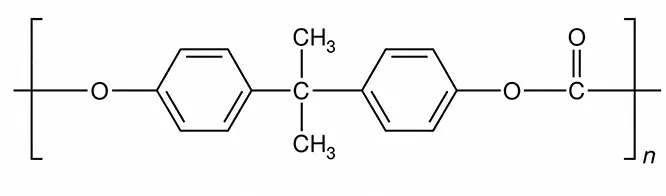
In terms of its material nature, Lexan is not a separate type of plastic outside the PC family. It belongs to the polycarbonate material system and is a polycarbonate brand owned by SABIC.
2. Main Properties of Lexan
High Impact Strength
Impact resistance is one of the most notable properties of Lexan. Compared with ordinary glass and many transparent plastics, PC can withstand significantly greater impact without breaking easily.
This makes it particularly suitable for protective covers, safety equipment, and structural parts that may be exposed to impact. It is especially useful in applications where both transparency and impact resistance are required.
Good Transparency
Transparent grades of Lexan offer high light transmission while still maintaining strong impact resistance. As a result, they are well suited for transparent housings, viewing windows, lighting components, and other products that require both clear visibility and a certain level of protection.
Compared with ordinary glass, Lexan is much less likely to shatter under impact, giving it a clear advantage in transparent applications where safety and durability matter.
Relatively High Heat Resistance
Compared with many common plastics such as PMMA, PE, and PP, PC can generally maintain better mechanical properties and dimensional stability at higher temperatures.
For this reason, Lexan is more suitable for parts located near heat sources, electrical equipment, or applications with relatively high operating temperatures. However, heat resistance varies between different grades.
Lightweight
Lexan has a much lower density than glass. In applications that require transparent protective structures, replacing glass with PC can significantly reduce the overall weight of the product.
This is particularly valuable in automotive components, portable equipment, and large transparent protective parts, where lower weight can improve usability and reduce the load on supporting structures.
Good Dimensional Stability
Lexan can maintain relatively stable dimensions under suitable temperature and service conditions, which is important for engineering parts that require assembly.
For example, excessive dimensional change in housings, connection structures, or functional components may affect clearances and assembly accuracy. For complex PC injection-molded parts, dimensional stability is therefore an important factor to consider during material selection.
Good Electrical Insulation
Lexan provides good electrical insulation while also offering strong mechanical performance and heat resistance.
It is therefore widely used in electrical housings, connectors, insulating structures, and internal components of electronic devices. Some specialized grades are further formulated to improve flame-retardant or electrical performance for specific applications.
3. Common Lexan Grades and Applications
LEXAN is available in a wide range of grades, each designed with a different balance of flowability, flame resistance, heat resistance, optical properties, and other characteristics. The following are several representative grades and their typical applications.
| LEXAN™ Grade | Main Category | Key Properties | Typical Applications |
| 141R | General-purpose transparent grade | Transparent, easy release, suitable for injection molding | Transparent housings, automotive lighting, appliance components |
| 945A | Transparent flame-retardant grade | Transparent, non-halogenated flame retardant, UL94 V-0, injection-molding grade | Electrical housings, electronic equipment, transparent flame-retardant parts |
| LUX2614G | Optical / LED grade | Light diffusion, UV stability, flame retardancy, resistance to heat aging | LED covers, diffusers, lighting components |
| XHT4141 | High-heat grade | High flow, high-heat PC copolymer | Complex or thin-wall injection-molded parts used in high-temperature environments |
4. What Is the Difference Between Lexan and Polycarbonate?
Lexan and polycarbonate are not two different plastics. PC is the generic name for polycarbonate, while Lexan is a PC brand owned by SABIC.
Therefore, what is commonly referred to as Lexan is fundamentally part of the PC material family. The main differences lie in the specific grades and performance levels, such as transparency, flame resistance, weatherability, high flow, or heat resistance.
In practical material selection, rather than simply comparing Lexan with PC, it is more important to review the performance data of the specific grade based on the requirements of the product.
5. Limitations of Lexan
The Surface Scratches Relatively Easily
Although Lexan has excellent impact resistance, its surface hardness is not particularly high. Transparent parts can develop fine scratches after repeated rubbing or cleaning, which may affect both appearance and light transmission.
When surface quality is important, scratch-resistant coatings or specially treated grades are often required.
Sensitive to Certain Chemicals
Some solvents, strong alkalis, cleaning agents, or oils may affect the surface and mechanical properties of Lexan. If the part is also under stress, exposure to incompatible chemicals may further increase the risk of stress cracking.
For this reason, parts used in medical, automotive, or industrial environments should be evaluated in advance for the chemicals they may come into contact with.
Outdoor Use Requires the Right Grade
Standard Lexan grades may yellow or experience performance degradation after prolonged exposure to ultraviolet radiation. For outdoor transparent covers, lighting components, and similar products, UV-stabilized or weather-resistant grades should be selected rather than relying on the material name alone.
Injection Molding Requires Careful Processing
Because Lexan is a PC material, it normally needs to be thoroughly dried before injection molding. If moisture is present during processing, defects such as splay marks and bubbles can easily occur.
PC also requires relatively high processing temperatures, and melt temperature, mold temperature, and injection parameters all need to be controlled carefully. For transparent parts or components with tight dimensional requirements, processing conditions have an even greater effect on final part quality.
Cost Is Not Suitable for Every Product
Lexan offers a strong overall combination of properties, but its material cost is generally higher than that of common plastics such as PP and ABS. If a product does not require high impact resistance, transparency, or relatively high heat resistance, Lexan may not be the most economical choice.
Conclusion
Lexan is only one representative brand within the PC material family. What ultimately determines material performance is the specific grade and the conditions in which it is used.
For engineering plastics, knowing the material name is only the first step. Understanding the conditions under which the material performs well—and where its limitations begin to appear—is far more useful in real-world product design and manufacturing.