
Some resins are plastics, but not all resins are considered plastics. Many synthetic resins can be used directly as plastic materials or modified with additives to achieve specific properties. This article explains what resin and plastic are, their key differences, and how they are used in industrial manufacturing.
1. What Is Resin?
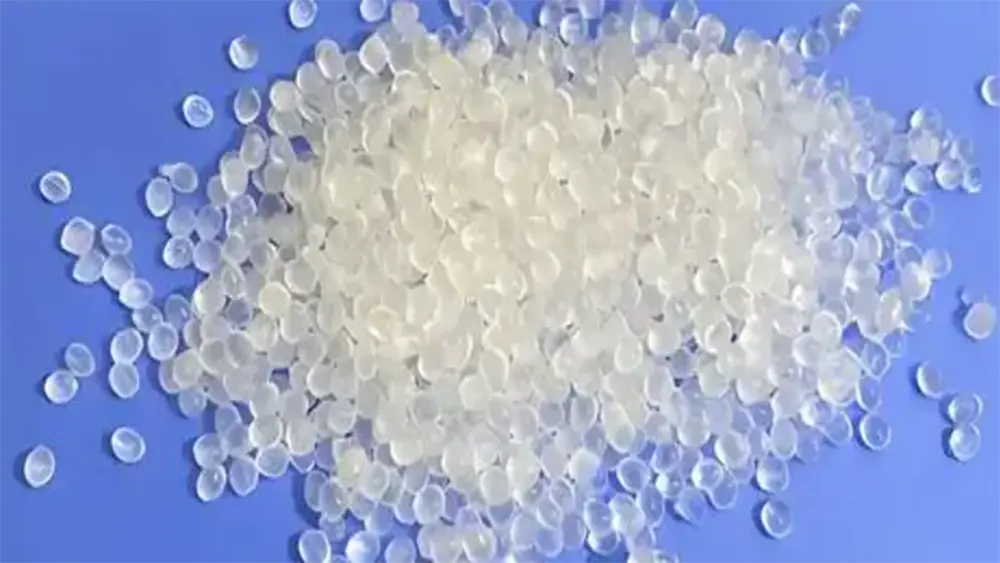
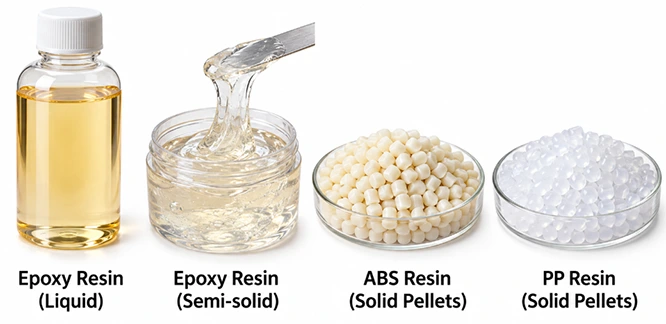
Resin is a category of natural or synthetic organic materials, typically composed primarily of polymers. It is widely used in plastics, coatings, adhesives, and composite materials. Resin can exist in liquid, semi-solid, or solid form. For example, epoxy resin is commonly supplied as a liquid, while ABS and PP resins used in injection molding typically come in solid pellets.
Natural Resins vs. Synthetic Resins
Natural Resins: Derived from natural sources, primarily plants. Rosin, for example, is commonly used in coatings, inks, and adhesives.
Synthetic Resins: Produced through chemical synthesis. Examples include polyethylene (PE), ABS, and epoxy resin, which are widely used in plastic manufacturing, electronic products, and industrial applications.
Thermoplastic Resins vs. Thermosetting Resins
Based on how they respond to heat and curing, common synthetic resins can also be divided into two categories:
Thermoplastic Resins: These materials soften or melt when heated and solidify again when cooled. They can generally be reprocessed multiple times. Common examples include PP, PE, and ABS.
Thermosetting Resins: These resins form cross-linked structures through chemical reactions. Once cured, they cannot be melted and reshaped. Examples include epoxy and phenolic resins.
2. What Is Plastic?
Plastic is a material composed primarily of polymers that can be shaped through suitable manufacturing processes.
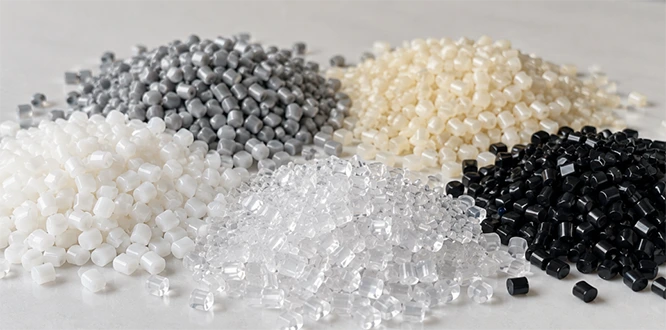
Plastics are typically made primarily from synthetic resins and may also contain additives such as plasticizers, flame retardants, stabilizers, glass fibers, and colorants to improve processing characteristics or meet specific performance requirements.
Additives are not required for a resin to be considered a plastic. Many resins already have the essential properties of plastics without additional modification.
3. Resin vs. Plastic: Key Differences
The terms resin and plastic overlap in meaning. Resin can refer to the base material used to manufacture plastics, as well as resin systems used in coatings, adhesives, and composites. Plastic, on the other hand, generally emphasizes a material’s moldability and its use in engineering and everyday applications.
| Comparison | Resin | Plastic |
| Definition | A category of natural or synthetic organic materials | A moldable material composed primarily of polymers |
| Source | Natural sources or chemical synthesis | Mainly made from synthetic polymers, though bio-based polymers can also be used |
| Physical Form | Liquid, semi-solid, or solid | Pellets, powders, melts, or finished solid products |
| Additives | Added depending on the intended application | Added according to performance and processing requirements |
| Main Applications | Plastic production, coatings, adhesives, composites, and more | Packaging, electronics, automotive parts, industrial equipment, and more |
In the plastics manufacturing industry, plastic resin generally refers to the raw material used to make plastic products, while plastic can refer to either the material itself or the finished product. For example, ABS resin and ABS plastic may refer to the same material, depending on the context.
4. Can Resin Be Used Directly as Plastic?
Yes. Some resins can be used as plastics without additional modification, while others can be combined with additives to produce modified plastics with specific properties.
Using Base Resins Directly
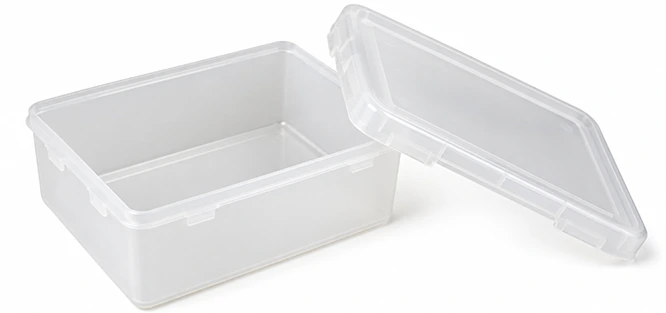
Certain PP, PE, and ABS resins can be used directly in plastic manufacturing processes such as injection molding and extrusion without additional compounding or modification.
For example, PP food storage containers can be manufactured using injection-molding-grade PP resin suitable for food-contact applications.
Modifying Resins with Additives
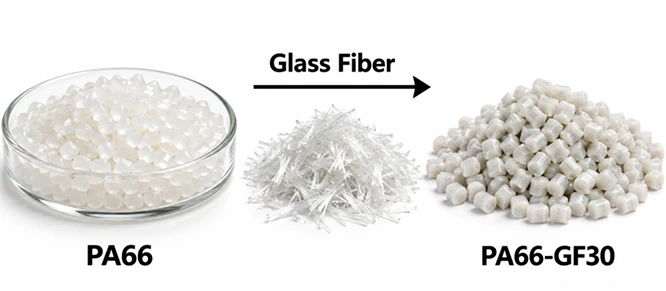
When a standard resin cannot meet a product’s performance requirements, additives such as glass fibers, flame retardants, and impact modifiers can be incorporated to enhance specific properties.
Take PA66 nylon as an example:
Unfilled PA66 is already a thermoplastic material commonly used for gears, connectors, and other mechanical components.
PA66-GF30, reinforced with approximately 30% glass fiber, generally offers higher stiffness, strength, and heat deflection resistance.
5. Resin and Plastic in Manufacturing
Resins and plastics are widely used in industrial manufacturing. Different material types are suited to different production processes, including injection molding, 3D printing, and resin casting.
Injection Molding
Injection molding primarily uses thermoplastics such as ABS, PP, and PC, which are also known as thermoplastic resins. During the process, plastic pellets are heated until molten, injected into a mold, and cooled to form the desired parts.
From remote control housings and plastic toys to automotive interior components, many everyday plastic parts are made through injection molding. The process is especially well suited for producing complex plastic parts in high volumes.
3D Printing
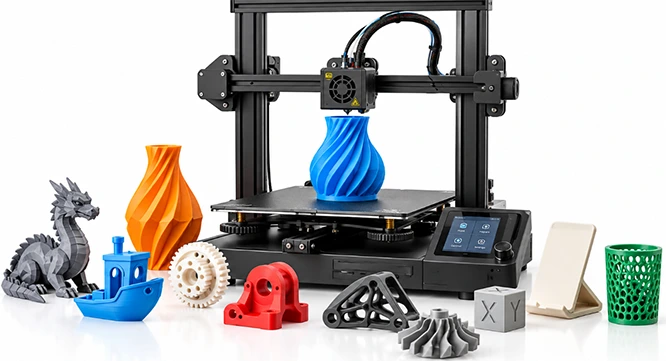
3D printing can use both plastics and resins, depending on the printing technology. FDM printing primarily uses thermoplastics such as PLA and ABS, while SLA and DLP printing use liquid photopolymer resins. Parts are built layer by layer through material deposition or light-induced curing.
Resin Casting
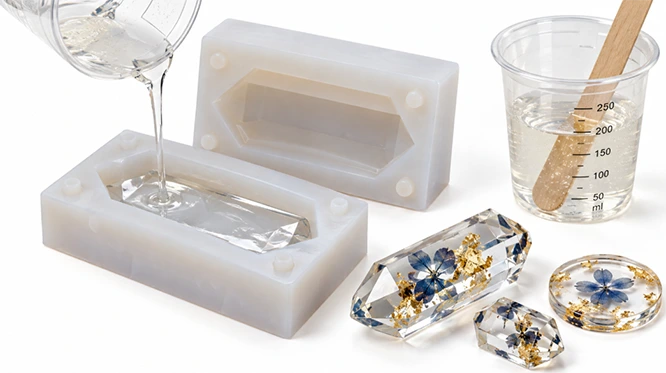
Resin casting primarily uses liquid resin systems such as epoxy and polyurethane resins. The resin is poured into a mold and allowed to cure, forming a solid part with the desired shape.
Common applications include clear resin ornaments, resin tabletops, and electronic component encapsulation.
 FAQs
FAQs
Is Resin Recyclable?
It depends on the resin type. Thermoplastic resins such as PP, PE, and ABS can generally be recycled through suitable processes, while cured thermosetting materials such as epoxy resin are much more difficult to recycle.
Is Resin Toxic?
Resin safety depends on its formulation and physical state. Some uncured epoxy and photopolymer resins may cause irritation or allergic sensitization, while properly used solid thermoplastics have different risk profiles. Always refer to the material’s Safety Data Sheet (SDS).
Is Resin Waterproof?
Some resins, such as cured epoxy and PE, offer good water resistance, but not all resins are completely resistant to moisture absorption. Materials such as PA (nylon) can absorb some moisture, which may affect their properties.
What Do the Numbers on Plastic Products Mean?
The numbers 1 through 7 commonly found on plastic products are Resin Identification Codes (RICs), used to identify plastic types. For example, 1 represents PET, 2 represents HDPE, and 5 represents PP. These numbers do not necessarily mean the product is recyclable.
Is Plastic Made from Petroleum?
Most conventional plastics are made from fossil-based feedstocks such as petroleum or natural gas. However, some bio-based plastics are produced using renewable resources such as corn and sugarcane, including certain grades of bio-based PE and PLA.