Custom PSU Injection Molding
We injection mold custom polysulfone (PSU) parts for applications that require heat resistance, dimensional stability, or visibility into a fluid path. Typical parts include flow covers, filter housings, and instrument components.
Request a Quote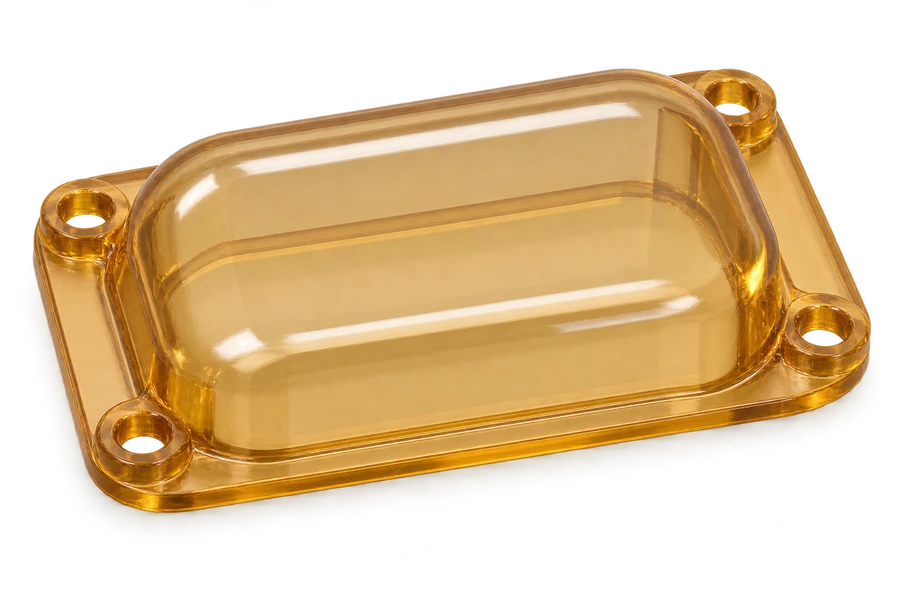
PSU Injection Molded Parts and Applications
-
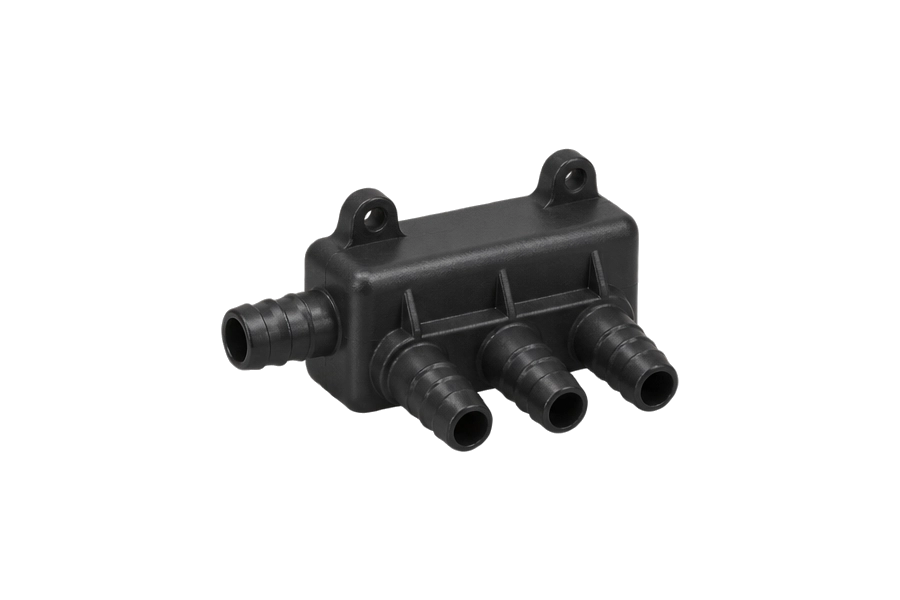
Hot-Water Manifolds
Distribute hot water from one inlet to multiple branches in plumbing assemblies.
-
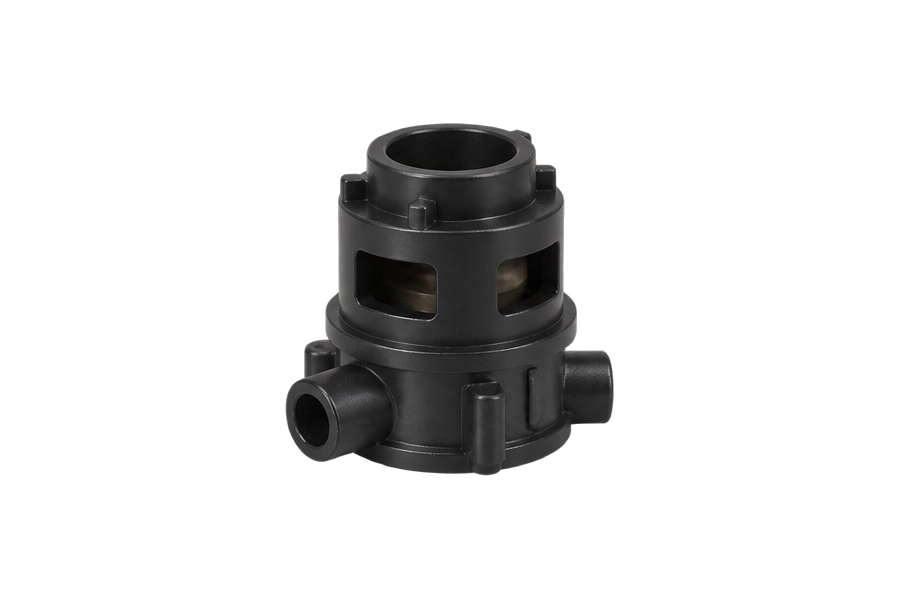
Faucet Cartridge Bodies
House valve components and route water through molded ports and passages.
-
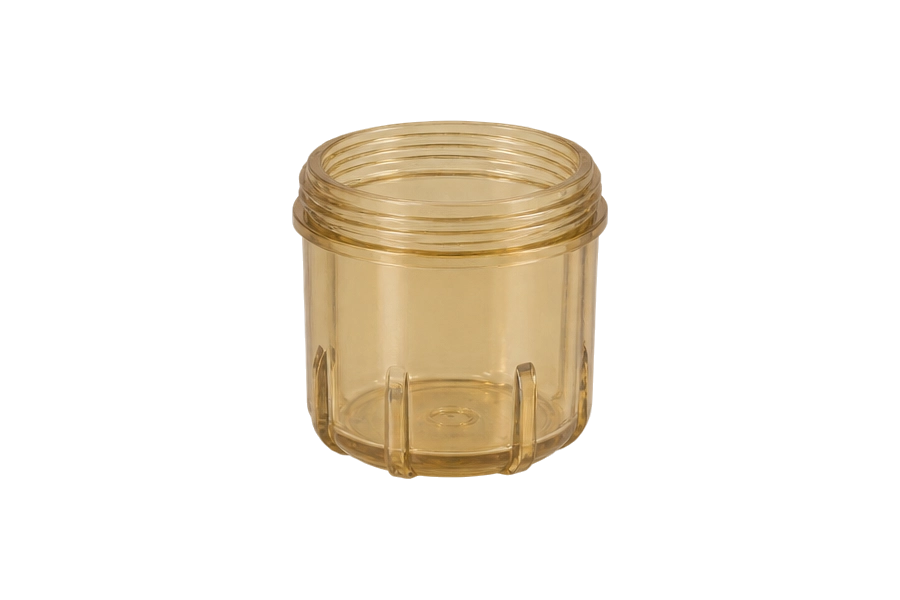
Filter Housings
Enclose filter elements and allow visual inspection through translucent walls.
-
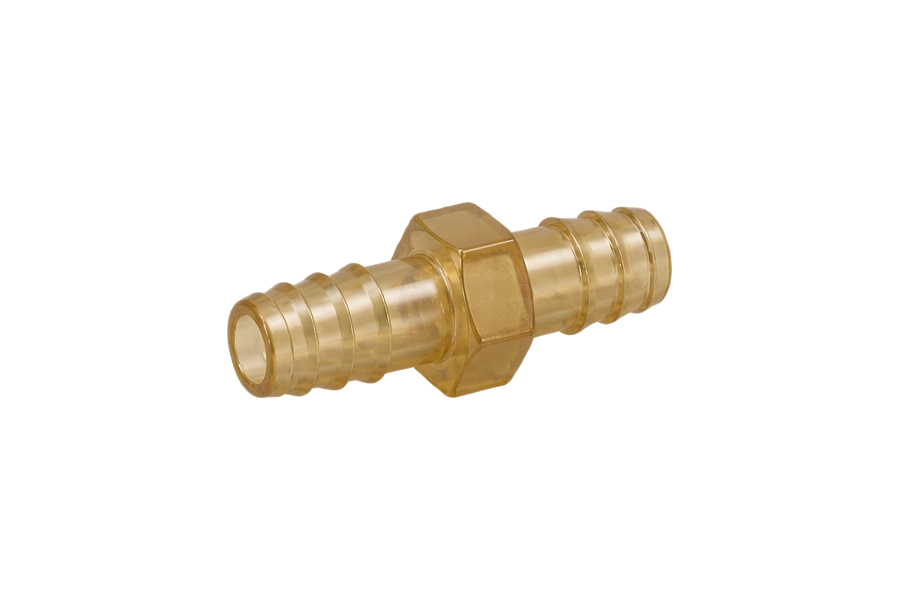
Barbed Fluid Connectors
Join flexible tubing in fluid-handling assemblies, including single-use bioprocess systems.
-
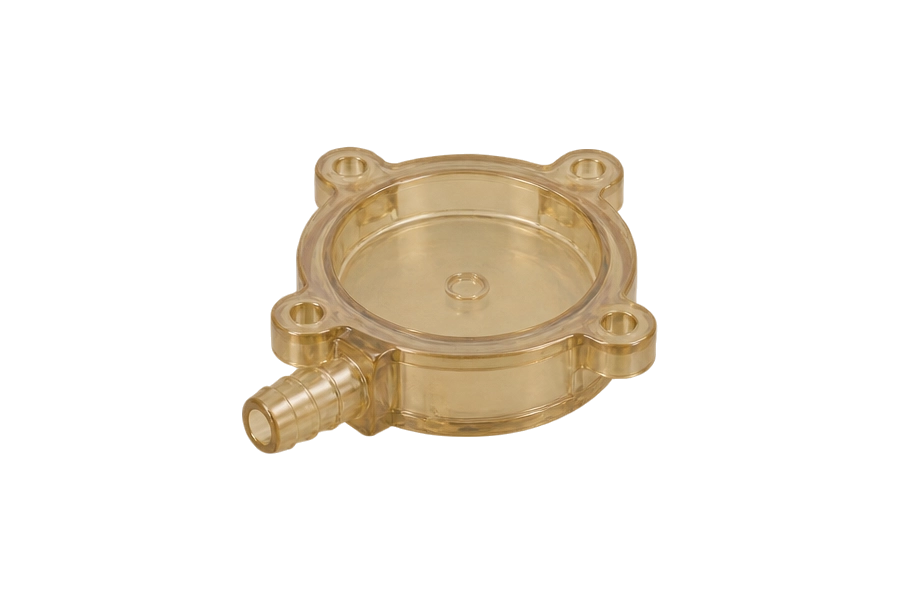
Pressure Sensor Housings
Form the fluid chamber and provide a mounting surface for the sensing diaphragm.
PSU Grades for Injection Molding
Natural unfilled PSU provides visibility into fluid paths. Glass-filled grades provide greater stiffness for parts that must resist deflection under load.
| Grade Type | Example Grade | HDT at 264 psi (1.82 MPa) |
Flexural Modulus at 23°C |
Typical Part Applications |
|---|---|---|---|---|
| Unfilled PSU | Udel® P-1700 | 174°C | 2.69 GPa | Filter bowls and fluid connectors where visual inspection is useful. |
| 10% Glass-Filled PSU | Udel® GF-110 | 179°C | 3.79 GPa | Fitting bodies and housings that need more stiffness than unfilled PSU. |
| 20% Glass-Filled PSU | Udel® GF-120 | 180°C | 5.52 GPa | Manifolds and valve bodies where deflection at ports and mounting points matters. |
| 30% Glass-Filled PSU | Udel® GF-130 | 181°C | 7.58 GPa | Rigid flanged housings and structural components that need the highest stiffness among the grades shown. |
Typical values from the Udel® PSU Design Guide. HDT measures short-term deflection under a specified load. For continuous service, evaluate the selected grade under the part’s actual load, temperature, and fluid exposure.
Design Considerations for PSU Injection Molding
Wall Thickness and Corner Radii
Keep walls uniform where possible and taper transitions into thicker sections. Add radii at port bases and internal corners to reduce stress concentrations.
Gate Location and Viewing Areas
For translucent filter bowls and inspection covers, define the viewing area on the drawing. Review gate placement and flow paths to keep gate marks and visible weld lines outside that area where possible.
Fiber Orientation and Sealing Surfaces
Glass-filled PSU can shrink differently along and across the flow direction. Use grade-specific shrinkage data for tooling, then check flange flatness and seal-groove dimensions on molded trial parts.
What Is PSU?
Polysulfone (PSU) is a rigid, amorphous thermoplastic. In its natural, unfilled form, it has a transparent amber tint.
Its combination of heat resistance and hydrolytic stability makes it useful for molded parts that handle hot water, including plumbing fittings and valve bodies.
Benefits of PSU for Molded Parts
-
Heat Resistance
PSU retains stiffness at elevated temperatures, which matters when fittings and housings carry loads in hot service.
-
Hydrolytic Stability
PSU resists degradation from prolonged hot-water exposure, making it suitable for wetted parts such as manifolds and valve bodies.
-
Low Water Uptake
Low moisture absorption helps limit dimensional changes at mating surfaces and fitted joints.
-
Visibility Through Molded Walls
Natural unfilled grades allow visual checks of fluid levels or filter elements through the housing wall.
From Tooling to Production
RJC designs and builds PSU injection molds in-house. We verify critical fits, sealing surfaces, and appearance on trial parts before starting production.
Discuss Your PSU Project- DFM Review Review the PSU grade, wall thickness, and critical dimensions. Identify any viewing areas or sealing surfaces before choosing the gate location.
- Mold Build Build the mold in-house using grade-specific shrinkage data. Match the cavity finish to the part’s appearance requirements.
- Sample Approval Check trial parts against the drawing and agreed appearance criteria. Inspection can include port dimensions, flange flatness, and visible marks in viewing areas.
- Production Control resin drying and molding temperatures using settings established during trials. Inspect production parts against the agreed requirements.
PSU Injection Molding FAQs
Yes. Natural, unfilled PSU is transparent with an amber tint. It is used for filter housings and inspection covers where operators need to see the fluid or internal components. If visibility matters, specify the viewing area and any limits on haze or visible molding marks.
Unfilled PSU is a good starting point when transparency matters. Glass-filled grades offer greater stiffness for parts such as flanged housings and valve bodies. For hot-water or fluid-handling parts, select the exact grade based on operating temperature, pressure, fluid exposure, and any applicable approval requirements.
Selected PSU grades are used in hot-water fittings, manifolds, and valve bodies. For drinking-water applications, verify that the exact resin grade and color meet the applicable requirements. Part design and testing should also account for the expected water temperature, pressure, and service life.
The quote typically lists tooling and molded-part pricing separately. Sampling, inspection, assembly, and packaging can be included based on the project scope. Send your 3D files, estimated order quantity, and a drawing with critical dimensions and tolerances. If the PSU grade is still open, include the part’s operating conditions and any transparency requirements.
Request a Quote for Your PSU Parts
Send us your 3D files and estimated order quantity. Include a drawing with critical dimensions and tolerances. If you have a specified PSU grade, include it. If you’re still selecting a grade, share the part’s operating conditions.