Plexiglass, also known as acrylic, is a transparent thermoplastic with a glass-like appearance and a lighter weight. It is commonly used as an alternative to regular glass in products such as windows, display cases, and protective shields. This article covers the key properties, common forms, practical applications, and processing methods of Plexiglass.
1. What Is Plexiglass?
Plexiglass is primarily made of polymethyl methacrylate (PMMA), a transparent thermoplastic produced by polymerizing methyl methacrylate (MMA) monomers.
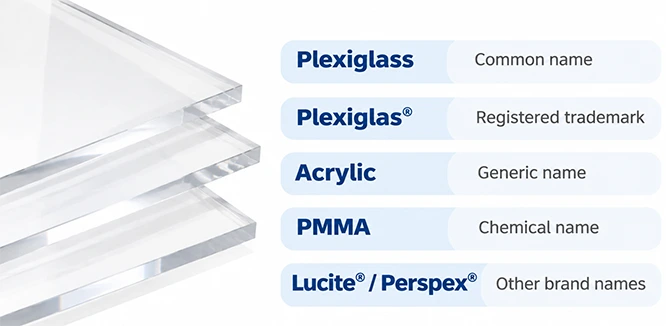
Plexiglass, Acrylic, and PMMA often appear in discussions about acrylic materials, but they have different meanings:
Plexiglass: A common informal name for acrylic.
Plexiglas®: A registered trademark and a specific brand name.
Acrylic: The generic name for acrylic materials.
PMMA: The chemical name for polymethyl methacrylate.
Lucite® and Perspex®: Other commercial brand names for acrylic products based on PMMA.
2. What Are the Properties of Plexiglass?
Transparency: Has high light transmittance and clarity comparable to regular glass, making it suitable for products that require clear visibility.
Weight: Has a density of approximately 1.18–1.20 g/cm³, making it significantly lighter than regular glass and easier to transport, install, and process.
Impact Resistance: More impact-resistant than regular glass and less likely to shatter like glass, but still less impact-resistant than polycarbonate.
Weather Resistance: Offers good UV resistance and outdoor weatherability.
Scratch Resistance: Has limited surface hardness and scratches easily. Frequent contact with rough objects should be avoided.
Chemical Resistance: Resists some common chemicals, but certain organic solvents and alcohol-based cleaners can cause surface damage or stress cracking.
3. What Are the Different Forms of Plexiglass?
Plexiglass is available in different forms. The choice depends on the product application and subsequent processing requirements.
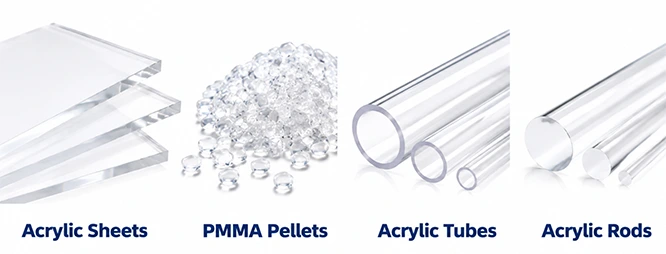
Acrylic Sheets
The most common form of Plexiglass. They are generally divided into cast acrylic and extruded acrylic. The former is produced through a casting and polymerization process, while the latter is manufactured continuously through extrusion. The two differ in thickness consistency, processing characteristics, and suitable applications. Common finishes include clear, colored, and frosted.
Acrylic Resin Pellets
PMMA raw material in pellet form, mainly used for injection molding. The pellets are heated and melted before being injected into molds to produce plastic parts in different shapes.
Acrylic Tubes
Hollow in structure, acrylic tubes are commonly used in lighting fixtures, display structures, and transparent tubing. They are generally manufactured through extrusion or casting.
Acrylic Rods
Usually available as solid round rods, though other cross-sectional shapes are also available. They can be cut, drilled, and CNC machined to produce display accessories, decorative parts, and mechanical components.
4. What Are the Common Uses of Plexiglass?
Plexiglass is widely used in everyday products and industrial applications because of its transparency, light weight, and processing flexibility.
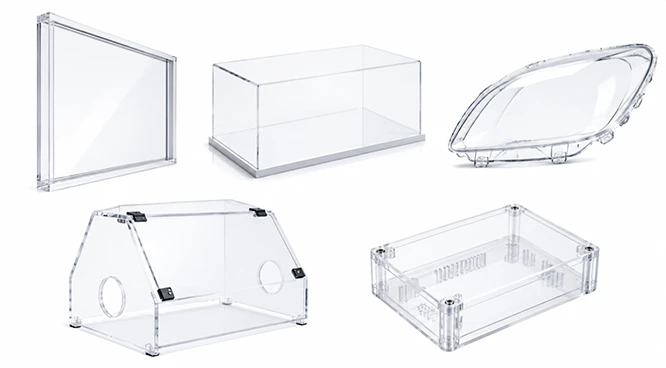
Architecture and Home Furnishings: Used in windows, interior partitions, skylights, and decorative furniture panels. It provides a clear appearance while reducing structural weight.
Retail and Displays: Commonly used in display cases, product stands, protective covers, and advertising signs to showcase products and protect displayed items.
Automotive and Aerospace: Used in certain vehicle light covers, transparent instrument components, aircraft windows, and other transparent protective structures.
Medical and Laboratory Equipment: Used in equipment guards, instrument viewing windows, and housings for certain laboratory devices.
Consumer Electronics: Used in transparent housings, display protective components, and decorative structures for some electronic products.
5. How to Cut Plexiglass?
Plexiglass is usually sold in sheet form and often needs to be cut to the required dimensions for actual use. However, cutting can cause problems such as cracking, chipping, overheating, and rough edges.
Common cutting methods include:
Scoring and Breaking (suitable for straight cuts in sheets under 3 mm thick): Use an acrylic scoring knife or hook knife to repeatedly score along a straightedge, then snap the sheet along the edge of a table.
Sawing (suitable for thicker sheets and simple curves): Use a hacksaw, table saw, or jigsaw. Choose a fine-tooth blade and control the cutting speed to prevent excessive friction and heat buildup.
CNC Milling (suitable for high-precision parts and complex shapes): Use a CNC router or milling machine to produce different contours, holes, and precision features.
Laser Cutting (suitable for complex contours and fine cutting): Use a CO₂ laser cutting machine. It produces narrow kerfs and generally smooth edges, making it suitable for complex shapes.
Note: Secure the sheet and keep an appropriate protective film on its surface before cutting. Maintain a steady cutting speed and avoid excessive pressure and localized heat buildup.
6. What Are the Differences Between Plexiglass, Glass, and Polycarbonate?
Plexiglass, regular glass, and polycarbonate can all be used in transparent products, but they differ significantly in weight, impact resistance, and scratch resistance.
| Property | Plexiglass (PMMA) | Glass | Polycarbonate (PC) |
| Transparency | Excellent | Excellent | Excellent |
| Weight | Light | Heavy | Light |
| Impact Resistance | Good | Low | Excellent |
| Scratch Resistance | Moderate | Good | Low |
| Machinability | Good | Relatively difficult | Good |
Conclusion
Plexiglass is suitable for products that require good transparency, light weight, and a certain degree of design flexibility, but it is not suitable for every transparent component. When choosing a material, consider the product’s operating environment, the impact it needs to withstand, and its surface wear requirements before deciding whether Plexiglass is a better choice than glass or polycarbonate.