Introduction
In injection molds, both sliders and lifters are used to handle features that cannot be demolded directly. However, their structures and functions differ significantly. In simple terms, sliders are mainly used for external features, while lifters are more suitable for internal undercuts. The differences are mainly reflected in the location they handle, their timing of operation, and their structural design.
In previous articles, we explained what sliders and lifters are. This article focuses on their differences and explains how to choose between them in real projects through practical examples.
Key Differences Between Sliders and Lifters
- Different Application Areas
Sliders are typically used for external features such as side holes, snaps, and grooves.
When these features interfere with normal mold opening, the mold requires a side action to retract those areas first.
Lifters are mainly used for internal undercuts. For example, internal snaps, inner locking features, or structures hidden inside the part. These are generally not suitable for sliders and are better handled by lifters. - Different Timing of Operation
Sliders usually operate during mold opening.
As the mold opens, the slider retracts sideways to clear the feature that blocks demolding, and then the part enters the ejection stage.
Lifters typically operate during ejection.
They are installed in the ejection system and move forward while also moving at an angle, releasing the internal undercut during ejection.
In simple terms: sliders “retract sideways first, then ejection follows,” while lifters “move forward and angled at the same time during ejection.” - Different Structural Design
Sliders are side-action mechanisms, typically positioned on the side of the mold and driven by the mold opening movement.
They are suitable for features with clear side access and external geometry.
Lifters are part of the ejection system, and their movement is linked to the ejection mechanism.
Compared to sliders, they are more commonly used in compact internal spaces where undercuts need to be released
How to Choose in Real Projects
In actual projects, the choice between sliders and lifters depends primarily on the product structure.
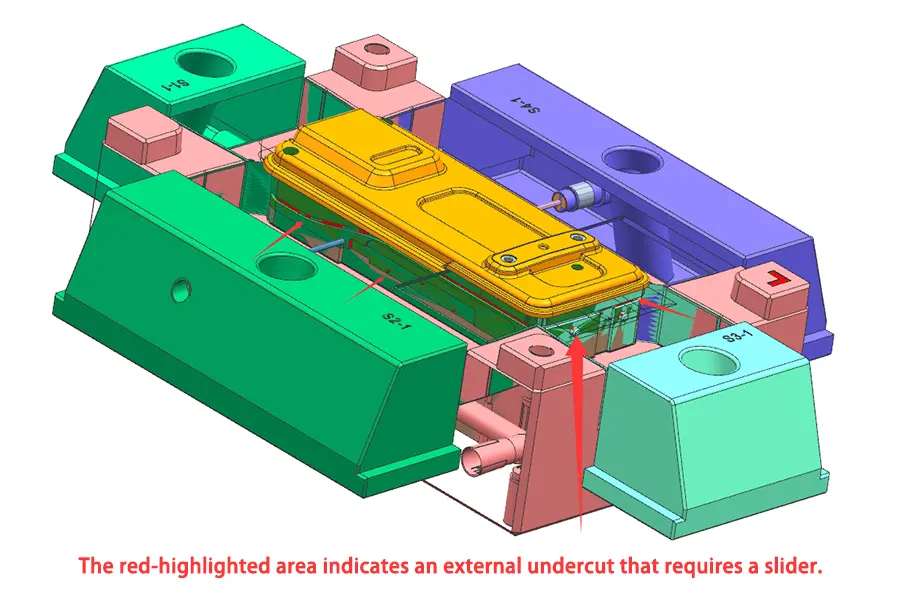
If the undercut or functional feature is located on the outside of the part, sliders are usually preferred.
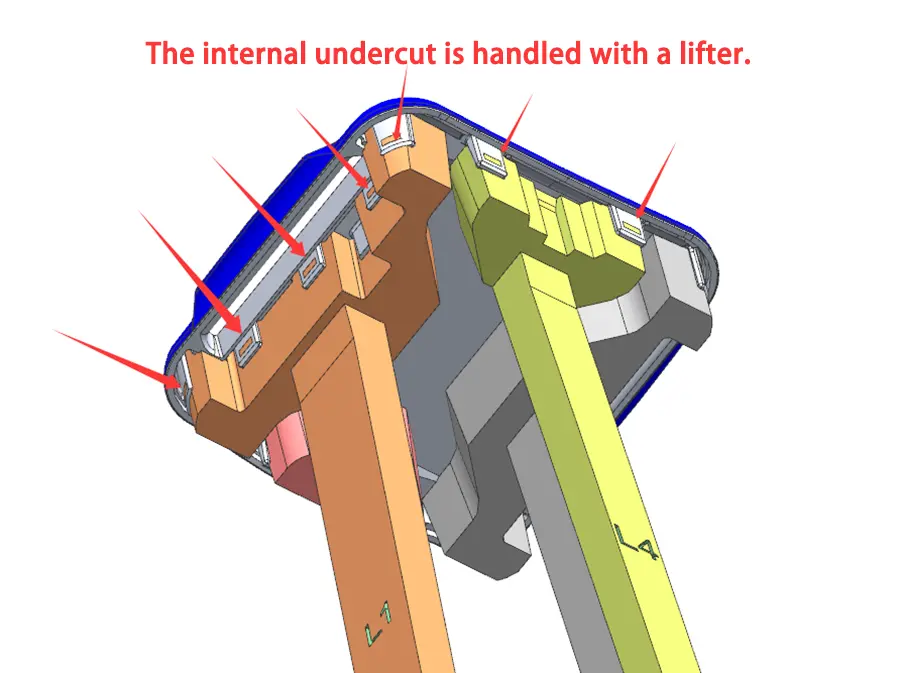
If the undercut is located inside the part and needs to be released together with the ejection process, lifters are generally more suitable.
In addition to location, factors such as draft direction, internal space, mold layout, and overall feasibility must also be considered.
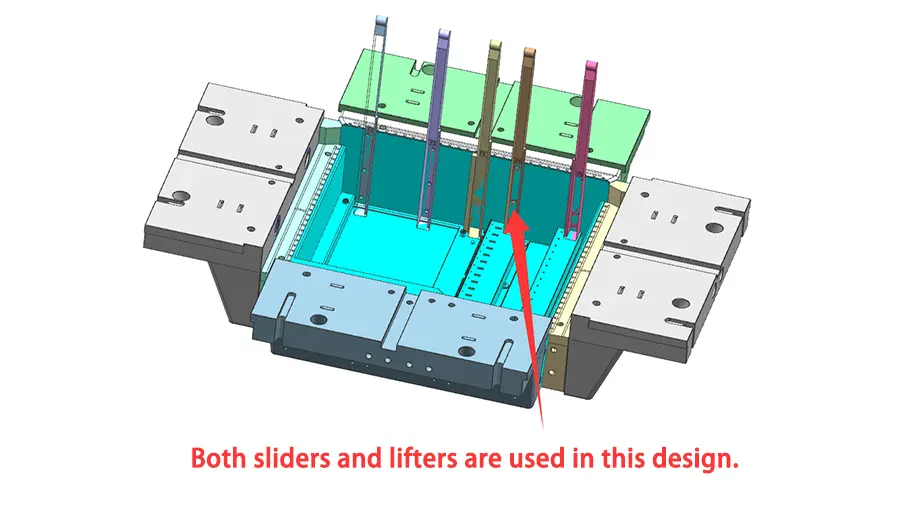
For more complex parts, a single mechanism may not be sufficient, and both sliders and lifters may be used together.
If you are unsure which solution is suitable for your product, please contact our engineers with over 20 years of experience for professional mold design support.