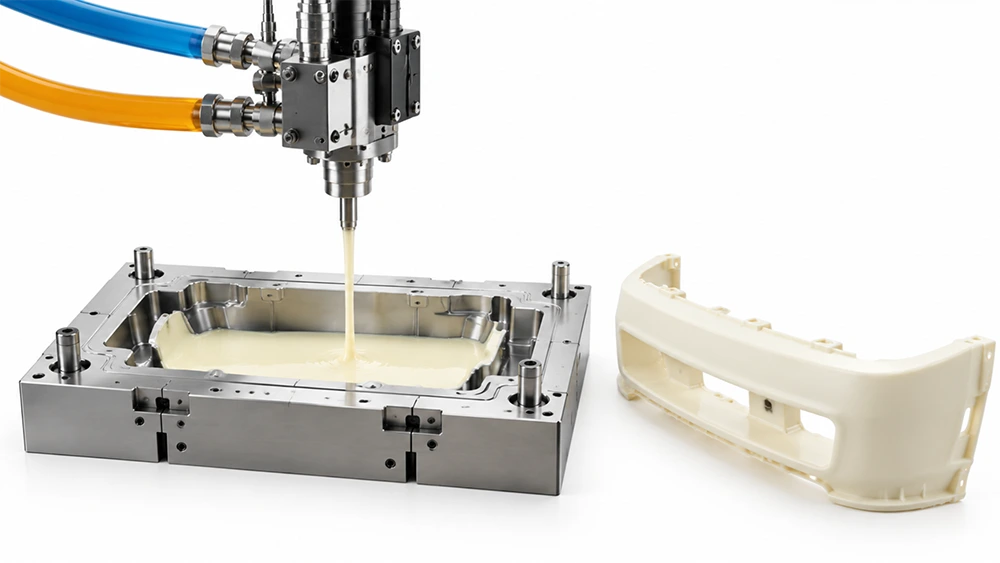
Why do some injection molded parts have a mirror-like shine, while others feature a subtle matte appearance or textures resembling leather or fine sand? These differences are closely related to the surface finishes applied to injection molds, although plastic materials and molding conditions also play a role.
This article covers common injection mold surface finish types, SPI finish standards, and manufacturing methods, along with practical guidance on choosing the right finish for specific product requirements.
1. What Are Injection Mold Surface Finishes?
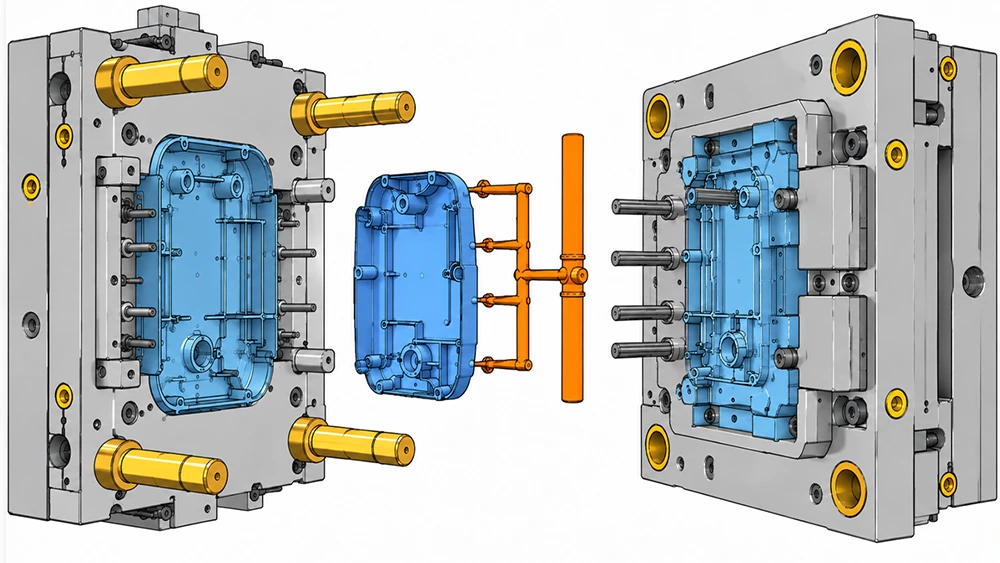
Injection mold surface finishing refers to processes such as grinding, polishing, sandblasting, and texturing that modify the surface smoothness and texture of mold cavities, cores, and other molding surfaces.
During injection molding, the plastic replicates the microscopic features of the mold surface, producing different levels of gloss and texture. The mold’s surface condition can also affect part release and surface quality.
2. Common Types of Injection Mold Surface Finishes
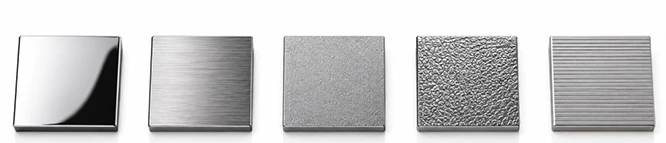
Based on their gloss and texture characteristics, injection mold surface finishes generally fall into four categories: mirror and high-gloss, semi-gloss, matte, and textured finishes.
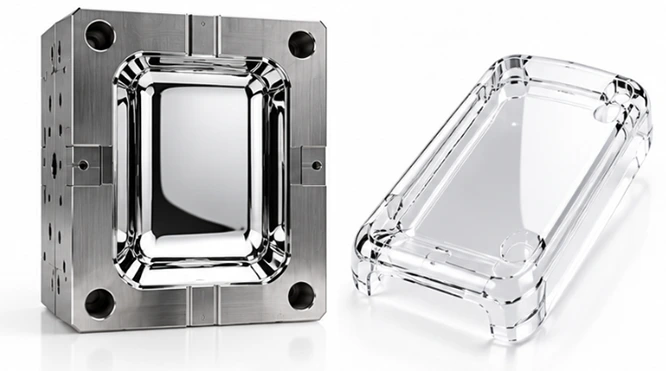
Mirror and High-Gloss Finishes
Mirror and high-gloss finishes feature smooth surfaces with strong light reflection. Mirror polishing requires more precise surface finishing to minimize fine scratches and machining marks. Achieving these finishes places greater demands on mold polishing quality and molding process control.
Common products: Transparent plastic housings, optical components, high-gloss decorative panels.
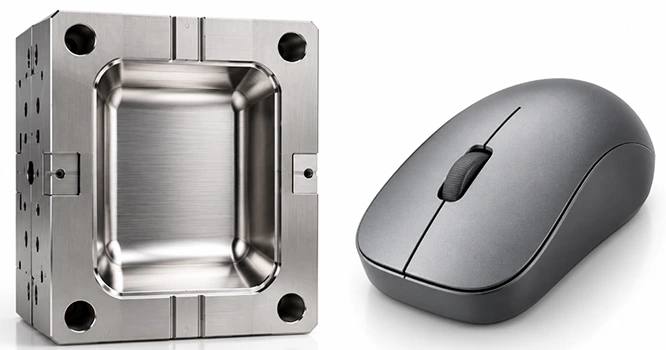
Semi-Gloss Finishes
Semi-gloss finishes provide moderate reflectivity, with a gloss level between high-gloss and matte. Their relatively smooth appearance makes them suitable for products that need some shine without a mirror-like effect.
Common products: Appliance housings, consumer electronics enclosures, decorative plastic components.
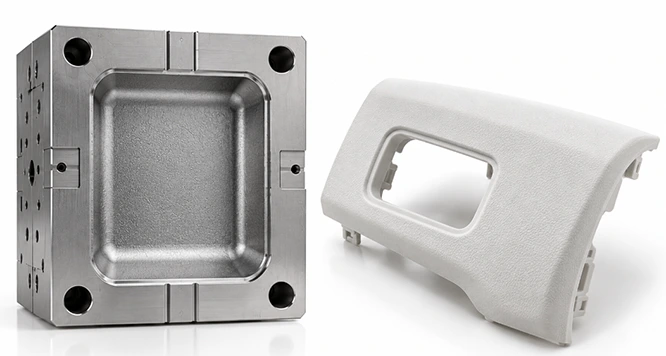
Matte Finishes
Matte finishes have low gloss and scatter reflected light, creating a softer appearance. Compared with high-gloss surfaces, they generally make minor scratches and certain small surface imperfections less noticeable.
Common products: Industrial equipment housings, automotive interior components, power tool housings.
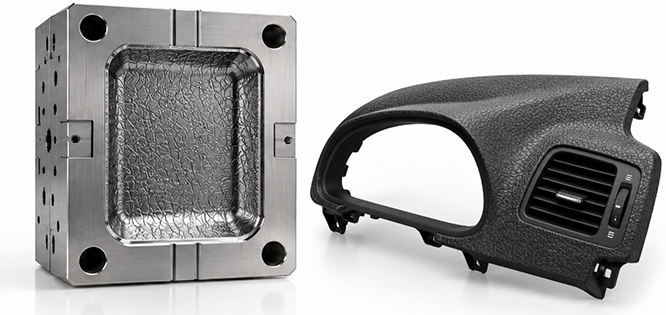
Textured Finishes
Textured finishes feature raised and recessed surface patterns, such as fine-grain, leather-grain, granular, or geometric textures. Beyond their decorative purpose, certain textures can improve grip and reduce the visibility of some surface imperfections.
Common products: Automotive dashboards, handheld tool grips, electronic device housings.
3. Understanding SPI Injection Mold Surface Finish Standards
The SPI (Society of the Plastics Industry) surface finish classification system is widely used in the injection mold industry. Based on finishing methods and surface appearance, it consists of four categories—A, B, C, and D—with 12 grades in total.
SPI Surface Finish Comparison Chart
| SPI Grade | Surface Appearance | Typical Finishing Method | Reference Ra (μm) |
| A-1 | Premium mirror finish | Grade 3 diamond polish | 0.012–0.025 |
| A-2 | High-gloss mirror finish | Grade 6 diamond polish | 0.025–0.050 |
| A-3 | Standard high-gloss finish | Grade 15 diamond polish | 0.050–0.100 |
| B-1 | Fine semi-gloss | 600-grit sandpaper | 0.050–0.100 |
| B-2 | Medium semi-gloss | 400-grit sandpaper | 0.100–0.150 |
| B-3 | Standard semi-gloss | 320-grit sandpaper | 0.280–0.320 |
| C-1 | Fine matte | 600-grit polishing stone | 0.350–0.400 |
| C-2 | Medium matte | 400-grit polishing stone | 0.450–0.550 |
| C-3 | Coarse matte | 320-grit polishing stone | 0.630–0.700 |
| D-1 | Fine blasted texture | Grade 11 glass bead blasting | 0.800–1.000 |
| D-2 | Medium blasted texture | Grade 240 aluminum oxide zoiuyblasting | 1.000–2.800 |
| D-3 | Coarse blasted texture | Grade 24 aluminum oxide blasting | 3.200–18.000 |
Note: Ra refers to arithmetic average surface roughness, measured in micrometers (μm). The values shown are commonly used reference ranges. Actual acceptance criteria should follow the project’s specifications or approved physical samples.
Within the same category, a lower number generally indicates a finer finish. For example, A-1 has a smoother surface than A-3. SPI grades help define mold finishing requirements, but the final appearance of molded plastic parts also depends on the material and injection molding conditions.
Data reference: Fictiv – SPI Guidelines for Injection Mold Surface Finish
4. What Other Mold Surface Texture Standards Are Used Besides SPI?
In addition to SPI, engineering drawings often specify VDI 3400 or Mold-Tech standards, particularly when a project requires a specific surface roughness or decorative texture.
VDI 3400 Surface Finish Grades
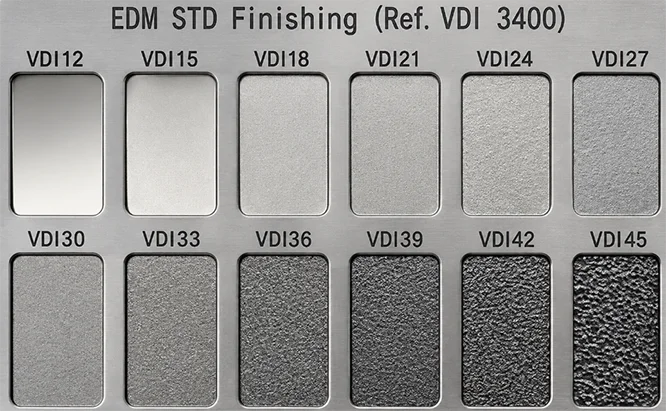
VDI 3400 is a German surface roughness classification system commonly used to describe surfaces produced by electrical discharge machining (EDM).
Common grades include VDI 12, VDI 18, VDI 24, VDI 30, and VDI 36. In general, higher numbers indicate greater surface roughness.
VDI 3400 is often used for mold surfaces requiring specified roughness levels or uniform machined textures. It is commonly referenced in European and international mold manufacturing projects.
Mold-Tech Texture Standards
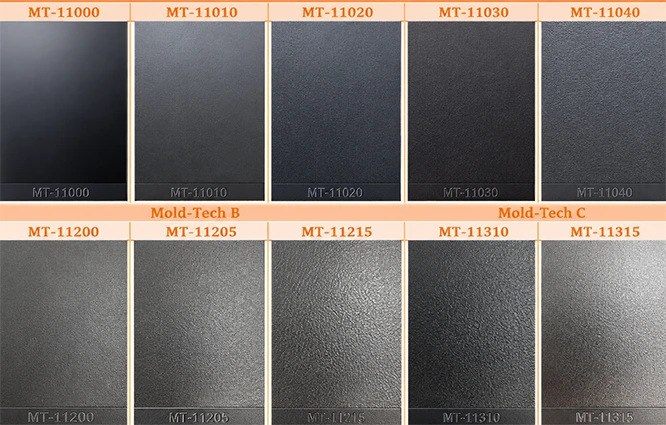
Mold-Tech is a commercial mold texturing system that uses specific texture codes to identify surface patterns.
For example, MT-11000, MT-11010, and MT-11020 represent different texture specifications. These textures are used for leather-grain finishes in automotive interiors, fine textures on consumer electronics housings, and other decorative surfaces.
How Do SPI, VDI, and Mold-Tech Differ?
| Comparison | SPI | VDI 3400 | Mold-Tech |
| Primary purpose | Surface finish classification | Surface roughness classification | Decorative texture specification |
| Designation | A-1 to D-3 | VDI numerical grades | MT texture codes |
| Commonly associated processes | Polishing, grinding, blasting | EDM and related processes | Chemical etching, laser texturing |
| Typical applications | High-gloss, semi-gloss, matte finishes | Uniform rough surfaces | Leather-grain, granular, and decorative textures |
5. How Are Injection Mold Surface Finishes Achieved?
Different surface finishes require different manufacturing processes. Common methods include grinding and polishing, sandblasting and bead blasting, EDM, and surface texturing.
Mold Grinding and Polishing
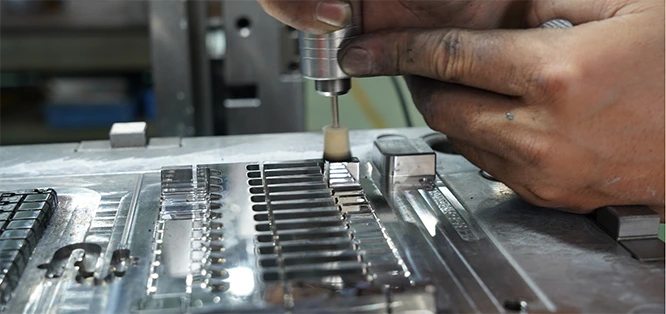
Polishing stones and sandpaper are used progressively to remove machining marks, followed by fine polishing with diamond compounds. Depending on the level of finishing precision, this process can produce anything from a standard smooth surface to a high-grade mirror finish.
Sandblasting and Bead Blasting
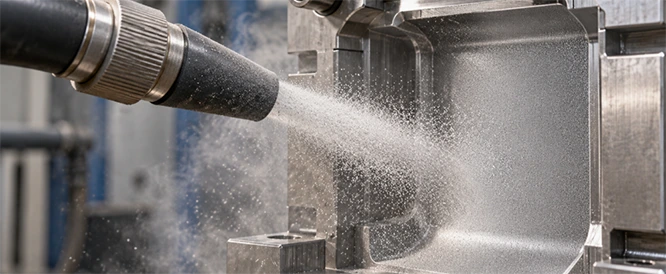
High-velocity abrasive particles strike the mold surface, creating a uniform matte or granular texture. Common blasting media include glass beads and aluminum oxide. Particle size, blasting pressure, and other parameters influence the final surface roughness.
EDM Surface Finishing
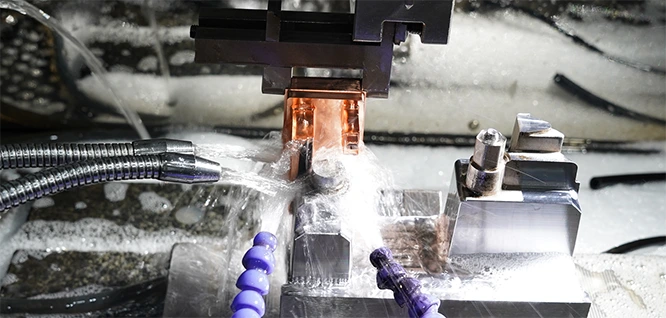
Electrical discharge machining (EDM) removes metal through controlled electrical discharges, leaving tiny craters on the mold surface. Adjusting the discharge parameters allows the surface roughness to be controlled. EDM is particularly useful for complex cavities and areas that are difficult to reach with conventional cutting tools. Additional grinding or polishing can be performed when necessary.
Chemical Etching and Laser Texturing
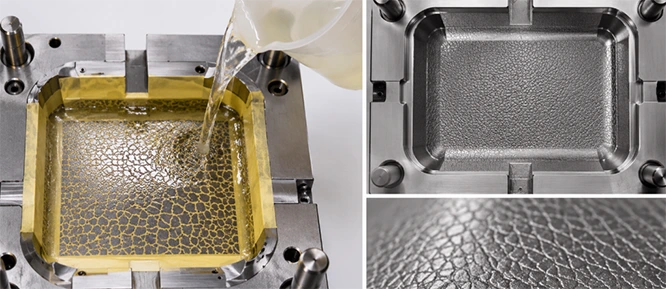
Chemical etching uses selective corrosion to create patterns such as leather-grain and granular textures. Laser texturing uses precisely controlled laser processing to produce surface structures, making it suitable for complex patterns and fine textures in specific areas. The choice of method depends on texture requirements, mold geometry, and cost.
6. How to Choose the Right Injection Mold Surface Finish
Choosing an injection mold surface finish involves considering product appearance, plastic material, demolding requirements, mold manufacturing conditions, and cost.
Choose Based on Product Appearance
Different appearance requirements call for different finishing methods:
| Product Appearance Requirements | Recommended Surface Finish |
| Transparent, mirror-like, or high-gloss appearance | Mirror or high-gloss polishing |
| Smooth surface with moderate reflectivity | Semi-gloss finish |
| Soft, low-reflection appearance | Matte finish |
| Special effects such as leather-grain or fine-grain textures | Textured finish |
Choose Based on Plastic Material
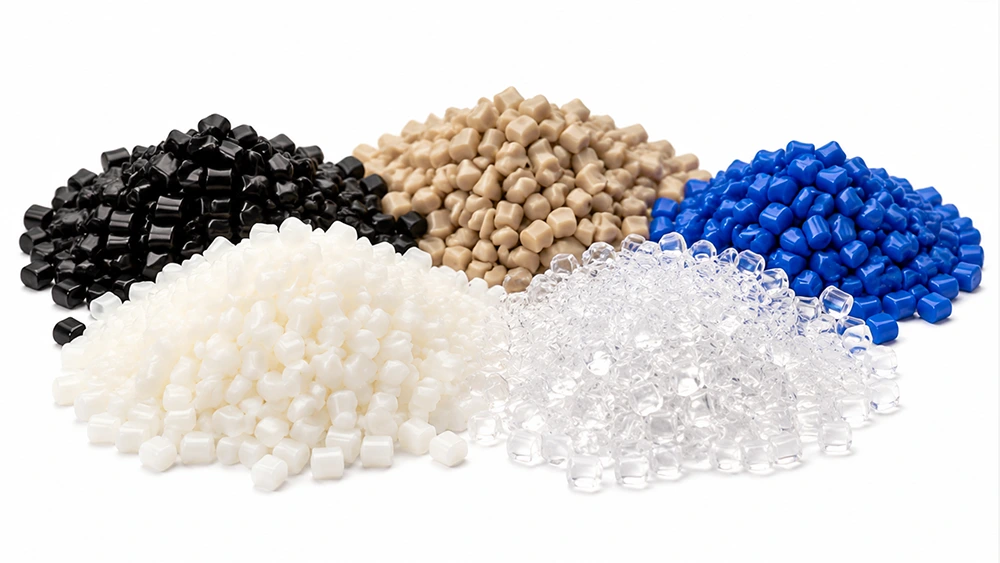
Different plastics replicate mold surface features differently.
PMMA and PC are commonly used for transparent or high-gloss products.
ABS can achieve a wide range of surface appearances.
PP gloss depends on the material formulation and molding conditions.
For glass-fiber-reinforced plastics, fiber exposure and uneven surface texture must also be considered.
Consider Draft Angles and Demolding Requirements
Surface textures affect the contact between the molded part and the mold. Deeply textured sidewalls, in particular, may develop drag marks, scratches, or texture damage during ejection.
In general, deeper textures require larger draft angles. However, the actual angle also depends on material shrinkage, part geometry, texture direction, and the demolding method.
Consider Mold Materials and Manufacturing Processes
The hardness, microstructural uniformity, cleanliness, and machining quality of mold steel can all influence the final surface finish.
For example, S136 and NAK80 are suitable for molds requiring high surface quality. Complex features such as deep cavities and narrow slots also need to be evaluated for machining accessibility. Insert designs may be considered when necessary.
Balance Surface Appearance and Manufacturing Cost
High-grade polishing requires additional machining time, while complex textures may increase manufacturing costs. A practical approach is to assign different finishes to different surface areas: use higher-grade finishes on primary cosmetic surfaces and cost-effective processes that meet functional requirements on noncritical areas.
Conclusion
Injection mold surface finishes affect the appearance, feel, and demolding performance of plastic parts. The right finish should be selected based on product requirements, material properties, and manufacturing costs.
In practical mold manufacturing, a higher finish grade is not always the better choice. Defining appearance requirements early and confirming the results with physical samples can help reduce later modifications and avoid unnecessary manufacturing costs.