What Is Medical Injection Molding?
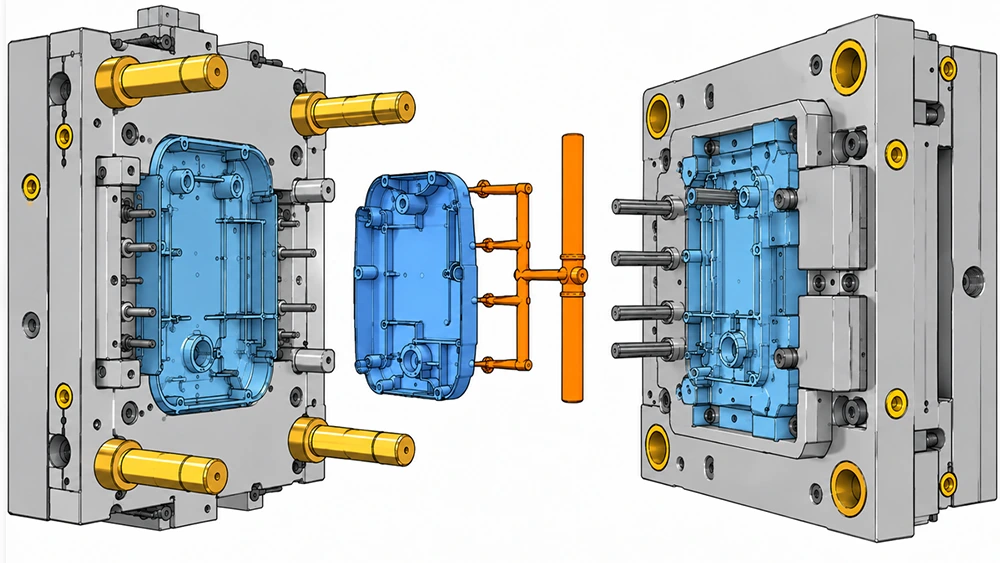
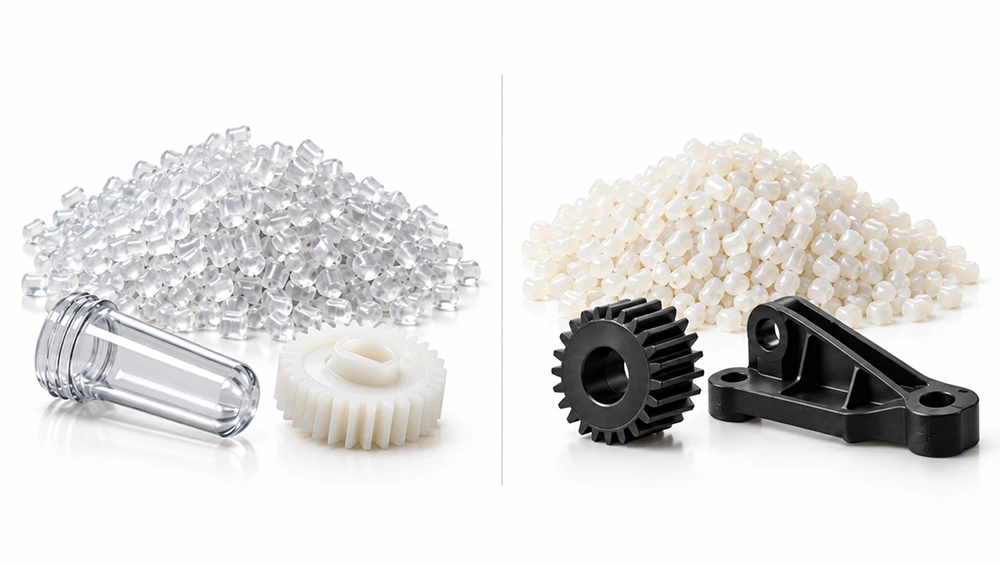
Medical injection molding uses thermoplastics or liquid silicone rubber to manufacture parts and components for medical applications.
From a basic manufacturing perspective, it is not fundamentally different from standard injection molding. The medical distinction lies in the additional material, contamination, process, and documentation requirements that may apply to the finished part.

What Makes Medical Injection Molding Different from Standard Injection Molding?
Requirements Depend on the Part’s Intended Use and Risk
“Medical parts” do not form a single product category with one uniform set of requirements. A plastic bracket installed inside diagnostic equipment faces very different risks from a patient-contact silicone component, a drug connector, or a sterile disposable product.
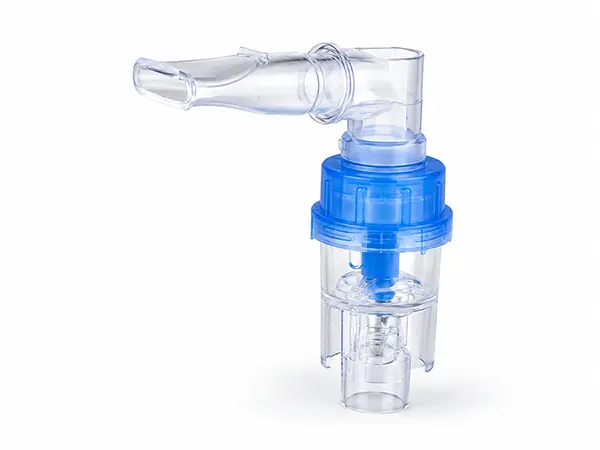
Determining the appropriate controls for a medical injection molding project usually begins with several questions:
- Does the part contact a patient, medication, a sample, or body fluid?
- Is it part of a fluid pathway or sealing structure?
- Will it require cleaning, disinfection, or sterilization?
- Is it disposable or intended for repeated long-term use?
- Could part failure affect equipment performance or patient safety?
- Could particles, microorganisms, or other contamination affect its use?
A standard medical equipment housing may be structurally and technically similar to an enclosure used for an electronic or industrial product.
Medical injection molding requirements are therefore not determined simply by applying the word “medical” to a product. They are determined by the part’s actual function and risk within the final application.
Materials Must Be Suitable for the Actual Medical Application
Materials used in medical applications are not necessarily unique to the medical industry. However, the specified grade must be suitable for the part’s contact conditions, cleaning or sterilization method, and expected service life.
Generic material names alone are not sufficient because formulations, additives, colorants, and grade-specific properties can affect actual performance.
Cleanrooms, Biocompatibility, and Sterilization Are Not Universal Requirements
Medical injection molding does not automatically mean cleanroom molding. It also does not mean that every medical component must undergo biocompatibility testing or sterilization validation.
These additional controls should be determined by the specific application. For example:
- Ordinary equipment housings and internal brackets may not require cleanroom production.
- Housings that are wiped repeatedly may require greater resistance to disinfectants.
- Patient-contact components may require supporting material documents or biocompatibility evaluation.
- Fluid-path components may place greater emphasis on particles, leakage, and chemical compatibility.
- Sterile products may require stricter production environments, packaging controls, and sterilization validation.
Even when cleanroom production is not required, a project may still need controls over raw-material storage, machine cleanliness, operator handling, part transfer, and packaging.
Controls should therefore be matched to the actual application rather than applied uniformly to every medical project.
The Production Process Must Be Stable—and Its Stability Must Be Demonstrable
Once the material and production requirements have been defined, the supplier must demonstrate that they can be maintained consistently across production batches. This is where material traceability, process records, and change control become important.
These management practices are not unique to the medical industry. They are also common in automotive, aerospace, and other highly controlled industries. Their purpose in a medical project is to ensure that approved materials, processes, and product performance are not changed without proper evaluation during later production.
ISO 13485 provides a quality-management framework for document control, material traceability, supplier control, nonconforming products, and change management. However, certification does not automatically mean that every molded component meets all applicable medical requirements.
Medical Injection Molding Applications
| Application | Typical Components |
| Medical equipment components | Housings, covers, buttons, brackets, and internal structures |
| Patient-contact parts | Handles, mask parts, wearable components, and soft-touch surfaces |
| Drug- or fluid-contact parts | Connectors, valves, seals, and flow-path components |
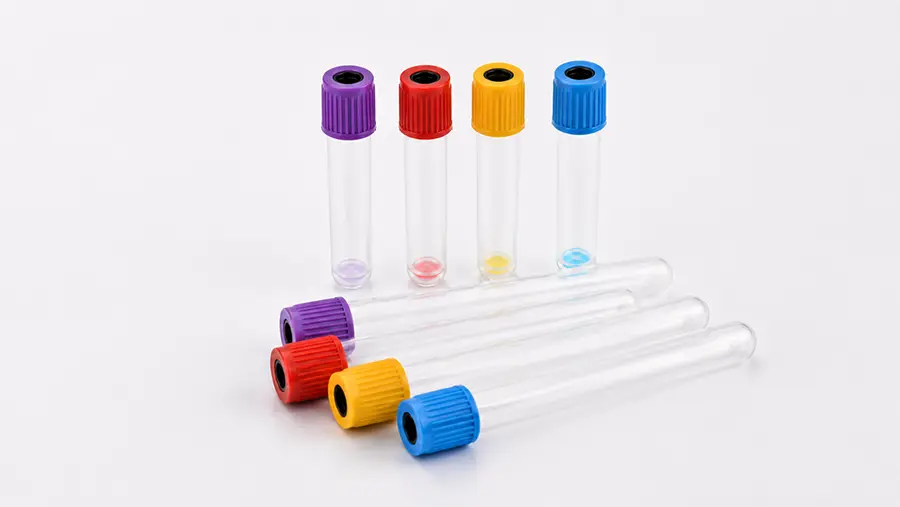
| Diagnostic and laboratory products | Cartridges, tubes, containers, and disposable components |
| Medical silicone parts | Seals, diaphragms, flexible interfaces, and contact components |
How to Select Materials for Medical Applications
Material selection should begin with the actual operating environment of the component.
Based on our years of experience working with molding materials, one of the most overlooked risks in medical projects is usually not insufficient initial material strength. It is how the material changes under actual operating conditions.
A PC or PC-ABS part may pass molding and initial inspection, but high residual molding stress can make it vulnerable to environmental stress cracking after repeated exposure to alcohol, disinfectants, or cleaning agents.
Silicone components should not be judged only by their initial softness or hardness. Incomplete curing, unsuitable formulation, or excessive compression set may reduce recovery over time and affect sealing or patient-contact performance.
Material selection should therefore not rely only on tensile strength, hardness, or temperature values shown in a datasheet.
A more reliable approach is to evaluate the material together with:
- Part geometry
- Molding conditions
- Residual stress
- Contact media
- Cleaning method
- Sterilization method
- Expected service life
For demanding applications, trials and functional testing should be carried out using the final specified grade rather than a different material from the same general family.
How to Choose a Medical Injection Molding Supplier
A supplier should not be selected only because it claims to have medical industry experience.
The more important question is how the supplier carries the project requirements into material selection, tooling, production, and inspection.
A suitable supplier should be able to:
- Translate the part’s intended use and risk into appropriate project controls
- Implement the required traceability, inspection, and change-control procedures
- Provide DFM, in-house toolmaking, and molding support
- Maintain stable dimensions and functional performance across production batches
Toolmaking capability is also important. Even familiar features such as thin walls, snap fits, sealing surfaces, transparent areas, and precision assembly features can lead to warpage, sink marks, stress cracking, or dimensional instability.
When mold design, machining, trials, modification, and molding are handled by the same supplier, it is easier to connect material behavior, mold dimensions, and actual production results.
Instead of reviewing a quality certificate alone, customers can ask to see examples of material lot records, inspection plans, and change-control procedures used for similar projects.