Introduction
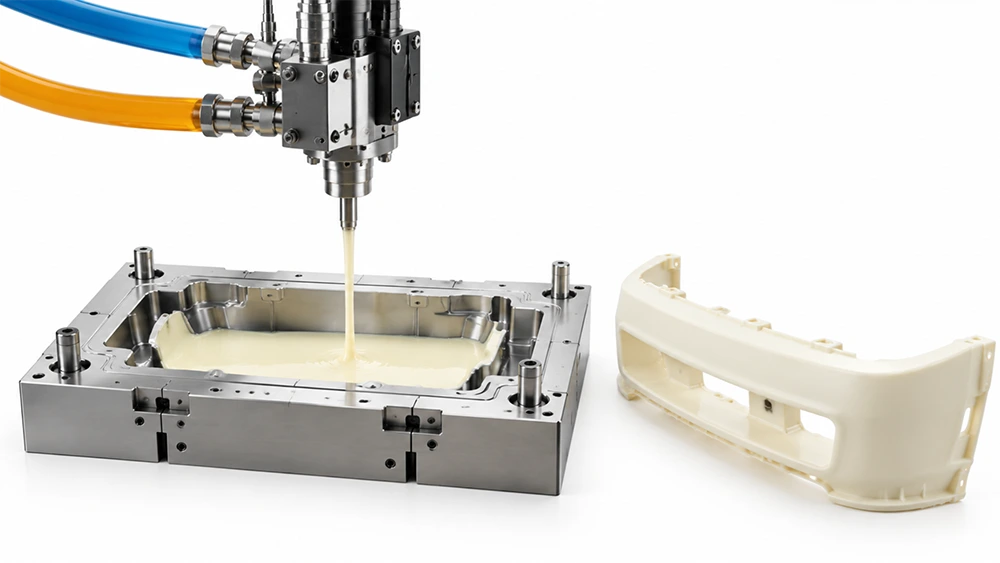
The final surface appearance of an injection molded part is not determined by molding alone. In many projects, the surface result also depends on material selection, mold surface quality, molding conditions, and secondary finishing processes.
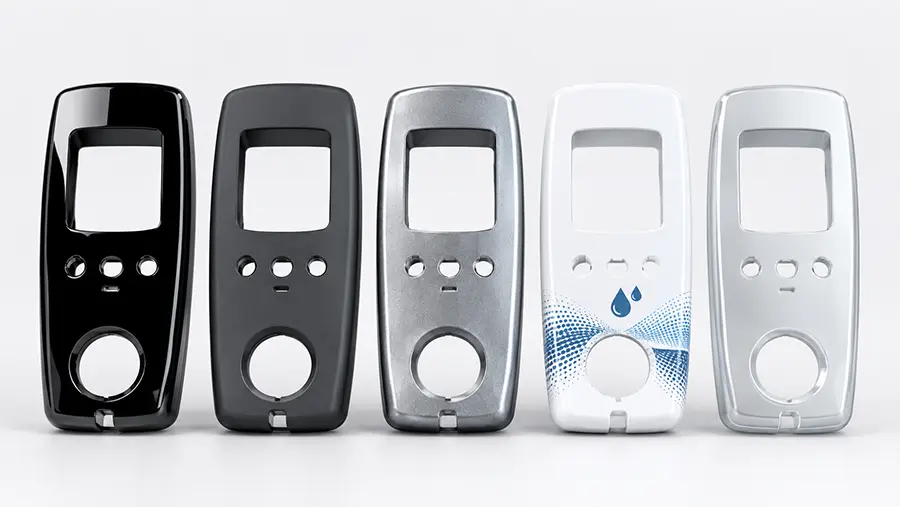
For example, a plastic housing can be molded directly in a selected resin color, painted for a more consistent color and gloss, textured through the mold surface, or finished with plating, printing, laser marking, or coating after molding. A matte surface may come from mold texture or a matte coating. A metallic appearance may come from electroplating, vacuum metallization, or metallic paint.
A good surface finish is usually not something added at the end to “fix” a part. It should be planned early, together with material choice, mold design, molding process, and finishing method. This helps reduce problems such as poor coating adhesion, color variation, visible molding defects, rework, and unexpected production costs.
Common Secondary Surface Finishing Options for Injection Molded Parts
Secondary surface finishing refers to processes applied after the part has been injection molded. These processes can improve appearance, add branding, change the surface feel, create a metallic effect, or provide surface protection.
This is different from mold texture. Mold texture is formed directly on the mold surface and copied onto the plastic part during molding. Secondary finishing adds another surface effect or functional layer after molding.
| Surface Effect | Common Options | Main Purpose |
| High-Gloss / Mirror-Like Finish | Gloss painting, clear coating, UV coating | Improves gloss and creates a bright, premium, or mirror-like appearance |
| Matte Finish | Matte painting, matte coating, soft-touch coating | Reduces glare and creates a smoother, softer, or more refined surface feel |
| Textured / Patterned Finish | IMD, IML, decorative film, printed texture | Adds patterns, decorative layers, colors, or complex visual effects |
| Metallic Finish | Electroplating, vacuum metallization, metallic painting | Creates a chrome-like, metal-like, or decorative metallic appearance |
| Logo & Graphic Finish | Pad printing, screen printing, laser engraving | Adds logos, text, icons, serial numbers, or functional markings |
| Protective / Functional Finish | Hard coating, anti-scratch coating, UV-resistant coating | Improves scratch resistance, wear resistance, stain resistance, weather resistance, or surface protection |
These finishing methods are not always used separately. Many products use more than one process. For example, vacuum metallization often requires a base coat and a protective topcoat. A printed logo may be covered with a clear protective layer. A high-gloss painted surface may also use a UV coating to improve scratch resistance.
Because of this, surface finishing should not be selected only by asking which process looks more advanced. The better question is: what does the part actually need? Better appearance, clearer branding, better wear resistance, metallic appearance, transparent gloss, matte feel, or lower cost? The answer determines which finishing method is suitable.
How to Choose the Right Surface Finish
Different surface finishes serve different goals. In real projects, customers usually do not start by asking whether they need pad printing, electroplating, or UV coating. They usually start with a product requirement: a premium look, a logo, a soft-touch feel, a metal-like appearance, better durability, or lower cost.
For High-Gloss or Premium Appearance
If the part needs a glossy, bright, or premium appearance, common options include gloss painting, clear coating, UV coating, and high-level mold polishing.
However, high-gloss surfaces make defects much easier to see. Flow marks, sink marks, weld lines, scratches, and polishing marks can become more obvious under a glossy surface. This means a high-gloss appearance cannot rely only on painting or coating. Material selection, mold polishing, gate location, and molding stability also need to be controlled from the beginning.
High-gloss finishes are commonly used for consumer electronics housings, appliance panels, display windows, transparent parts, and premium appearance parts.
For Matte or Soft-Touch Feel
If the product needs lower reflection or a softer hand feel, matte painting, matte coating, soft-touch coating, mold texture, or sandblasted mold finish can be considered.
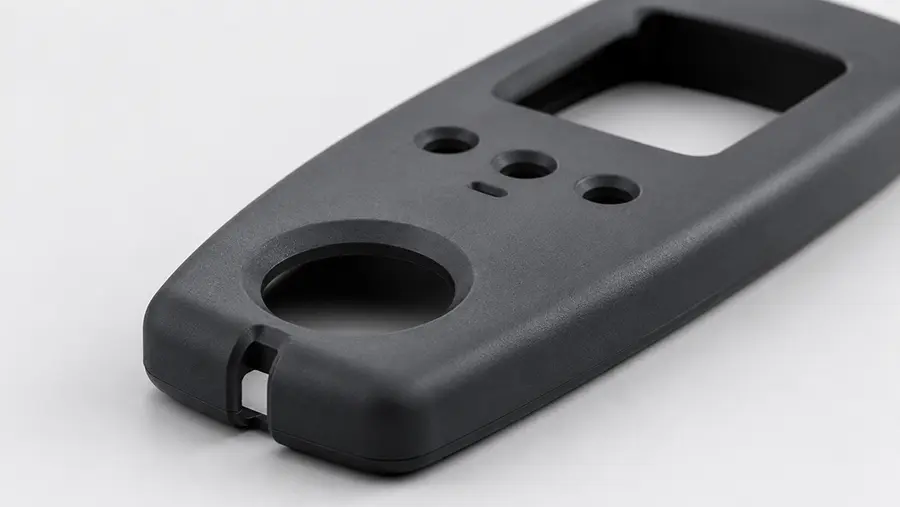
If the goal is only a basic matte surface, mold texture is often more stable for mass production because the effect is copied directly from the mold surface. It does not require each molded part to go through an extra coating process. If the product needs a special tactile feel, such as a rubber-like or soft-touch surface, soft-touch coating is usually more suitable.
Matte and soft-touch finishes are commonly used for handheld devices, remote controls, tool handles, consumer electronics, and personal care product housings.
For Metallic Appearance
If the product needs a metallic appearance, common choices include electroplating, vacuum metallization, and metallic painting.
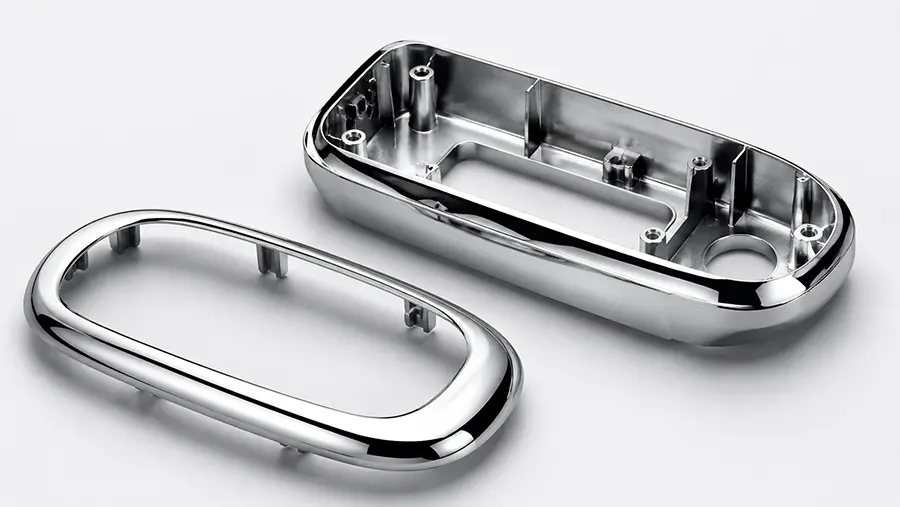
Electroplating gives a stronger metal-like appearance and can create a chrome-like surface with good gloss and surface hardness. However, it has stricter requirements for material compatibility, pretreatment, and environmental control. ABS is one of the more common plastics used for plating.
Vacuum metallization is often used for lightweight decorative metallic effects. It is common in cosmetic packaging, consumer electronics trim, and automotive interior parts. Metallic painting is usually easier to control in cost, but it does not provide the same visual depth or surface feel as real plated or metallized layers.
If a part only needs to “look metallic,” electroplating is not always necessary. The right choice depends on appearance standard, use environment, production volume, durability requirements, and budget.
For Logo, Text, or Product Marking
If the part needs a logo, text, icon, serial number, or operating mark, the common options are pad printing, screen printing, laser engraving, IMD, or IML.
Screen printing works well for relatively flat surfaces and larger graphics. Pad printing is suitable for smaller areas, curved surfaces, and irregular shapes. Laser engraving is better for permanent markings, serial numbers, button characters, and functional labels. IMD and IML are suitable for complex graphics, high appearance requirements, and larger production volumes.
When choosing a marking process, it is important to consider graphic size, surface shape, wear resistance, number of colors, and the use environment. For example, if a button marking is touched frequently, ordinary printing may wear over time. Laser marking, IMD, or IML can provide better durability in many cases.
For Decorative Patterns or Complex Graphics
If the product requires complex graphics, multi-color decoration, gradient effects, or a durable decorative layer, IMD, IML, or decorative film can be used.
These methods are suitable for products with higher volume and consistent appearance requirements. They allow the decorative layer to be integrated with the molded part, reducing some of the instability associated with post-molding printing or painting.
However, IMD and IML require more planning before production. Film positioning, mold structure, part geometry, forming behavior, and process validation all need to be checked carefully. They are usually less suitable for very low-volume projects or designs that change frequently.
Common applications include appliance control panels, automotive interior panels, consumer electronics housings, and decorative plastic panels.
For Wear Resistance or Surface Protection
If the part will be touched, cleaned, rubbed, or exposed to outdoor conditions, the surface may need extra protection. In this case, the finish should not only be judged by appearance but also by durability.
Common options include hard coating, anti-scratch coating, UV coating, weather-resistant coating, and clear protective coating. These finishes may not significantly change the appearance of the part, but they help keep the surface stable during use.
For example, transparent PC or PMMA parts may need a hard coating to reduce scratches. Outdoor plastic housings may need a UV-resistant coating to reduce aging and discoloration. Parts that are touched frequently may need a protective layer to reduce oil stains, abrasion, or paint wear.
For Cost Control
If cost is a major concern, the first question should be whether the surface effect can be achieved through molded-in color, mold texture, or simple printing instead of complex painting, plating, or IMD / IML.
In general, the more secondary processes a part requires, the higher the cost, lead time, and quality risk. Painting may introduce color variation, masking cost, adhesion problems, and rework. Electroplating and vacuum metallization require more pretreatment and process control. IMD and IML can provide excellent appearance stability at scale, but the upfront cost is higher.
If the part only needs a basic matte or fine texture, mold texture may be more stable than secondary coating. If the part only needs a simple logo, pad printing may be more economical than a complex decorative process. If the product can accept a molded-in color, it is often easier to control cost than painting every part after molding.
Mold Texture
Not every surface effect requires secondary finishing. Many injection molded parts get their texture, matte appearance, gloss, or fine grain directly from the mold surface.
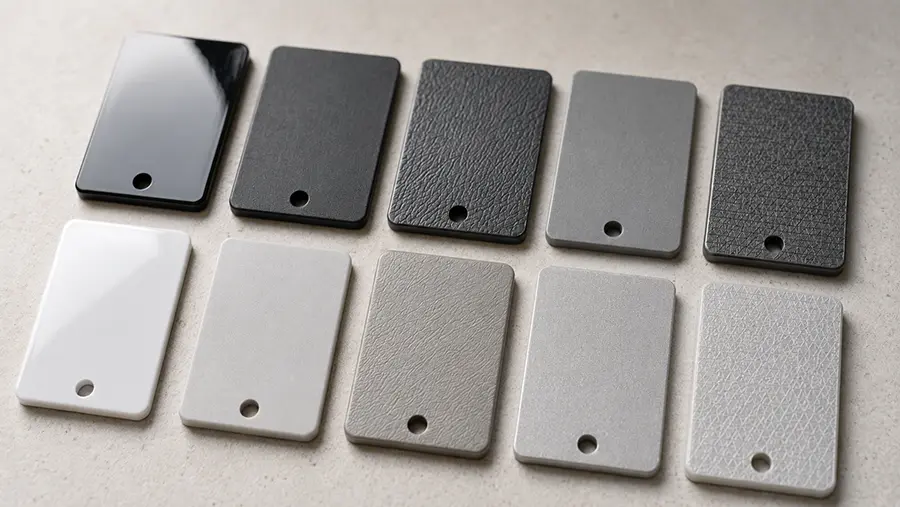
Mold texture is stable and repeatable, which makes it suitable for mass production. As long as the mold surface remains consistent, each molded part can reproduce the same surface effect. Compared with painting, printing, or coating, mold texture does not add another post-processing step and does not create coating peel-off problems.
However, mold texture also has limits. It mainly changes the physical surface pattern and gloss level of the molded part. It cannot create multi-color graphics, metallic plating, printed logos, or special protective coatings. If the product needs these effects, secondary surface finishing is still required.
Mold Etching
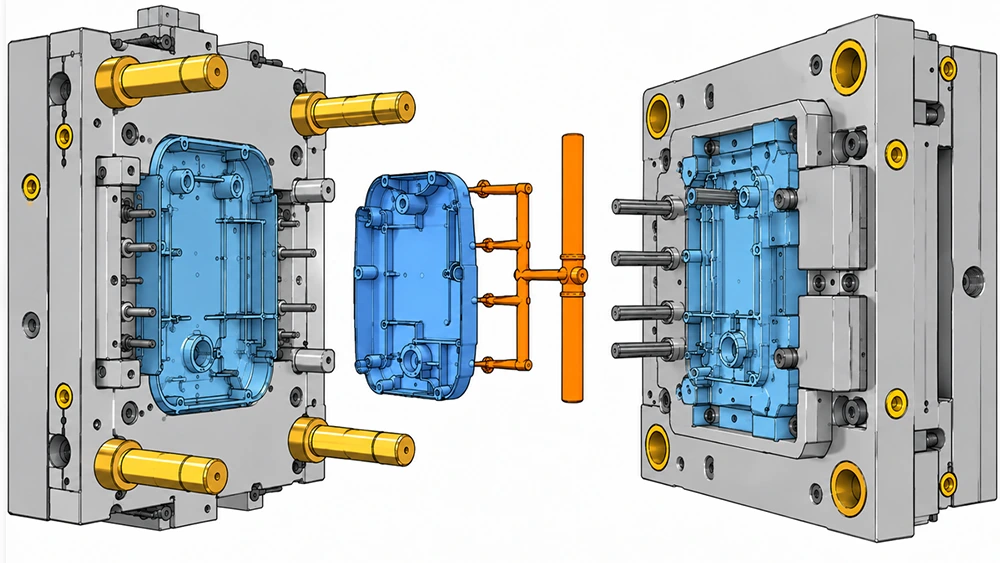
Mold etching creates textures directly on the mold surface, such as leather grain, fine grain, matte texture, or decorative patterns. During injection molding, molten plastic fills the cavity and copies the mold surface. After cooling, the molded part carries the same texture.
This method is common for automotive interior parts, electronic housings, tool handles, appliance housings, and consumer product shells. Its main advantage is repeatability in mass production. Once the mold texture is approved, the texture can be reproduced without applying a separate finish to every part.
The limitation is that mold texture is difficult to change after it has been applied to the mold. Texture depth, draft angle, part geometry, and appearance requirements should be confirmed before mold texturing.
Mold Polishing
Mold polishing is important for high-gloss, mirror-like, and transparent surfaces. For transparent and glossy appearance parts, the polishing quality of the mold directly affects the final visual result.
If the mold surface has small tool marks, polishing lines, scratches, or uneven areas, these defects can be copied onto the molded part. For transparent materials such as PC and PMMA, insufficient polishing can reduce clarity, gloss, and overall visual quality.
Mold polishing is commonly used for transparent windows, light covers, lenses, glossy housings, and display-area components.
Sandblasted Mold Finish
A sandblasted mold finish creates a relatively simple and uniform matte surface. Unlike complex etched textures, it does not create a strong pattern. Instead, it gives the mold surface a fine roughness, which is then copied onto the plastic part.
This method is useful for industrial housings, electronic device housings, visible internal structural parts, and basic matte appearance parts. If the product does not need a complex texture but needs lower reflection or a more stable matte surface, a sandblasted mold finish can be a practical option.
Mold Texture vs Secondary Surface Finishing
Mold texture and secondary surface finishing are not direct replacements for each other. They solve different problems.
If the goal is a matte surface, fine grain, leather-like texture, or basic tactile effect, mold texture is often more stable and cost-effective for volume production. If the goal is color change, metallic appearance, logo marking, complex graphics, scratch protection, or special surface feel, secondary surface finishing is usually more suitable.
In many projects, both can be used together. A plastic housing may use mold texture for the base surface and pad printing for the logo. A glossy part may use mold polishing for the base appearance and a clear coating for additional scratch protection.
Material Compatibility Matters
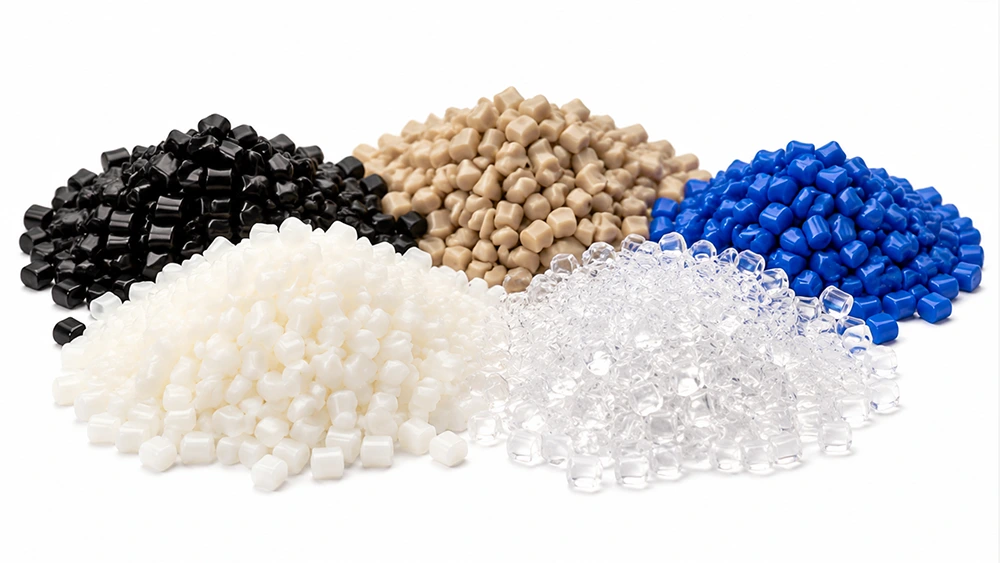
Surface finishing should not be selected only by appearance target. The plastic material must also be compatible with the finishing process. Different plastics have different surface energy, chemical resistance, heat resistance, transparency, and additive packages. These factors can affect painting, plating, printing, laser marking, and coating adhesion.
| Material Factor | Why It Matters |
| Surface Energy | Low-surface-energy materials such as PP and POM usually have poorer paint, ink, and adhesive adhesion. Flame treatment, corona treatment, plasma treatment, or primer may be required. |
| Chemical Resistance | Materials with strong chemical resistance can be more difficult for coatings, inks, or adhesives to bond to. |
| Transparency | Transparent materials such as PC and PMMA depend heavily on material purity, mold polishing, and molding control. Secondary finishing cannot fully hide internal defects. |
| Heat Resistance | Some coating, metallization, or printing processes require the material to withstand certain processing temperatures. |
| Additives and Fillers | Glass fiber, flame retardants, colorants, and other additives can affect gloss, coating adhesion, printing quality, and laser marking contrast. |
In general, ABS has good compatibility with painting, electroplating, printing, and vacuum metallization. PC and PMMA are often used for transparent, glossy, or hard-coated applications. PP and POM are more difficult to paint or print because of their low surface energy and usually need surface pretreatment. PA / Nylon may require extra attention because moisture absorption can affect surface stability.
This is why surface finishing should be discussed during material selection, not after the mold is completed. If coating adhesion, plating quality, or laser marking contrast is checked too late, changes may require material replacement, surface pretreatment, mold modification, or additional testing.
Conclusion
Surface finishing for injection molded parts is not just a final decoration step. It is the result of material choice, mold surface, molding process, product requirements, and secondary finishing working together.
If a part only needs a basic matte, textured, or glossy surface, mold texture, sandblasted mold finish, or mold polishing may be enough. If the part needs color change, logos, metallic appearance, wear protection, or complex graphics, a suitable secondary finishing process should be selected.
Material compatibility also needs to be confirmed early. Not every plastic is suitable for painting, plating, printing, or laser marking. The earlier the surface finish, material, and process are matched, the easier it is to control appearance quality, production cost, and repeatability in mass production.