Your decision for TPU vs silicone controls the success of your product. You need to understand their particular limits. This guide explains test standards, actual engineering failures, and processing costs. You will learn exactly when to use each material based on hard data.
TPU vs Silicone
Thermoplastic Polyurethane is a plastic that acts like rubber. Engineers call it TPU. Silicone is a completely synthetic rubber. Both materials bend easily. Both materials feel soft. But they fail in very different ways. You must know these differences before you start designing parts.
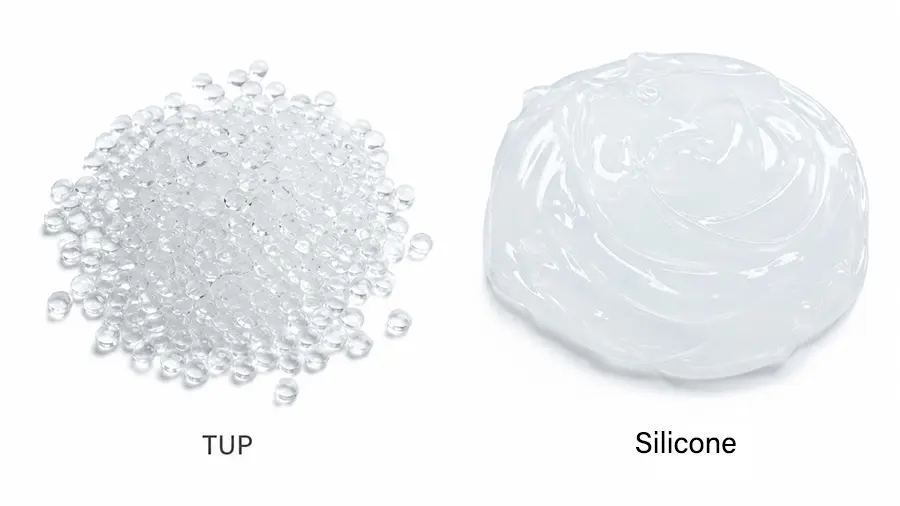
TPU vs Silicone Property Comparison Table
Here is the basic comparison of TPU and silicone.
| Property | TPU | Silicone |
| Operating Temperature | -40°C to 120°C | -60°C to 250°C |
| Tensile Strength | 20 – 60 MPa | 5 – 10 MPa |
| Hardness Range | Shore 60A to 85D | Shore 10A to 80A |
| Elasticity / Memory | Moderate | Excellent |
| Tear Strength | Very High | Low to Moderate |
| Compression Set | Poor | Excellent |
| UV Resistance | Poor | Excellent |
| Oil/Chemical Resistance | Excellent | Poor |
When to Choose TPU
You choose TPU when your part needs high physical strength. For example, phone cases or castor wheels require extreme wear resistance. TPU handles rubbing and scraping better than almost any other soft material. Therefore, if your product slides against rough concrete or rough metal, TPU is your best option. There is no better choice for heavy scraping.
Another example is protective boots for construction workers. The material takes heavy abuse. So, you pick TPU to make the product last long under heavy friction. Furthermore, industrial belts use TPU because it handles constant motion without losing its shape.
When to Choose Silicone
You choose Silicone for extreme heat or medical use. Silicone does not melt easily. So, baking pans and medical tubes rely on it completely. If your part touches the human body for a long time, silicone is very safe. The reason is it does not cause human skin reactions. Furthermore, hospitals use massive amounts of silicone. They trust it because it stays clean in boiling water.
You also pick silicone when you need parts to stay soft in freezing weather. There are very few materials that survive high heat and extreme cold together. For instance, aerospace seals use silicone because airplanes fly in freezing air.
Today, many phone cases are also made with silicone because it provides a softer touch and better protective performance.
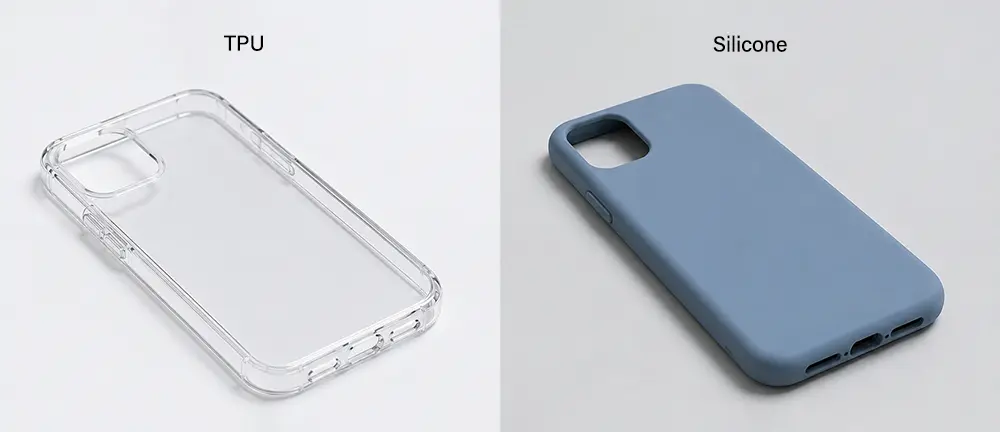
TPU vs Silicone Side by Side Property Analysis
We need to look at exact test results to prove these claims. Engineers use specific testing standards to measure limits. Here is how they compare in a laboratory.
Compression Set Performance
Compression set measures if a material bounces back after being squeezed. You put a piece of material in a vice. You squeeze it tight. Then you wait many hours. Finally, you release it. Silicone wins here. Under this test, silicone returns perfectly to its original shape. But the problem is TPU takes on a permanent dent.
The plastic memory gets weak over time. If you design a waterproof seal for a pipe, silicone keeps the water out much longer. The silicone pushes back against the metal forever. TPU will eventually relax. Then the water will leak out of the pipe. Therefore, always choose silicone for permanent sealing applications.
Tear Strength Performance
Tear strength measures how easily a cut spreads. Engineers clamp the material in a machine. The machine pulls the material apart. TPU dominates this exact test. TPU can resist massive pulling forces without ripping. Silicone fails quickly once a small cut starts. For instance, a sharp edge will destroy a silicone cover in minutes.
If you have a small nick in silicone, the whole part will split open. Therefore, you cannot use silicone around sharp metal corners. You must use TPU for those applications. The strong bonds in TPU hold the material together even after it takes damage.
Tensile Strength
Tensile strength shows how much total force snaps the material. You measure this by pulling the ends until the part snaps. TPU handles very high stretching force. You can pull a thick piece of TPU very hard. It fights back with great strength.
Silicone is weak in tension. It stretches easily but snaps under low weight. If your design requires a part to hold a heavy weight while stretching, you must use TPU. A silicone strap will just snap and drop the weight. For example, heavy duty lifting straps always use TPU instead of silicone.
Hardness Variability
You measure softness using the Shore scale device. You push a small metal pin into the rubber to read the number. Silicone goes very soft. You can find silicone at Shore 10A. This feels exactly like a human muscle or a soft gel.
TPU usually stops getting softer around Shore 60A. This feels like a hard car tire. So, if you need a super soft touch, silicone is the only choice. But TPU goes much harder. It reaches Shore 85D. This feels like a hard plastic bowling ball. You have a huge range of hardness with TPU. You can match the exact stiffness your project needs.
TPU Stickiness and Plasticizer Migration Over Time
Many people do not talk about TPU aging. This material has a dark secret that ruins products over the years. You need to plan for this specific failure.
Why TPU Becomes Sticky in Storage
TPU parts sometimes turn into a sticky mess after a few years. The reason is plasticizers. Manufacturers add extra chemicals to make the stiff TPU turn soft. Over time, these chemical liquids move to the outside surface.
Humidity and heat speed up this exact process. When you open a box of old TPU parts, they might stick together. The surface feels like wet glue. It leaves a bad residue on your fingers. This chemical movement happens slowly, but it ruins the product completely.
Cost of Stickiness Problem
This sticky surface destroys products completely. You cannot easily clean the sticky layer off. Soap does not work. Alcohol just smears the chemicals around. Because of this, angry customers return products to your store. Whole shipments sit in warehouses and go bad in the summer heat.
You lose massive amounts of money on ruined inventory. Your brand trust drops to zero when a customer touches a gross and sticky handle. For instance, a camera grip that gets sticky will make the photographer hate the camera brand forever.
Prevention and Management Strategies
There are strict ways to stop this aging process. First, you must store TPU parts in cool and dry places. Do not leave boxes in hot shipping containers for months. Second, ask your factory supplier for ether grade TPU instead of ester grade TPU. Ether grades cost a bit more money up front. But they resist water breakdown much better.
Also, you can add a clear top coat spray to block the sticky surface. This seals the chemical liquids inside the plastic so they cannot reach the human hand.
Poor Tear Resistance of Silicone
Silicone looks perfect in the factory until it catches on something sharp. You must understand how easily it rips apart in the real world.
Why Silicone Tears so Easily
Silicone has extremely low molecular alignment. The atoms do not tangle together tightly. When you nick the edge of silicone, the stress focuses heavily on that tiny cut. The material structure cannot stop the cut from traveling forward.
Therefore, a tiny scratch turns into a massive rip. You can easily tear a thick piece of silicone with just your bare fingers if you start a small hole first. The lack of internal strength makes it very fragile against sharp points.
Actual Failure Examples
Consider modern silicone watch bands. A user brushes their wrist against a rough brick wall. A microscopic cut forms on the edge. The next time they take the watch off, the band snaps completely in two pieces.
Another example is silicone laptop keyboard covers. Heavy typing causes fingernails to puncture the soft material. The cover then splits open and lets dirt inside. These are very common failures. Because of this, you must test your products against daily scratching risks before selling them.
Design Workarounds for Silicone Weakness
You can fix this exact weakness through smart engineering design. Make all the edges round and smooth. Sharp corners create dangerous weak points in silicone. So, you must use thick radiuses everywhere.
Another trick is to embed strong cloth inside the silicone part. A mesh fabric stops the tear from moving forward. This is exactly how engineers make durable silicone radiator hoses for large trucks. The internal fabric carries all the heavy load, and the silicone just seals the water.
TPU Chemical Resistance
Chemicals destroy normal plastics quickly. You need to know how TPU reacts before using it in harsh environments. Here is the exact data on chemical exposure.
TPU Strong Points
TPU fights off heavy oils very well. Under testing, you drop TPU in motor oil for many days. The TPU sits in the oil and does not swell up. It also resists raw gasoline and industrial greases. Because of this, auto mechanics use TPU hoses everywhere. If your product lives in a dirty automotive shop, TPU will easily survive the daily oil spills. It keeps its full physical strength even when soaked in dirty grease.
TPU Failure Modes
But TPU fails completely around certain harsh chemicals. Strong acids dissolve TPU parts. Rubbing alcohol can also degrade it over a long time. If you wipe down TPU parts with bleach every single day, the material turns hard and brittle. It loses all the rubber feeling. It will eventually crack open like old glass. Therefore, you cannot use TPU for items that need constant chemical washing. The chemical attack tears the plastic chains apart permanently.
Actual Application Failures
Engineers once tried using soft TPU for hospital surgical tool grips. Nurses cleaned the tools with harsh sanitizing wipes daily. The TPU cracked open after only two months. The wiping alcohol removed the softening oils inside the plastic. So, the grips dried out entirely and fell apart during surgery. This was a massive failure because they chose the wrong material. They ignored the chemical cleaning schedule of the hospital.
Silicone Chemical Resistance
Silicone handles liquid chemicals in a totally different way than plastics. It survives completely different environments. You must match the material to the exact chemical.
Silicone Exceptional Range
Silicone ignores most harsh cleaning chemicals completely. You can soak silicone parts in raw bleach, hydrogen peroxide, or strong alcohol. It will not break down at all. This is exactly why hospitals love silicone products.
Under testing, silicone keeps its shape and strength in hot water and strong medical cleaners. It is incredibly stable. For instance, baby pacifiers use silicone because parents boil them in water and wash them with strong soap daily.
Silicone Chemical Weak Points
But the problem is silicone absolutely hates oil. If you put silicone in motor oil, it absorbs the thick liquid like a kitchen sponge. The silicone part swells up to double its normal size. It loses all physical strength and turns into jelly.
Also, you cannot use silicone anywhere near raw gasoline. The fuel destroys the internal rubber matrix instantly. So, you must keep silicone far away from car engines and heavy machinery fluids.
Real Cost of Chemical Resistance
You must map out exactly what liquids will touch your product. If you choose silicone for an engine oil seal, it will leak heavily. You will face massive expensive recall costs. If you choose TPU for a medical hospital device, it will crack during routine cleaning.
You must buy the correct material to avoid huge warranty claims. Mistakes here cost companies millions of dollars. You need to ask your buyers exactly how they will wash the product.
Operating Temperature Ranges
Heat changes how soft materials act. You cannot ignore temperature limits in engineering. A few degrees can destroy your product entirely.
TPU Temperature Reality Check
TPU does not like high heat environments. Once the surrounding temperature goes over 90 degrees Celsius, TPU gets very soft and weak. It loses its grip strength. At 120 degrees Celsius, TPU starts to melt into a liquid.
You cannot boil TPU parts in water safely. Therefore, you cannot sterilize TPU inside steam machines. It will just melt into a flat puddle. For example, if you leave a TPU phone case inside a hot car during summer, it will warp and lose its tight fit.
Silicone Temperature Advantage
Silicone survives extreme heat without any damage. It works perfectly at 200 degrees Celsius all day long. Some special high grades go up to 300 degrees Celsius safely. You can bake silicone inside a kitchen oven. The material does not melt or smoke. It also handles extreme freezing cold.
Silicone stays very soft at minus 50 degrees Celsius outside. Because of this massive range, engineers always pick silicone for aerospace and deep winter products.
Cost of Temperature Limitations
If your product needs to survive a home dishwasher, you must pay for silicone. The dishwasher heat combined with hot water will ruin TPU. TPU will bend and deform permanently in hot water. So, if you try to save money by using cheap TPU for kitchen tools, the tools will fail.
Your customers will demand fast refunds. The high initial price of silicone actually saves you money later. It stops customer complaints about melted products.
Can You Overmold TPU Over Silicone or Vice Versa?
Engineers often want to combine these two different materials together. They want the soft touch of silicone and the hard strength of TPU. This is very hard to achieve in a factory.
TPU Over Silicone
You cannot easily mold hot TPU over a silicone base part. Silicone has extremely low surface energy. Almost nothing sticks to it naturally. If you inject melted hot TPU over a cold silicone part, the TPU will peel right off later. They do not bond together chemically at all. You will just have two loose pieces that fall apart in your hands. Therefore, chemical bonding is not an option here.
Silicone Over TPU
Molding liquid silicone over a hard TPU part is also a complete nightmare. Silicone requires high heat to cure properly. Liquid silicone rubber usually cures at 150 degrees Celsius inside the mold.
But we already know TPU melts at 120 degrees Celsius. So, the high heat required to cure the liquid silicone will completely melt your TPU base part inside the machine. You will ruin the base part before the silicone ever finishes cooking.
Hybrid Workarounds
There are physical mechanical workarounds for this exact problem. Instead of trying to make a chemical glue bond, you design physical locks. You can make large holes in the base plastic part.
The second soft material flows completely through the holes and locks tightly in place as it cools. Also, you can use room temperature curing silicone. But this slow process takes hours and costs a lot of money in factory labor. So, physical locking is the best choice.
UV and Weather Exposure Performance
Direct sunlight destroys many soft materials. You must check outdoor weather performance carefully if your product lives outside. Sun damage happens very quickly to bad plastics.
TPU Outdoor Lifespan
Standard cheap TPU fails badly in direct sunlight. Ultraviolet sun rays break the internal chemical chains. Under strict testing, standard aromatic TPU turns ugly yellow very fast. After turning yellow, the surface gets chalky and dry. Then it cracks wide open.
You can buy special aliphatic TPU. Aliphatic TPU resists yellowing nicely. But the problem is it costs three times as much money. Therefore, outdoor TPU gets very expensive if you want it to look good for years.
Silicone Outdoor Durability
Silicone completely rules the outdoors. The internal silicon and oxygen bonds are much stronger than the suns ultraviolet rays. Silicone simply does not turn yellow. It does not dry out. It does not crack.
An outdoor silicone window seal will last twenty full years without failing. Normal weather simply does not affect it at all. It handles rain, snow, and beating sun perfectly. Because of this, construction companies use massive amounts of silicone for tall buildings.
Actual Outdoor Applications
Look closely at expensive solar panels. Factories seal the heavy glass edges with pure silicone. Rain, sun, and snow hit the solar panels every single day. The silicone never leaks water.
If someone used standard TPU for that outside seal, the rain water would get inside after just one year. So, for permanent outdoor weather use, silicone is the absolute only answer. It guarantees safety against water damage.
TPU vs Silicone Production Speed and Cycle Time
Manufacturing time equals money. These two materials process very differently in the factory. You must understand these machine speeds to calculate your true product cost.
TPU Injection Molding Advantage
TPU is a standard thermoplastic. You heat it up, inject it into a mold, and cool it down quickly. The cooling stage takes only seconds. A machine can make a new TPU phone case every twenty seconds.
Because the factory injection molding cycle time is very fast, the labor cost per single part is very low. Also, you can recycle waste TPU easily. You just grind the bad parts up and melt them again. There is zero wasted material in the factory.
Silicone Processing Challenges
Silicone is a thermoset material. You must mix two chemical liquids together and apply steady heat to trigger a permanent reaction. This curing time takes minutes, not seconds. A silicone part might take three full minutes inside the hot mold. You wait much longer for each piece.
Also, you cannot melt cooked silicone again. Waste silicone goes straight to the trash bin forever. Therefore, material waste increases your final costs heavily.
Real Manufacturing Cost Comparison
Silicone raw liquid material costs more money than TPU pellets. Plus, the molding machine runs much slower. Therefore, a finished silicone part often costs twice as much money as a TPU part. You only use expensive silicone when the engineering truly requires high heat or medical safety.
For everything else, the fast speed of TPU saves your project budget. You keep your profit margins high by picking TPU whenever possible.
CONCLUSION
Choosing between TPU and Silicone requires looking at exact failures. Use TPU for heavy wear and fast factory production. Choose Silicone for high heat and hospital environments. Review your chemical limits before picking a material. Your careful choice here stops costly product recalls later. You now have the data to decide.