

Injection molding is not a single technique, but rather a group of related manufacturing processes. Which variant is most suitable depends on the material used and how you fill the cavity. This guide categorizes 12 injection molding processes by material and process type. The focus is on the parameters that processors actually work with in practice.
Classification of Injection Molding Processes
In practice, the following classification has become established among engineers and tooling specialists:
- Processes by Material
- Processes by Method
The choice of material determines how the plastic behaves during molding. The process type determines how the material is injected, compacted, and cured. Let’s first look at the materials.
Types of Injection Molding by Material
1. Thermoplastic Injection Molding
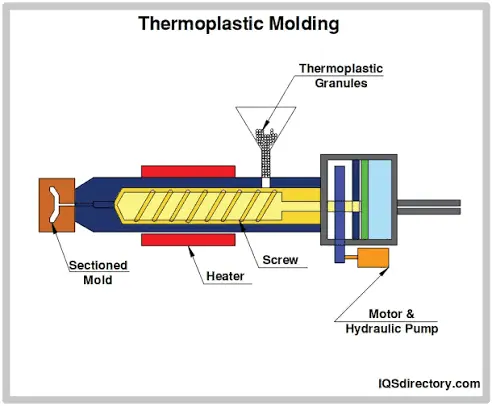

This is the most widely used injection molding process. The plastic is melted before filling the cavity which then solidifies upon cooling. Depending on the material used, the melting temperatures range from 180 °C to 350 °C. The mold temperature is usually between 20 °C and 80 °C.
Advantages
- Widest range of materials: ABS, nylon, polypropylene, polycarbonate
- The material can be remelted; scrap can be reused as regrind
- Short cycle times of 10 to 30 seconds keep unit costs low for large production runs
Disadvantages
- Lower heat resistance than thermosets
- Thick-walled areas are prone to sink marks & warping
2. Thermoset Injection Molding
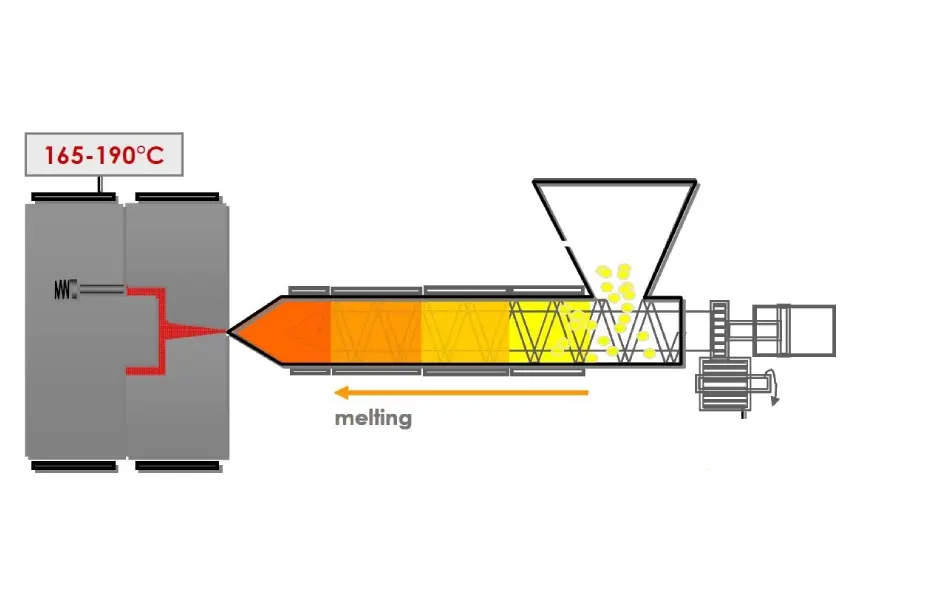

Thermoset materials cure permanently in heated molds. Once the material has cross linked, it cannot be reshaped or remelted. A typical example is epoxy resin. Mold temperatures are generally higher than in thermoplastic injection molding, often exceeding 150 °C.
Advantages
- Higher resistance to chemicals & heat than most thermoplastics
- Remains dimensionally stable even under continuous heat stress
- Can replace metal in automotive, aerospace industries and medical technology
Disadvantages
- Cannot be remelted or further processed after curing
- Longer curing times slow down the production cycle
3. Liquid Silicone Rubber (LSR) Injection Molding
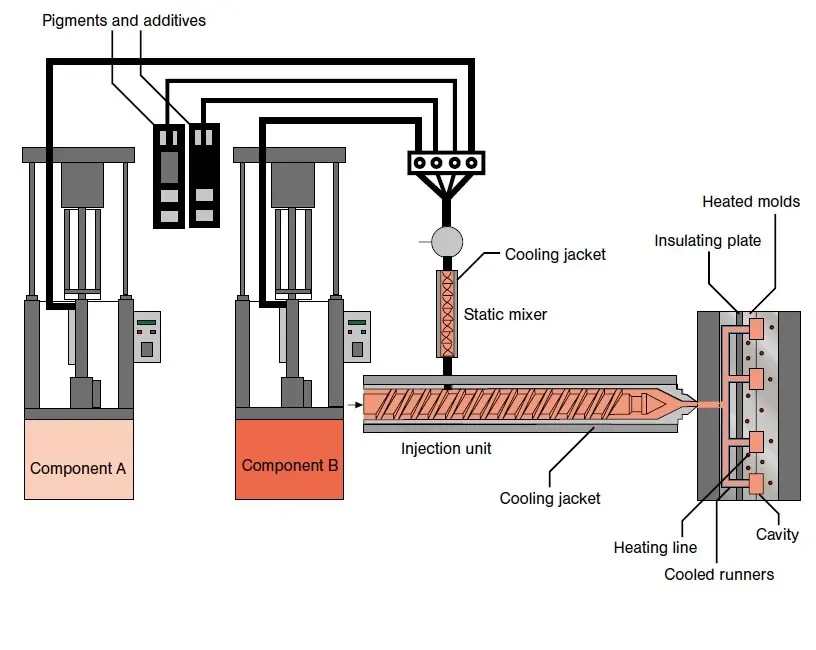

LSR injection molding uses a two-component elastomer that cures through platinum-catalyzed addition reaction (hydrosilylation). The system meters and mixes the liquid components before injection. The mixture is then injected at low pressure into a heated cavity; mold temperature typically runs between 150°C and 200°C.
Injection pressures generally range from 200 – 1200 psi, and in most applications between 300 and 700 psi. Cure time varies with part thickness and mold temperature, and it ranges between tens of seconds to a few minutes.
Advantages
- Medical-grade formulations can be certified biocompatible (e.g., USP Class VI, ISO 10993) for regulated applications
- Flows easily into fine contours but require proper venting
- Suitable for both low & high operating temperatures
Disadvantages
- Requires precisely placed vents and tight tool tolerances
- The adhesive material can complicate automated demolding
4. Rubber Injection Molding
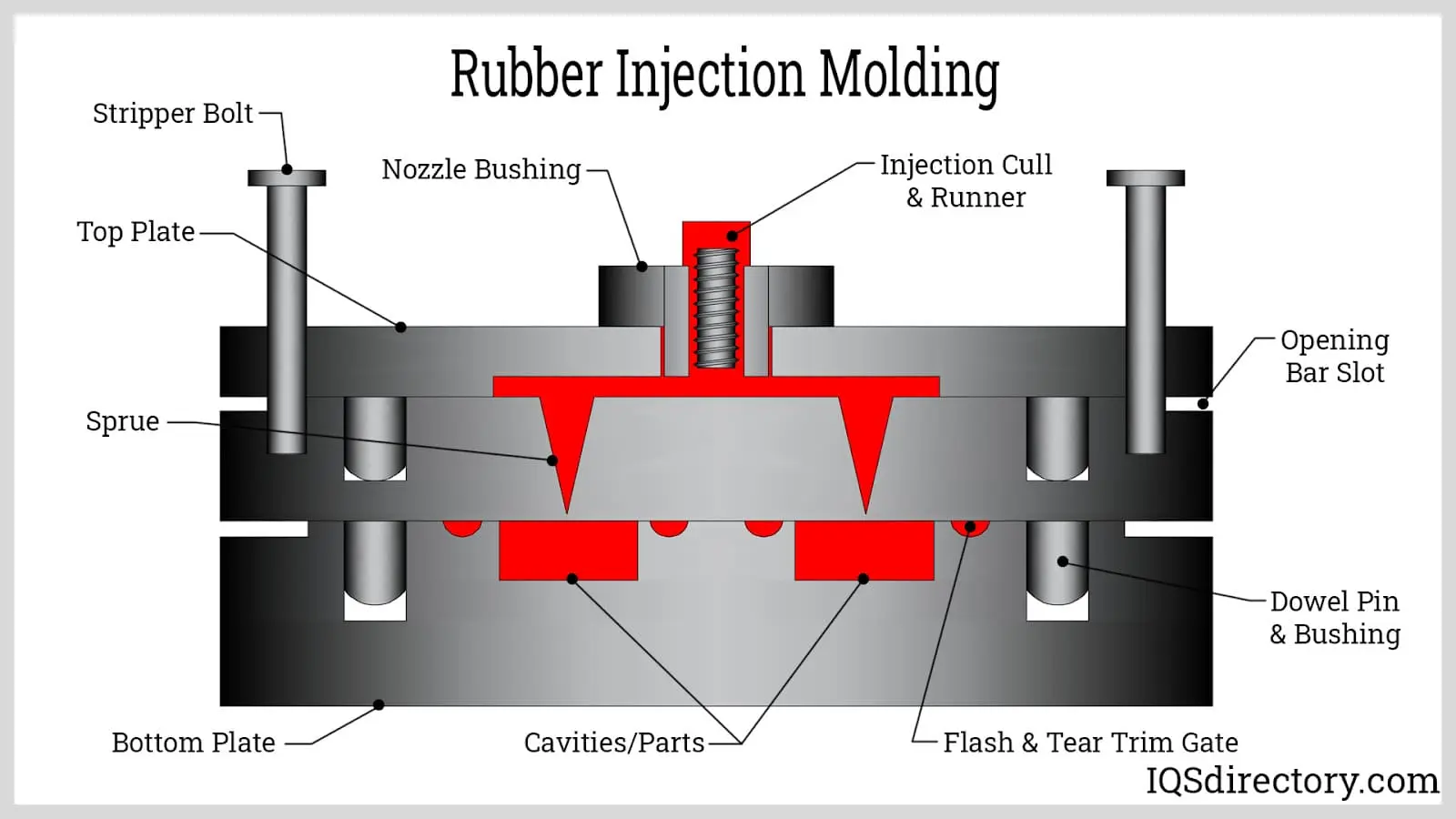

Rubber injection molding uses elastomer compounds that are chemically different from liquid rubber (LSR). The material vulcanizes under heat & pressure in a closed mold. Normal applications include gaskets, seals and vibration-damping components.
The specific formulation used as well as the mold temperature greatly influence the curing process. Unlike LSR, most rubber compounds are not available as a pumpable liquid but as a premixed solid.
Advantages
- Compounds can be specifically designed for chemical or abrasion resistance
- High resistance to compression set over extended periods
- Economical for sealing designs with high production volumes
Disadvantages
- Batch consistency is more difficult to control than with LSR
- Vulcanization usually takes longer than the cooling cycle for thermoplastics
5. Micro Injection Molding
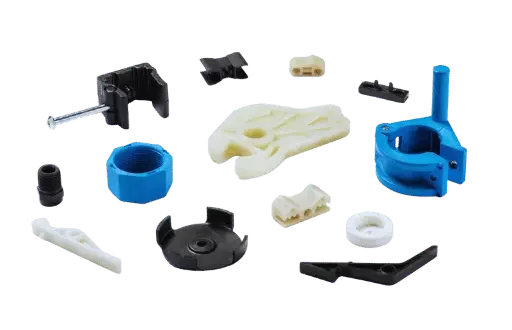

Micro molding produces parts with micron-level tolerances that are often under 0.5 grams in weight. It uses scaled-down machines with precise shot control, sometimes down to fractions of a gram. Injection speed and holding pressure need far tighter control than standard molding. A few microns of flash can block a microfluidic channel or ruin a device fit.
Advantages
- Achieves tolerances as tight as ±0.01 mm or better
- Enables miniaturized parts impossible with standard tooling
- Reduces material waste on high-value components
Disadvantages
- Requires specialized machines, molds, and metrology equipment
- Narrow process window demands constant statistical process control
6. Gas-Assisted Injection Molding
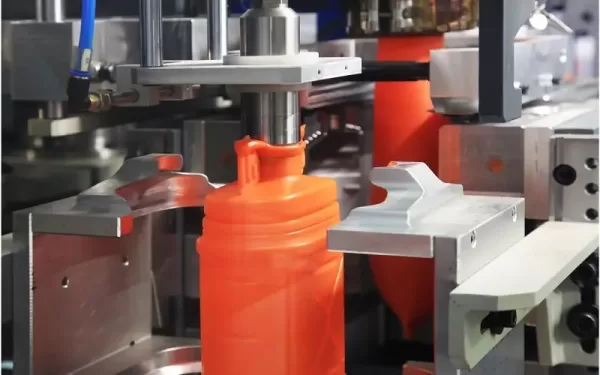

In gas-assisted injection molding, the cavity is first filled to 70 to 90% with thermoplastic melt. Once this fill level is reached, nitrogen is introduced through designated channels. The gas injection pressure is typically between 2000 and 4,500 psi, depending on the wall thickness of the plastic. The wall thickness of the components is usually between 2 and 6 millimeters.
Advantages
- Reduces material usage & component weight
- Prevents sink marks in thick, load-bearing areas
- Cools down faster than a comparable solid cross-section
Disadvantages
- The gas channels make mold design more complex
- The process window is narrow and more difficult to fine tune
7. Structural Foam Injection Molding
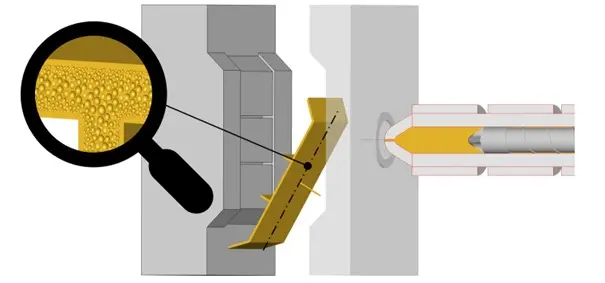

In this process, nitrogen is introduced directly into the molten plastic stream. This creates a foamed core with a compact outer layer. Because the cavity pressures are lower, aluminum molds can often be used instead of hardened steel molds.
Advantages
- Aluminum molds keep costs low for large components
- The lower pressure requires less clamping force
- Large parts are cheaper to produce than with conventional injection molding
Disadvantages
- The surface finish is coarser than with solid injection molded parts
- Cycle times are longer due to the foam core
8. Injection Compression Molding
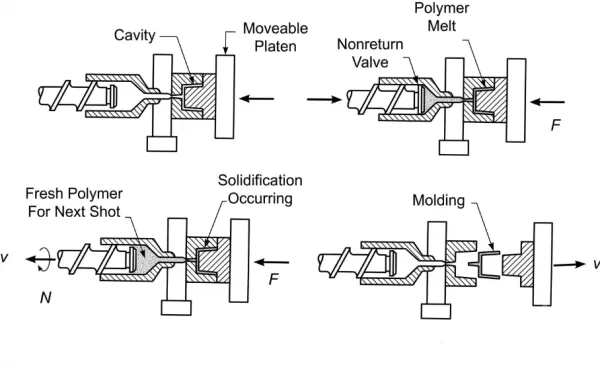

In this process the melt is compressed in the cavity after partial or complete injection. The compression reduces internal stresses that would otherwise lead to sink marks and warping. This process is particularly well suited for thick-walled components with long flow paths.
Advantages:
- Well suited for optical components with long flow paths
- Limits warping & sink marks in thick-walled parts
- Generates fewer molded-in stresses than conventional injection molding
Disadvantages:
- Runs slower than conventional injection molding for comparable parts
- Requires a press designed for the compression stroke
9. Reaction Injection Molding (RIM)
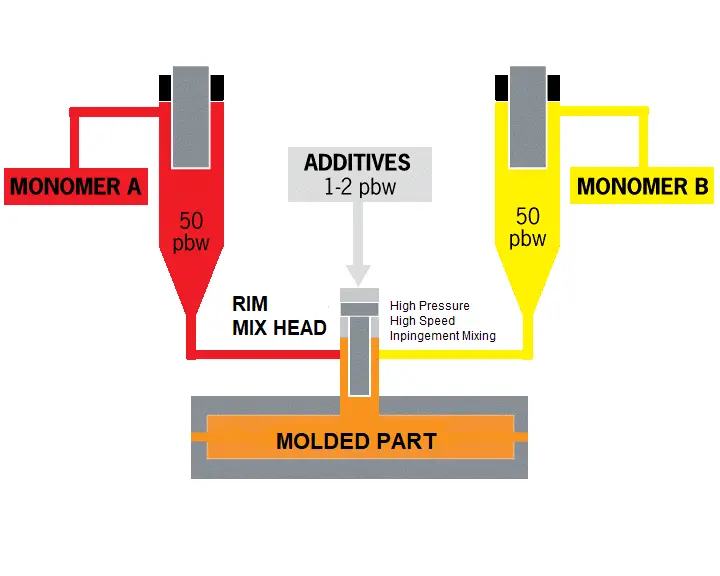

This method uses reactive liquid polymers such as polyurethanes, which chemically cure in the cavity and do not melt and cool. Before entering the mold, two components are mixed together using a high pressure impact mixing process.
- The pressures in the mixing head are between 1,500 and 3000 psi.
- The mold cavity pressure is typically 50 to 150 psi which is significantly lower than in conventional injection molding.
- The processing temperatures range from 60 °C to 120 °C.
Due to the low pressure, aluminum or composite molds can be used instead of hardened steel molds. For example bumpers in the automotive industry are produced on RIM machines with only 100 to 150 tons of clamping force. Comparable thermoplastic components often require several thousand tons.
Advantages
- The low pressure allows for lighter & less expensive aluminum tooling
- Requires less energy than high-pressure thermoplastic injection molding
- Well suited for large components
Disadvantages
- Limited material selection, predominantly polyurethanes
- Longer cycle times than comparable thermoplastic parts
10. Multi-shot Injection Molding (Two-Shot)
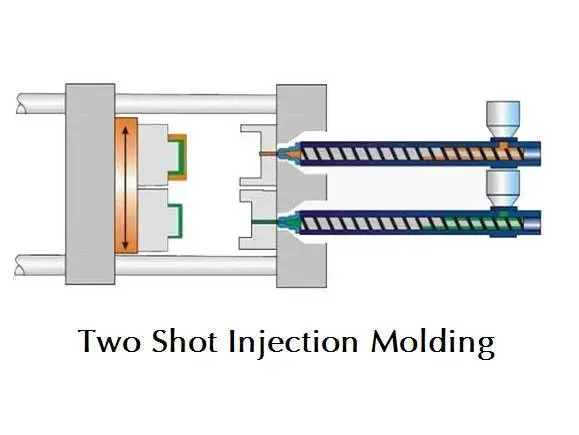

In two-shot molding, several materials are injected in a single cycle. A rotating or indexing plate moves the component between the injection stations. The strength of the final component and the bond strength depend on material compatibility.
Advantages
- No additional assembly required for multi-material components
- Reduces handling effort compared to separate assembly
- Creates strong bonds between soft-touch and rigid areas
Disadvantages
- Specialized tooling results in higher initial costs
- The combination of materials is limited by their compatibility
11. Overmolding
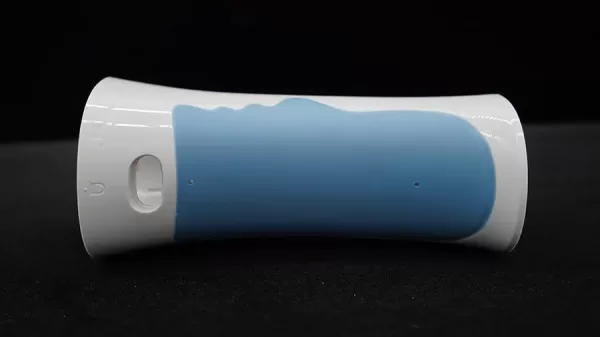

In overmolding, a second material is applied to an existing substrate. First the base component is created; then it is transferred into a second cavity. The resulting adhesion strength depends greatly on the surface condition of substrate.
Advantages
- Adds vibration damping or grip surfaces in a single process step
- Improves haptics and function without additional assembly
- Enables designs made from mixed materials
Disadvantages
- Substrate preparation is critical; inadequate preparation leads to adhesion failure
- Two mold cycles increase production time
12. Insert Molding
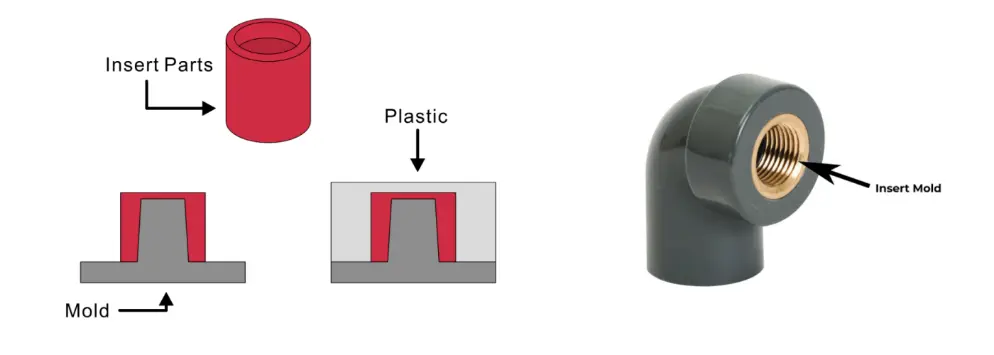

In insert molding, a pre-fabricated metal part or other non plastic component is first provided. During injection molding, this insert is then firmly bonded to the plastic. Before injection, the insert is positioned in the cavity.
This process is particularly suitable for electrical contacts, threaded elements or components that require local reinforcement. The quality of the finished part depends crucially on the precise positioning of insert.
Advantages
- Creates strong connections around pre-fabricated inserts
- Delivers targeted strength to areas that bear structural loads
- Reduces the number of parts compared to post-assembly
Disadvantages
- Insert positioning must be very precise
- Manual insert feeding increases costs & cycle time
Comparison Table for Injection Molding Processes
| Process | Typical Tooling | Cycle Time | Suitable Volume | Cost | Applications |
| Thermoplastic Molding | Hardened steel | 10 to 30 sec | High | Medium | Consumer goods, automotive interior parts, packaging, electronics housings |
| Thermoset Molding | Hardened steel | 10-120 sec | Medium to high | Medium to High | Electrical components, automotive & aerospace metal-replacement parts |
| LSR Molding | Steel, precision-vented | 30 to 180 sec | Medium to high | High | Medical devices, seals, wearables, infant care products |
| Rubber Injection Molding | Steel | Vulcanization-dependent, mostly 60 to 180 sec | Medium to high | Medium | Seals, gaskets, o-rings, vibration mounts |
| Micro Injection Molding | Micro-machined steel (EDM, micro-milling) | 5 to 20 sec | Medium to High | High | Micro-connectors, drug delivery components, diagnostic cartridges, hearing aid parts, sensor housings |
| Gas-Assisted Molding | Steel with gas channels | 30 to 90 sec | High | Medium to High | Automotive handles, armrests, panels; appliance housings; furniture parts |
| Structural Foam Molding | Cast or CNC-machined aluminum | 2 to 6 min | Low to medium | Low to Medium | Aircraft interiors, industrial equipment housings, electrical enclosures, large panels |
| Injection-Compression Molding | Steel (specialized compression press) | 15 to 60 sec | Medium to high | Medium to High | Optical lenses, thick wall parts, long flow-path parts |
| Reaction Injection Molding (RIM) | Aluminum or composite | 1 to 4 min | Low | Low | Automotive bumpers and fascias, heavy equipment housings, medical equipment enclosures |
| Two-Shot (Multi-Shot) Molding | Steel, multi-cavity/rotary tooling | 30-90 sec | High | High | Medical retractor handles, power tool handles, multi-color consumer products |
| Overmolding | Steel or standard tooling, 1–2 cavities | 30 to 120 sec | Low to medium | Medium | Toothbrush handles, tool grips, parts for wearable devices |
| Insert Molding | Steel, single-cavity | 25-60 sec for automatic insert loading and up to 120 sec for manual insert loading. | Low to medium | Low to Medium | Threaded fasteners, electrical connectors, automotive brackets, sensor housings |
Notes:
- Production Volume Classes: Low = under 20,000 units/year; Medium = 20,000 to 100,000; High = over 100,000
- Costs refer to the total program costs (tooling + unit costs), not just the tooling.
How to Choose the Right Injection Molding Process for Your Component
For process selection, proceed as follows:
- First check the geometry & wall thickness of your component. This will determine which injection molding processes are even suitable.
- Next clarify the actual requirements of your material.
- Consider your production volume, as this will determine whether aluminum or steel tools are economical.
- Before making a decision, also consider your budget & any industry-specific certification requirements.
Quick Decision Guide
- For hollow, lightweight structural component – Use gas-assisted injection molding.
- Large component in small quantities with short tool cycle times – Reaction injection molding is usually the right choice here.
- Flexible & biocompatible component – Opt for LSR injection molding.
- Two materials that need to be firmly joined in high volumes – Multi-component injection molding becomes cost effective starting at around 100,000 parts.
- For embedded metal element with minimal assembly effort – Insert injection molding is often more cost-effective.
- Soft-touch handle for low to medium production runs – Overmolding is usually cheaper than two-shot molding in terms of tooling costs.
To SumUp
Different injection molding processes exist because no single method is equally effective for every material & geometry. Material chemistry influences mold design & pressure levels while the chosen process affects cycle time. Selecting a process that matches the geometry, material and tolerances of the component reduces defects and helps control costs.
At RJC Mold we offer conventional thermoplastic injection molding, LSR injection molding, two shot injection molding and insert injection molding. Contact us and our engineers will recommend the process that best suits your material, component geometry, budget & production volume.
Related Questions
Can a product be manufactured using more than one injection molding process?
Yes. In many cases, depending on the product design, material, budget and planned quantity, several processes are suitable. For example a product with a soft-touch handle can be manufactured either by overmolding or using multi-shot injection molding. Before selecting a process, manufacturers compare cycle time & tooling costs with the required component performance.
Which injection molding process is best suited for medical applications?
Liquid silicone rubber (LSR) injection molding is a common process for medical applications. It allows for the production of flexible components that are biocompatible & sterilizable. Thermoplastic injection molding is also frequently used, for example, for syringes, diagnostic devices & other medical products. The most suitable solution depends on the material & regulatory requirements
Do different injection molding processes require different machines?
Not necessarily. Overmolding, thermoplastic injection molding and insert injection molding can often be performed on modified conventional injection molding machines.
The situation is different for LSR injection molding, reaction injection molding and gas-assisted injection molding: Here, special machines, gas injection systems, or mixing & dosing systems are required to process the respective materials reliably.