If your product only requires a few hundred to a few thousand parts, is it worth investing in an injection mold? How can you control upfront costs while still achieving consistent part quality and maintaining production flexibility? Low-volume injection molding is designed for exactly these types of production needs. This article covers its main benefits, costs, and typical applications.
1. What Is Low-Volume Injection Molding?
Low-volume injection molding refers to using injection molding to produce relatively small quantities of plastic parts. Typical production runs range from a few hundred to several thousand parts, although some projects may reach around 10,000 units.
However, there is no strict industry-wide definition of what qualifies as low-volume production. Whether a project falls into this category depends on factors such as part size, design complexity, mold life, and future production plans.

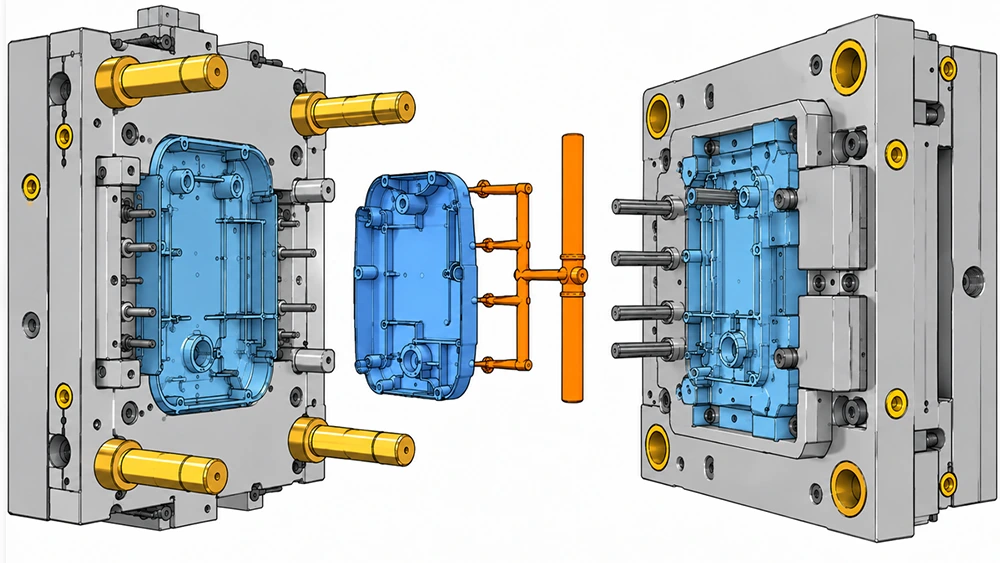
Compared with long-term, high-volume production, low-volume injection molding often uses aluminum molds, soft steel molds, or simplified mold structures to reduce tooling investment and shorten lead times. For this reason, it is commonly used as a bridge between prototype validation and full-scale production.
2. Main Benefits of Low-Volume Injection Molding
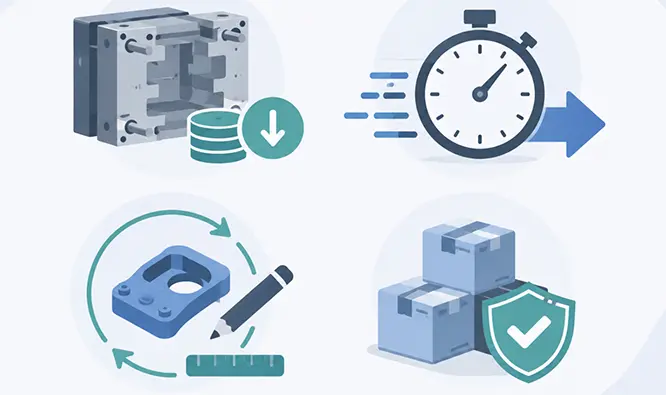
1) Lower Upfront Tooling Costs
High-volume production usually requires more durable and sophisticated production molds. For projects that only need a few hundred or a few thousand parts, that level of investment may not be economical.
Low-volume injection molding can reduce upfront costs through aluminum molds, soft steel molds, or simplified tooling, helping companies avoid committing to expensive production molds before market demand is fully proven.
2) Faster Time to Market
Low-volume molds are usually simpler, so machining and mold testing can often be completed more quickly. This makes it possible to move into production sooner. For projects involving pilot runs, market testing, or an initial product launch, the shorter tooling cycle can significantly reduce the time from design approval to finished parts.
3) Easier Design Changes
Even when a product is largely finalized, dimensions, structures, or materials may still need to be adjusted based on assembly testing or market feedback.
Because the initial investment in low-volume tooling is lower, the financial risk associated with later modifications is generally lower than with full production tooling. This makes it more suitable for projects that may still require some iteration.
4) Lower Production and Inventory Risk
When market demand is uncertain, producing a large quantity of parts upfront can create excess inventory.
Low-volume injection molding allows companies to manufacture in smaller batches based on actual orders or market feedback. This helps maintain injection-molded part quality and consistency while reducing the inventory and cash-flow risks associated with overproduction.
3. Low-Volume Injection Molding Costs
The total cost of low-volume injection molding mainly consists of tooling and part production costs. Actual pricing can vary significantly depending on part size, geometry, material, mold type, and sourcing location. Simple low-volume molds may start at around one or two thousand dollars, while more complex molds can cost substantially more.
| Cost Item | Typical Range | Main Cost Factors |
| Tooling Cost | Approx. $1,000–$8,000+ | Mold material, size, design complexity, slides/undercuts, number of cavities |
| Part Cost | Approx. $0.50–$5.00+ / part | Plastic material, part weight, molding cycle, production quantity |
| Production Volume | Approx. 100–10,000 parts | Higher quantities spread the tooling cost across more parts |
| Overall Cost Trend | Lower upfront investment, but higher unit cost than high-volume production | Average unit cost decreases as production volume increases |
As production volume increases, the tooling cost is spread across more parts, so the average unit cost of injection molding falls quickly. The following example compares the cost trend of three manufacturing processes for the same simple plastic part:
| Production Quantity | Low-Volume Injection Molding (USD/part) | 3D Printing (USD/part) | CNC Machining (USD/part) |
| 100 parts | $31.50 | $12.00 | $25.00 |
| 500 parts | $7.50 | $12.00 | $25.00 |
| 1,000 parts | $4.50 | $12.00 | $25.00 |
| 5,000 parts | $2.10 | $12.00 | $25.00 |
| 10,000 parts | $1.80 | $12.00 | $25.00 |
4. Common Applications of Low-Volume Injection Molding
1) Functional Prototypes and Product Testing
Use the same or similar injection molding materials as the final product to validate assembly, strength, dimensions, and real-world performance.
2) Pilot Production
Produce a small batch before full-scale manufacturing to validate the mold, assembly process, and overall production stability.
3) Market Testing
Manufacture a few hundred or a few thousand products for market launch, then use actual customer feedback to decide whether production should be scaled up.
4) Bridge Production
When full production tooling is not yet ready, or when market demand is growing, low-volume injection molding can maintain product supply during the transition.
5) Long-Term Low-Volume Production
For products with consistently limited demand, such as specialized equipment parts, replacement components, or custom products, low-volume injection molding can avoid the need for a large investment in high-volume production tooling.
Case Study: Helping a Startup Bring Its Product to Market
A startup approached us with a limited budget and needed an initial run of 300 plastic housings for a commercial product launch. The customer required near-production appearance and consistent part quality, but because market demand had not yet been validated, they were unwilling to invest heavily in full production tooling.
We compared several viable manufacturing options:
| Option | Total Cost for 300 Parts | Main Consideration |
| 3D Printing | $3,600 | Low upfront investment, but limited surface quality and batch consistency |
| CNC Machining | $4,500 | Stable quality, but relatively high unit cost |
| Low-Volume Injection Molding | $3,900 | Production-grade quality with lower tooling investment |
| Full-Scale Injection Molding | $8,000+ | Low unit cost, but high upfront investment |
The customer ultimately chose low-volume injection molding. Although the initial batch cost slightly more than 3D printing, it allowed them to produce injection-molded parts suitable for commercial sale without taking on the high upfront cost of full production tooling, making it a better fit for the startup’s budget and product requirements at that stage.
The product performed well after launch. The customer later placed several additional production orders and eventually became a long-term customer.

FAQ
Q1: Can low-volume injection molding use production-grade plastics?
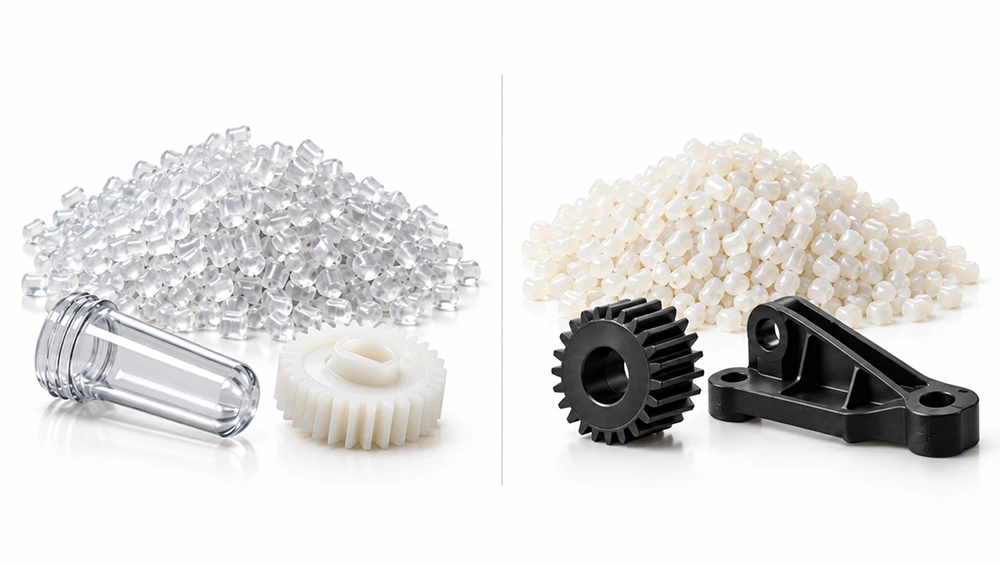
Yes. Low-volume injection molding can typically use common injection molding materials such as ABS, PC, PP, PA, and POM, allowing part performance to closely match that of the final production product.
Q2: Can low-volume injection molded parts be used as final products?
Yes. As long as the material, dimensions, and quality meet the product requirements, low-volume injection molded parts can be used not only for testing but also for final assembly or direct sale.
Q3: Does low-volume injection molding require DFM analysis?
Yes. Reviewing wall thickness, draft angles, undercuts, gate locations, and other design features in advance can reduce the risk of mold modifications and improve molding stability.
Q4: Can colors and surface finishes be customized for low-volume injection molding?
Yes. Different colors, textures, polishing levels, and other surface finishes can usually be specified according to project requirements, although the available options depend on the material and mold.
Q5: Can low-volume injection molds be modified later?
In many cases, yes. Certain local dimensions or structural features can be adjusted after the mold is made. However, the extent of possible modification depends on the mold design, and major product changes may require a new mold.