Stainless steel is an iron-based alloy that contains enough chromium to provide good corrosion resistance. Depending on its metallurgical structure, stainless steel can be divided into several types. Each type includes different grades with distinct properties and applications.
1. What Are the Types of Stainless Steel?
Based on their metallurgical structure, stainless steels are generally divided into five major categories: austenitic, ferritic, martensitic, duplex, and precipitation-hardening stainless steels.
| Type | Common Grades | Key Characteristics |
| Austenitic stainless steel | 303, 304, 316 | Good corrosion resistance and formability |
| Ferritic stainless steel | 409, 430 | Magnetic and relatively low cost |
| Martensitic stainless steel | 410, 416, 420 | High strength and hardness |
| Duplex stainless steel | 2205, 2507 | High strength and excellent corrosion resistance |
| Precipitation-hardening stainless steel | 17-4 PH, 15-5 PH | High strength and good corrosion resistance |
2. Austenitic Stainless Steel
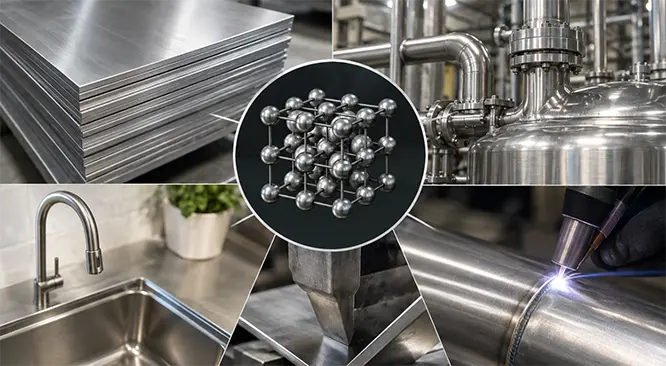
Austenitic stainless steel has an austenitic microstructure at room temperature, with a face-centered cubic (FCC) crystal structure. It offers good corrosion resistance, toughness, formability, and weldability, making it one of the most widely used types of stainless steel.
Most austenitic stainless steels are non-magnetic or only slightly magnetic in the annealed condition, although cold working can introduce some magnetism.
Common grades:
| Grade | Main Element Content | Grade Characteristics | Typical Applications |
| 303 | Cr 17%–19%, Ni 8%–10%, higher S | Sulfur-added austenitic grade designed for easier machining | Shafts, fasteners, precision parts |
| 304 | Cr 18%–20%, Ni 8%–10.5% | Typical “18-8” general-purpose austenitic stainless steel | Food equipment, piping, mechanical parts |
| 316 | Cr 16%–18%, Ni 10%–14%, Mo 2%–3% | Contains molybdenum and is better suited to chloride-rich and corrosive environments | Marine equipment, chemical equipment, medical devices |
| 304L | Similar to 304, C ≤ 0.03% | Low-carbon version of 304, suitable for welded structures | Welded piping, tanks, chemical equipment |
| 316L | Cr 16%–18%, Ni 10%–14%, Mo 2%–3%, C ≤ 0.03% | Low-carbon version of 316 | Medical equipment, chemical equipment, marine equipment |
3. Ferritic Stainless Steel
Ferritic stainless steel has a ferritic microstructure at room temperature, with a body-centered cubic (BCC) crystal structure. It is generally magnetic and offers good corrosion resistance, oxidation resistance, and a relatively low coefficient of thermal expansion.
Compared with austenitic stainless steel, ferritic grades usually contain less nickel, which also helps keep material costs lower.
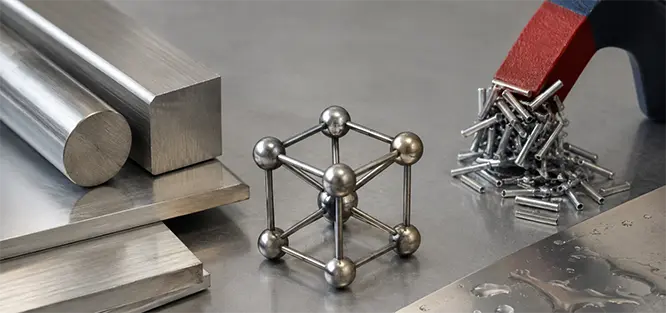
Common grades:
| Grade | Main Element Content | Grade Characteristics | Typical Applications |
| 409 | Cr 10.5%–11.75%, small amount of Ti | Low-chromium, titanium-stabilized ferritic grade | Automotive exhaust systems, heat-resistant components |
| 430 | Cr 16%–18%, very low Ni content | Typical general-purpose ferritic stainless steel | Home appliances, kitchen equipment, decorative parts |
| 446 | Cr 23%–27% | High-chromium ferritic grade suited to high-temperature environments | Industrial furnaces, combustion equipment, high-temperature components |
4. Martensitic Stainless Steel
Martensitic stainless steel can form a martensitic microstructure through heat treatments such as quenching and tempering, allowing it to achieve high strength and hardness.
These steels are generally magnetic and offer good wear resistance, although their corrosion resistance is usually lower than that of austenitic grades such as 304 and 316.
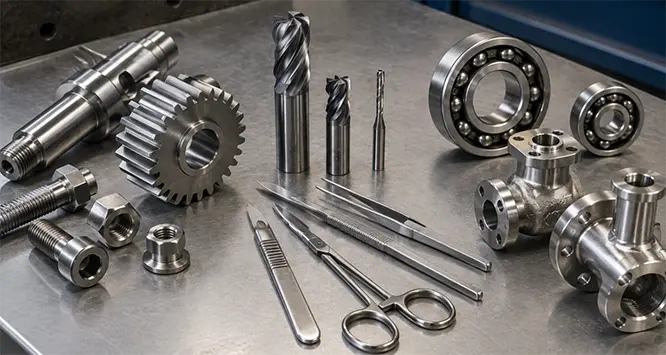
Common grades:
| Grade | Main Element Content | Grade Characteristics | Typical Applications |
| 416 | Cr 12%–14%, higher S | Sulfur-added, free-machining martensitic grade | Shafts, gears, fasteners |
| 420 | Cr 12%–14%, higher C | Can achieve high hardness through heat treatment | Cutting tools, surgical instruments, wear-resistant parts |
| 440C | Cr 16%–18%, C 0.95%–1.20% | High-carbon, high-chromium martensitic grade | Bearings, cutting tools, valve components |
5. Duplex Stainless Steel
Duplex stainless steel contains both austenitic and ferritic microstructures, usually in relatively balanced proportions.
This dual-phase structure combines high strength with good corrosion resistance. Duplex grades are particularly resistant to pitting, crevice corrosion, and chloride stress corrosion cracking.
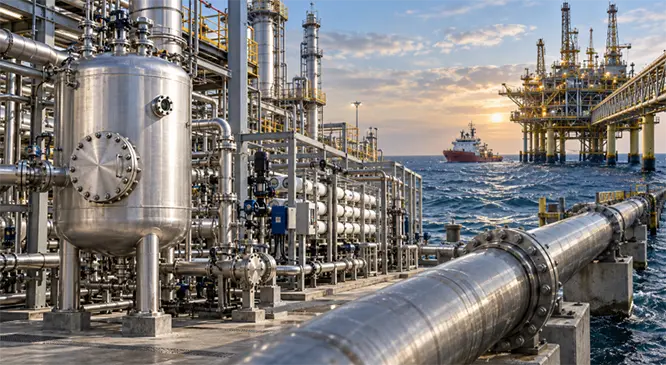
Common grades:
| Grade | Main Element Content | Grade Characteristics | Typical Applications |
| 2205 | Cr 21%–23%, Ni 4.5%–6.5%, Mo 2.5%–3.5%, small amount of N | Most common standard duplex grade | Chemical equipment, pressure vessels, marine structures |
| 2507 | Cr 24%–26%, Ni 6%–8%, Mo 3%–5%, higher N | Super duplex grade for more demanding environments | Desalination systems, offshore facilities, marine pipelines |
6. Precipitation-Hardening Stainless Steel
Precipitation-hardening stainless steel can develop fine strengthening precipitates during aging treatment, significantly increasing its strength and hardness.
These materials combine high strength, good corrosion resistance, and good dimensional stability, making them suitable for components subjected to high mechanical loads.
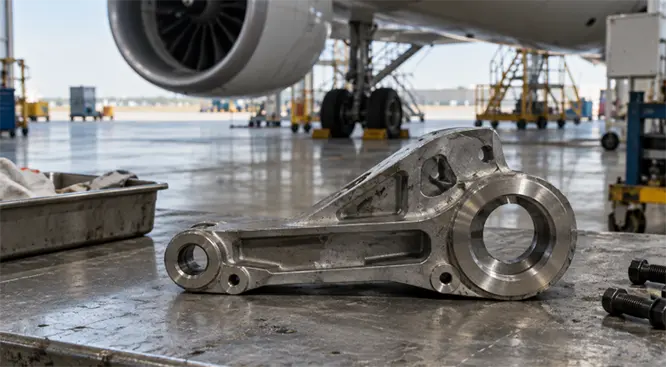
Common grades:
| Grade | Main Element Content | Grade Characteristics | Typical Applications |
| 17-4 PH | Cr 15%–17.5%, Ni 3%–5%, Cu 3%–5%, small amount of Nb | Typical copper precipitation-hardening grade | Aerospace parts, valves, fasteners |
| 15-5 PH | Cr 14%–15.5%, Ni 3.5%–5.5%, Cu 2.5%–4.5%, small amount of Nb | Similar to 17-4 PH, with greater emphasis on toughness | Aerospace structural parts, valves, shafts |
7. What Are the Differences Between Common Stainless Steel Grades?
Different stainless steel grades vary significantly in corrosion resistance, strength, hardness, magnetism, and machining performance.
| Grade | Corrosion Resistance | Strength/Hardness | Machinability | Magnetism | Weldability | Formability |
| 303 | ★★★ | ★★★ | ★★★★★ | ○ | ★★ | ★★★ |
| 304 | ★★★★ | ★★★ | ★★★ | ○ | ★★★★★ | ★★★★★ |
| 316 | ★★★★★ | ★★★ | ★★ | ○ | ★★★★★ | ★★★★★ |
| 430 | ★★★ | ★★★ | ★★★ | ● | ★★★ | ★★★ |
| 410 | ★★ | ★★★★ | ★★★ | ● | ★★ | ★★ |
| 416 | ★★ | ★★★★ | ★★★★★ | ● | ★ | ★★ |
| 420 | ★★ | ★★★★ | ★★★ | ● | ★★ | ★★ |
| 2205 | ★★★★★ | ★★★★★ | ★★ | ● | ★★★★ | ★★★ |
| 17-4 PH | ★★★★ | ★★★★★ | ★★★ | ● | ★★★ | ★★ |
FAQ
Q1: What Is Stainless Steel Made Of?
Stainless steel is primarily made of iron and contains at least about 10.5% chromium. It may also contain nickel, molybdenum, manganese, carbon, nitrogen, and other alloying elements.
Q2: Is Stainless Steel Magnetic?
It depends on the type. Ferritic, martensitic, and duplex stainless steels are generally magnetic, while austenitic stainless steels usually have little or no magnetism.
Q3: What Makes Stainless Steel Stainless?
Chromium is the key element. It forms a passive film on the surface of the steel, which helps protect the material from corrosion.
Q4: What Is the Difference Between Stainless Steel and Carbon Steel?
The main differences are alloy composition and corrosion resistance. Stainless steel contains a higher level of chromium, while ordinary carbon steel is generally more susceptible to rust.
Q5: Does Stainless Steel Rust?
Yes. Stainless steel has good corrosion resistance, but it can still corrode when exposed to chlorides, strong acids, prolonged moisture, surface contamination, or other aggressive conditions.