
Iron, nickel, and cobalt are the most typical magnetic metals. Many types of steel and certain stainless steels are also attracted to magnets. The magnetic behavior of different metals and alloys depends on their composition and internal structure. This article explains the most common magnetic metals and how to determine whether a metal is magnetic.
1. What Is Metal Magnetism?
Metal magnetism refers to how a metal responds to a magnetic field. Different metals exhibit different types and levels of magnetic behavior.
In everyday use and manufacturing, whether a metal is considered magnetic usually refers to whether it can be noticeably attracted by an ordinary magnet. Iron, nickel, and cobalt, for example, are strongly ferromagnetic, while metals such as aluminum, copper, and titanium show only very weak magnetic responses.
2. Which Metals Are Magnetic?
| Metal/Material | Magnetism at Room Temperature | Typical Behavior |
| Iron | Strong | Typical ferromagnetic metal |
| Nickel | Magnetic | Pure nickel is ferromagnetic |
| Cobalt | Magnetic | Typical ferromagnetic metal |
| Carbon steel | Usually strong | Most grades are noticeably attracted to magnets |
| Stainless steel | Depends on the type | Some grades are magnetic, while others are weakly magnetic or show no obvious magnetism |
1) Iron
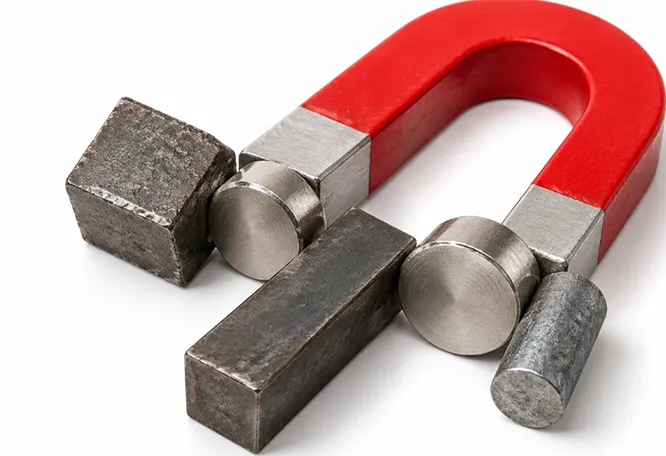
Iron is one of the most typical and widely used magnetic metals in industry. The magnetic moments of iron atoms can become aligned in an ordered arrangement, giving iron strong ferromagnetic properties and making it readily attracted to magnets.
Iron is widely used to produce steel, mechanical components, structural parts, tools, and many types of industrial equipment.
2) Nickel
Nickel is a ferromagnetic metal and can be attracted to a magnet at room temperature. It is also commonly used as an alloying element to improve corrosion resistance, high-temperature performance, and other material properties.
It is important to note that pure nickel is magnetic, but this does not mean that all nickel alloys are strongly magnetic. Changes in alloy composition and internal structure can significantly affect magnetic behavior.
3) Cobalt
Cobalt is another typical ferromagnetic metal with relatively strong magnetic properties. It is often used in magnetic materials as well as in alloys that require good performance at elevated temperatures.
Cobalt-based alloys and cobalt-containing magnetic materials are used in high-temperature equipment, aerospace applications, and specialized industrial components.
4) Steel
Most common carbon steels, low-alloy steels, and tool steels are noticeably magnetic. This is mainly because steel is iron-based, and its typical microstructures retain strong ferromagnetic behavior.
However, not all steels exhibit the same level of magnetism. Chemical composition, crystal structure, and processing condition can all affect the final magnetic properties.
3. Which Common Metals Are Usually Not Noticeably Magnetic?
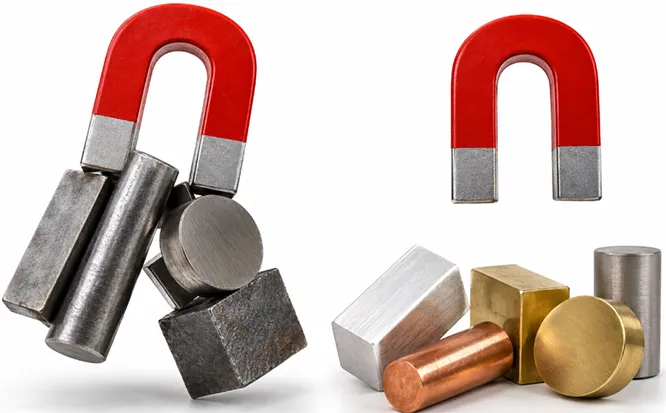
Apart from iron, nickel, cobalt, and most steels, many common metals are not noticeably attracted to ordinary magnets under normal conditions.
| Metal | Noticeably Attracted by an Ordinary Magnet? | Magnetic Type |
| Aluminum | No | Weakly paramagnetic |
| Copper | No | Diamagnetic |
| Brass | Usually no | No obvious magnetism |
| Bronze | Usually no | No obvious magnetism |
| Titanium | No | Weakly paramagnetic |
| Gold | No | Diamagnetic |
| Silver | No | Diamagnetic |
4. Is Stainless Steel Magnetic?
It depends on the type of stainless steel.
Although stainless steel is primarily iron-based, different stainless steel families have different microstructures, which leads to different magnetic behavior. Common types are shown below:
| Stainless Steel Type | Common Grades | Magnetic? |
| Austenitic | 304, 316, 303 | Usually not noticeably magnetic |
| Ferritic | 409, 430, 446 | Usually magnetic |
| Martensitic | 410, 420, 440C | Usually magnetic |
| Duplex | 2205, 2507 | Usually magnetic |
| Precipitation-hardening | 17-4 PH, 15-5 PH | Usually magnetic |
Among these, 304 and 316 stainless steel are generally not noticeably magnetic in the annealed condition. However, after cold working processes such as bending or cold rolling, some areas may develop a certain degree of magnetism.
5. Common Applications of Magnetic Metals
Motors and Generators
Magnetic materials such as iron and silicon steel are commonly used in the cores of motors and generators. They help conduct and strengthen magnetic flux, allowing these systems to convert energy efficiently.
Magnetic Detection and Separation
Magnetic equipment can be used to identify, attract, and separate ferrous materials. Common applications include metal detection, scrap processing, and production-line sorting.
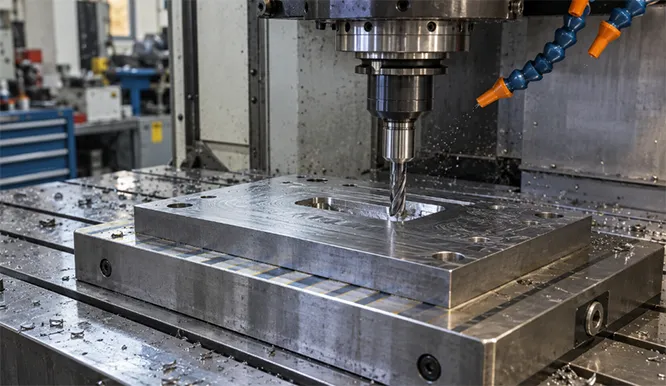
Magnetic Workholding and Machining
Steel workpieces can be held using magnetic fixtures or magnetic chucks, making clamping and positioning easier during CNC machining.
6. How Can You Tell Whether a Metal Is Magnetic?
1) Use a Magnet
This is the simplest method. Bring an ordinary magnet close to the metal surface. If there is a noticeable attraction, the material likely has relatively strong magnetic properties.
However, a magnetic test cannot replace material certification, chemical composition analysis, or PMI testing.
2) Check the Material Grade
For alloys such as stainless steel, identifying the specific grade can provide useful information. For example, 304, 316, and 430 stainless steel can show very different magnetic behavior.
3) Check the Material Data Sheet
If the material is being used for a formal manufacturing project, check the supplier’s material data sheet or material certification documents to confirm its composition, grade, and condition.
7. How Does Magnetism Affect CNC Machining?
Magnetism usually does not directly determine the CNC machining process, but it can influence workholding, chip management, and material identification.
Workholding: Ferromagnetic materials can sometimes be secured using magnetic chucks or magnetic fixtures, especially for certain flat steel workpieces.
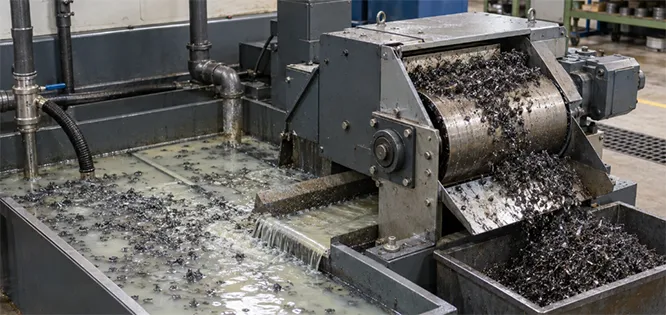
Chip Management: Ferromagnetic chips produced when machining steel and other ferrous materials can be handled using magnetic separation or magnetic filtration systems.
Material Identification: A magnet test can help with the preliminary identification of certain steels or stainless steels, but it should not be used on its own to determine a specific material grade.
8. FAQ
Is Steel Magnetic?
Most common carbon steels, low-alloy steels, and tool steels are magnetic and can be attracted to ordinary magnets. However, the level of magnetism varies between different steel grades.
Is Aluminum Magnetic?
Aluminum is generally not noticeably attracted to an ordinary magnet. It is weakly paramagnetic, but under everyday conditions it is usually considered non-magnetic.
Is Copper Magnetic?
Copper is generally not attracted to ordinary magnets. It is a diamagnetic material, and its magnetic response is extremely weak.
Is Titanium Magnetic?
Titanium is generally not attracted to ordinary magnets. It is weakly paramagnetic, but this magnetic behavior is difficult to detect under normal conditions.
Is 304 Stainless Steel Magnetic?
304 stainless steel is usually not noticeably magnetic in the annealed condition. However, after cold rolling, bending, or other cold working processes, some areas may develop a certain degree of magnetism.
Is 316 Stainless Steel Magnetic?
316 stainless steel is generally not noticeably magnetic, although it may develop slight magnetism after cold working.
Why Are Some Stainless Steels Attracted to Magnets?
The magnetic behavior of stainless steel mainly depends on its microstructure. Ferritic, martensitic, and duplex stainless steels are usually magnetic, while austenitic stainless steels are generally not noticeably magnetic. However, austenitic stainless steel can also develop some magnetism after cold working.